
Compare models
Galaxy A56 vs Google Pixel 9 Pro Fold
- 1-year warranty
- Free standard shipping
- Free 30-day returns
Differences at a glance
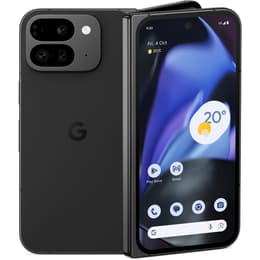
The Samsung Galaxy A56 (2025) and the Google Pixel 9 Pro Fold (2024) represent two distinct approaches to modern mobile design, pairing a traditional mid-range smartphone format with an advanced book-style folding device. While they share contemporary operating systems, their hardware structures and core purposes differ entirely. This comparison examines how their practical capabilities, everyday usability, and design philosophies compare to help you decide which device matches your lifestyle needs.
Available Models
Colour
Storage
Scores
Durability
Both devices launched within a consecutive generation window, but they approach long-term durability and structural longevity through very different mechanical frameworks.
- Release timeline and build: The Google Pixel 9 Pro Fold arrived in late 2024 utilizing a sophisticated folding hinge mechanism, whereas the Samsung Galaxy A56 launched in early 2025 with a traditional, rigid slate body.
- Software support lifecycle: Both manufacturers provide extended multi-year update commitments, ensuring that both units maintain software security and feature freshness over a prolonged ownership window.
- Practical structural lifespan: Rigid slate devices generally present fewer moving parts for everyday wear and tear, while folding devices require careful handling of the flexible inner screen mechanism over years of frequent opening and closing.
Release year
2025
2024
Operating system
Android
Android
Foldable
No
Yes
Performance
System responsiveness and daily multitasking capabilities vary significantly based on how each hardware architecture manages power and memory allocation.
- Multitasking and memory headroom: The Google Pixel 9 Pro Fold features a high-capacity memory configuration that handles demanding split-screen workflows smoothly, while the Galaxy A56 relies on a balanced configuration suited for routine daily apps and moderate background tasks.
- App loading and system speed: Both devices handle everyday messaging, web browsing, and media streaming without noticeable stutter, though high-end graphics processing runs with greater thermal headroom on top-tier flagship processors.
- Battery behavior: The Galaxy A56's traditional single-screen layout maintains steady power consumption throughout a standard day, whereas powering the expansive dual-screen setup on the Pixel 9 Pro Fold requires mindful battery management during heavy multitasking.
Screen quality
Display configurations define the primary interaction difference, shifting between a conventional single panel and a transforming dual-screen layout.
- Display technology and format: The Galaxy A56 utilizes a bright, flat OLED panel with smooth refresh rates for traditional viewing, while the Pixel 9 Pro Fold provides both a standard outer cover screen and a tablet-sized flexible inner display.
- Outdoor visibility: Both screens incorporate high peak brightness capabilities, ensuring that text and images remain legible under direct sunlight.
- Viewing space: Users who prefer compact, single-handed use will find the traditional slate form factor straightforward, whereas those seeking an expansive digital canvas for reading or viewing media will appreciate the folding screen layout.
Resolution
1080 x 2340
2076 x 2152
Audiovisual
Optics and media playback hardware cater to different creative styles and everyday entertainment preferences.
- Camera system versatility: The Pixel 9 Pro Fold equips a versatile multi-lens rear array paired with unique folding-angle shooting modes, while the Galaxy A56 provides a dependable triple-lens setup focused on clear everyday snapshots.
- Video and low-light processing: Image software optimization on both models delivers balanced exposure and sharp detail in challenging lighting conditions.
- Media consumption: Built-in stereo speakers on both devices provide clear audio output for casual video watching and hands-free calls, with the larger unfolded screen offering a more immersive visual environment.
Miscellaneous
Physical handling, connectivity standards, and daily portability features shape how each device fits into regular routines.
- Portability and dimensions: The Galaxy A56 offers a lightweight, familiar profile that slips easily into pockets, whereas the Pixel 9 Pro Fold carries a heavier, more substantial footprint due to its complex hinge assembly and dual screens.
- Connectivity and security: Both models support fast 5G networks, modern Wi-Fi standards, and secure biometric authentication through fingerprint and facial recognition sensors.
- Sustainability choices: Choosing a quality-assured refurbished option for either model provides an eco-friendly alternative that reduces electronic waste while delivering reliable, tested performance.
Weight
200 oz
257 oz
Screen size (in)
6.7
8.0
Network
4G
5G
SIM card
Physical SIM + eSIM
Physical SIM + eSIM
Carrier compatibility
Unlocked
Unlocked
What the community thinks
User feedback from community discussions highlights distinct patterns of praise and common considerations for both devices. Owners of the Samsung Galaxy A56 frequently commend its dependable daily battery duration, clean display quality, and straightforward handling. At the same time, some users note that its mid-range processing limits peak gaming speeds compared to top-tier alternatives. Conversely, users of the Google Pixel 9 Pro Fold praise its expansive inner workspace and innovative folding versatility, though reviewers frequently mention the heavier physical weight and the extra care required for a folding screen over years of use.
Ultimately, your choice depends entirely on your daily habits. Users prioritizing a lightweight, traditional smartphone experience with dependable everyday performance will find the Galaxy A56 well-suited to their needs. Meanwhile, users prioritizing maximum screen workspace for multitasking and media consumption may prefer the versatile layout of the Pixel 9 Pro Fold. Exploring a quality-assured refurbished option for either device offers a sustainable choice that supports environmental responsibility without compromising on functional reliability.