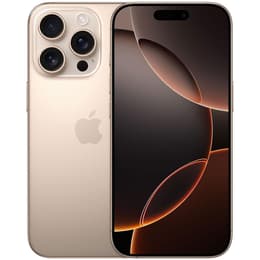

Galaxy S25 Ultra vs iPhone 16 Pro

Galaxy S25 Ultra
Galaxy S25 Ultra
Starting at

Refurbished price:A$1,106.00

Versus A$2,149.00 new

See options
iPhone 16 Pro
iPhone 16 Pro
Starting at

Refurbished price:A$1,134.00

Versus A$1,999.00 new

See options

The Samsung Galaxy S25 Ultra, released in February 2025, and the iPhone 16 Pro, launched in September 2024, represent flagship smartphones from their respective manufacturers. While both devices offer premium experiences, they diverge in their operating systems, with the Galaxy S25 Ultra running Android 15 and the iPhone 16 Pro operating on iOS 18 (upgradable to iOS 26.4). Key distinctions lie in their camera systems, display technologies, and overall design philosophies.

Scores

Durability

When considering the long-term usability of these devices, several factors contribute to their expected practical lifespan.

  • Release Timeline: The Galaxy S25 Ultra was released in February 2025, making it a slightly newer device compared to the iPhone 16 Pro, which launched in September 2024. This difference in release dates can influence the duration of software support.
  • Software Longevity: The iPhone 16 Pro, while released earlier, was discontinued in September 2025 following the announcement of the iPhone 17 Pro, which might impact its perceived software longevity compared to a currently supported model. Samsung typically offers several years of Android and security updates for its flagship devices, with the S25 Ultra running Android 15.
  • Repairability: The Galaxy S25 Ultra has shown improved repairability compared to previous Samsung flagships, earning a provisional iFixit score of 5 out of 10. This is partly due to easier battery replacement with pull tabs and modular rear cameras. However, the iPhone 16 Pro received a higher provisional repairability score of 7 out of 10, attributed to its dual-entry design and comprehensive repair manuals, making it generally more straightforward to service. Both devices feature durable materials like titanium frames and advanced glass protection, with the S25 Ultra using Corning Gorilla Armor 2 and the iPhone 16 Pro featuring Ceramic Shield.

Release year

2025

2024

Foldable

No

No

Performance

Both smartphones are equipped with powerful internal components designed for demanding tasks, though their approaches to performance optimization differ.

  • Processor Capabilities: The Galaxy S25 Ultra is powered by an octa-core processor, enabling it to handle intensive applications and multitasking efficiently. The iPhone 16 Pro features a different advanced processor, which contributes to its smooth operation across various applications and gaming scenarios. Users of both devices generally report fluid performance for everyday use and demanding apps.
  • Multitasking and Storage: The Galaxy S25 Ultra offers substantial RAM options, including 12GB and 16GB, which supports extensive multitasking and keeps numerous applications active in the background without slowdowns. The iPhone 16 Pro comes with 8GB of RAM, optimized by its operating system to manage applications effectively. Both devices offer various storage configurations, ranging from 128GB up to 1TB, providing ample space for apps, media, and files.
  • Battery Behavior: The Galaxy S25 Ultra houses a 5000 mAh battery, delivering extended usage times, with some tests indicating over 17 hours of continuous use and many users reporting 1.5 days of moderate use. The iPhone 16 Pro, with a 3582 mAh battery, also provides strong battery performance, with tests showing over 20 hours of video playback and users often experiencing a full day of use, sometimes extending to two days with lighter usage.

Memory (GB)

12 GB

8 GB

Screen quality

The visual experience on both devices is a highlight, with each offering a high-quality display tailored to different preferences.

  • Display Technology and Size: The Galaxy S25 Ultra features a larger 6.9-inch Dynamic LTPO AMOLED 2X display, providing vibrant visuals and deep blacks. The iPhone 16 Pro has a 6.3-inch Super Retina XDR OLED display, known for its color accuracy and contrast. Both displays utilize OLED technology for excellent picture quality.
  • Resolution and Clarity: The S25 Ultra offers a QHD+ resolution of 3120x1440 pixels, resulting in a sharp and detailed image. The iPhone 16 Pro provides a resolution of 2622x1206 pixels at 460 pixels per inch, ensuring clear text and images. The S25 Ultra also includes ProScaler AI upscaling technology to enhance lower-resolution content.
  • Brightness and Smoothness: Both phones feature high refresh rates of up to 120Hz, contributing to smooth scrolling and responsive interactions. The Galaxy S25 Ultra can reach a peak brightness of up to 2600 nits, offering excellent visibility in bright outdoor conditions. The iPhone 16 Pro achieves a typical brightness of 1000 nits and a peak outdoor brightness of 2000 nits. Both devices also include an Always-On display feature.

Resolution

1440x3120

1206 x 2622

Audiovisual

Both smartphones are equipped with advanced camera systems, offering versatile photography and videography capabilities.

  • Camera System Configuration: The Galaxy S25 Ultra boasts a quad-camera setup, including a 200MP main sensor, a 50MP ultrawide, a 10MP telephoto with 3x optical zoom, and a 50MP telephoto with 5x optical zoom, capable of up to 100x digital zoom. The iPhone 16 Pro features a triple-camera system with a 48MP main sensor, a 48MP ultrawide with autofocus, and a 12MP telephoto lens.
  • Photography Performance: The S25 Ultra's 200MP main camera can capture highly detailed images, and its ultrawide camera has seen improvements, particularly in low-light conditions. Users often find Samsung's color science to produce more vibrant and punchy images. The iPhone 16 Pro's camera system is praised for its color accuracy and consistent results, with its 48MP ultrawide offering strong detail. Both perform well in everyday lighting, with differences often coming down to subjective color preference.
  • Video Recording and Zoom: The Galaxy S25 Ultra supports 8K video recording at 30 frames per second and offers advanced zoom capabilities, including a 5x optical telephoto lens. The iPhone 16 Pro is capable of 4K video recording at 120 frames per second in Dolby Vision, providing high-quality video capture. For zoom, the S25 Ultra generally offers more reach and detail at higher magnifications due to its dedicated telephoto lenses.
  • Audio Experience: Both devices feature stereo speakers, with the Galaxy S25 Ultra's tuned by AKG, providing a rich audio experience for media consumption. The iPhone 16 Pro also delivers strong speaker output, contributing to an immersive audio experience.

Miscellaneous

Beyond core performance and camera, several practical elements differentiate these two devices in daily use.

  • Connectivity and Ports: Both the Galaxy S25 Ultra and the iPhone 16 Pro support 5G cellular networks and the latest Wi-Fi 7 standard, ensuring fast and reliable wireless connectivity. The S25 Ultra typically features a USB-C port, while the iPhone 16 Pro uses a Lightning port for charging and data transfer.
  • Biometric Security: The Galaxy S25 Ultra incorporates an ultrasonic in-screen fingerprint sensor for secure unlocking. The iPhone 16 Pro relies on Face ID, its facial recognition system.
  • Design and Handling: The Galaxy S25 Ultra has dimensions of 162.8 x 77.6 x 8.2 mm and weighs 218g, featuring a flat design with a titanium frame. The iPhone 16 Pro is more compact at 149.6 x 71.5 x 8.25 mm and weighs 199g, also utilizing a titanium frame. The S25 Ultra includes an integrated S Pen, offering additional functionality for note-taking and navigation.
  • Build Materials: Both devices use premium build materials, including titanium for the frame, contributing to their durability. The S25 Ultra features Corning Gorilla Armor 2 on its display, while the iPhone 16 Pro uses Ceramic Shield for enhanced screen protection.

Weight

218 oz

199 oz

Screen size (in)

6.9

6.3

Network

5G

5G

SIM card

Physical SIM + eSIM

Physical SIM + eSIM

Carrier compatibility

Unlocked

Unlocked

User feedback for the Galaxy S25 Ultra often praises its exceptional battery life, vibrant display, and versatile camera system, particularly its zoom capabilities. Some users appreciate the extensive customization options available through Android and Samsung's One UI. Criticisms sometimes point to the display not being 10-bit and the charging speed not being the fastest compared to some competitors. The iPhone 16 Pro is frequently lauded for its smooth performance, high-quality display, and consistent camera output. Users often highlight the seamless integration within the Apple ecosystem and the overall refined user experience. Some common concerns include the camera's tendency for an 'over-processed' look in certain situations and occasional software glitches.

Users prioritizing a larger display, extensive camera zoom capabilities, and a highly customizable Android experience may find the Galaxy S25 Ultra well-suited to their needs. Its robust battery life also makes it a strong contender for heavy users. Conversely, individuals who value a more compact device, a highly optimized operating system, and consistent camera performance with a focus on color accuracy might lean towards the iPhone 16 Pro. Its higher repairability score also offers a practical advantage for those considering long-term maintenance. Both devices represent top-tier options in the smartphone market, and choosing between them often comes down to personal preference for operating system and specific feature priorities. For those looking for a more sustainable choice, both models are available as quality-assured refurbished options, extending their lifecycle and reducing electronic waste.


See all articles

Our recent comparisons