
Compare models

Galaxy S21+ 5G vs iPhone 11 Pro

  • 1-year warranty
  • Free standard shipping
  • Free 30-day returns
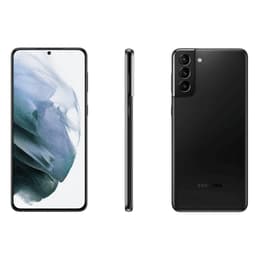
Galaxy S21+ 5G
Starting at

Refurbished price:A$359.00

Versus A$1,736.00 new

See options
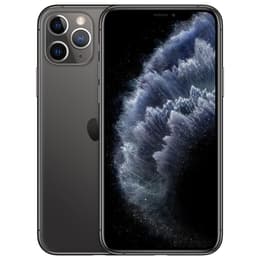
iPhone 11 Pro
Starting at

Refurbished price:A$339.00

Versus A$1,029.00 new

See options

Differences at a glance

The Samsung Galaxy S21 Plus 5G, released in January 2021, and the Apple iPhone 11 Pro, launched in September 2019, represent different generations and operating systems within the smartphone market. While both offer premium experiences, they diverge significantly in their design philosophy, software ecosystems, and hardware capabilities. The Galaxy S21 Plus 5G operates on Android, offering a larger display and 5G connectivity, whereas the iPhone 11 Pro runs on iOS, providing a more compact form factor and a distinct user interface.

Available Models

Colour

Storage (GB)

Scores

Durability

The practical lifespan of a smartphone is heavily influenced by its release date and the manufacturer's commitment to software updates. The Galaxy S21 Plus 5G, being a newer device, generally benefits from a longer expected period of software support compared to the iPhone 11 Pro.

  • Release Timeline: The Galaxy S21 Plus 5G was released in January 2021, approximately 16 months after the iPhone 11 Pro's September 2019 launch. This difference in release dates directly impacts their remaining support windows.
  • OS Support Duration: Samsung typically provides four major Android OS updates and five years of security updates for its flagship S series. The Galaxy S21 series received its final major OS update (Android 15-based One UI 7.0) in the first half of 2025, with security updates expected to continue through January or February 2026. The iPhone 11 Pro, released in 2019, is expected to support iOS 26, which would likely be its final major iOS update, with security updates potentially extending a bit further.
  • Practical Longevity: By early 2026, the Galaxy S21 Plus 5G is still receiving security updates, while the iPhone 11 Pro is nearing the end of its major software update cycle. This means the Galaxy S21 Plus 5G offers a slightly longer period of guaranteed software and security support, which can be a significant factor for users planning to keep their device for an extended time.

Release year

2021

2019

Compatible with latest Update

Yes

Yes

Operating system

Android

iOS

Foldable

No

No

Performance

Performance is a key differentiator, with the newer Galaxy S21 Plus 5G generally offering more robust capabilities for demanding tasks and multitasking due to its more recent internal components.

  • Processing Power: The Galaxy S21 Plus 5G features a newer generation processor, which translates to faster app loading times, smoother transitions between applications, and more efficient handling of graphically intensive games and complex tasks. The iPhone 11 Pro, while still capable for everyday use, may exhibit slower performance in comparison, especially with newer, more demanding applications.
  • Multitasking and Responsiveness: The Galaxy S21 Plus 5G comes with 8GB of RAM, double that of the iPhone 11 Pro's 4GB. This larger RAM capacity allows the Galaxy S21 Plus 5G to keep more applications open in the background without needing to reload them, contributing to a more fluid multitasking experience.
  • Battery Behavior: The Galaxy S21 Plus 5G is equipped with a larger 4800 mAh battery, compared to the iPhone 11 Pro's 3046 mAh battery. In typical usage, the Galaxy S21 Plus 5G often provides a full day of heavy use, with some users reporting up to two days with lighter usage. The iPhone 11 Pro also offered good battery life for its time, with users often achieving a full day of use, though its smaller capacity may require more frequent charging for heavy users.

Screen quality

The display experience varies significantly between these two devices, primarily due to differences in size, refresh rate, and underlying technology.

  • Display Technology and Clarity: The Galaxy S21 Plus 5G features a 6.7-inch Dynamic AMOLED 2X display with a resolution of 1080 x 2400 pixels, offering vibrant colors and deep blacks. The iPhone 11 Pro has a more compact 5.8-inch Super Retina XDR OLED display with a resolution of 2436 x 1125 pixels, resulting in a higher pixel density for its size. Both displays deliver excellent visual quality, but the larger size of the S21 Plus 5G provides a more expansive viewing area.
  • Refresh Rate and Smoothness: A key difference is the refresh rate; the Galaxy S21 Plus 5G boasts an adaptive 120Hz refresh rate, which provides noticeably smoother scrolling and more fluid animations compared to the iPhone 11 Pro's standard 60Hz refresh rate.
  • Brightness and Viewing Experience: Both devices offer high brightness levels, with the Galaxy S21 Plus 5G reaching up to 1300 nits peak brightness and the iPhone 11 Pro reaching 1200 nits peak brightness for HDR content, ensuring good visibility even in bright outdoor conditions. The iPhone 11 Pro's display is praised for its sharpness and color accuracy, while the S21 Plus 5G offers a larger, more immersive experience with its higher refresh rate.

Resolution

1080 x 2400

1125 x 2436

Screen type

Dynamic AMOLED 2X

Super Retina XDR OLED

Audiovisual

Both smartphones offer capable camera systems, but they approach photography with different strengths and features, reflecting their respective release years and manufacturer philosophies.

  • Rear Camera Systems: The Galaxy S21 Plus 5G features a triple-camera setup consisting of a 12MP wide, 12MP ultrawide, and a 64MP telephoto lens, offering 3x hybrid optical zoom and up to 30x digital zoom. The iPhone 11 Pro also has a triple 12MP camera system, including wide, ultrawide, and telephoto lenses, with 2x optical zoom. The S21 Plus 5G's higher megapixel count on its telephoto lens allows for greater detail at zoomed distances.
  • Low-Light and Everyday Photography: Both devices perform well in various lighting conditions. The iPhone 11 Pro introduced a significant improvement in low-light photography with its Night Mode, which brightens dark scenes effectively. The Galaxy S21 Plus 5G also offers strong low-light performance, benefiting from newer image processing capabilities. Users generally find both capable of producing high-quality images in everyday scenarios.
  • Video Recording and Front Camera: Both phones are capable of recording 4K video at various frame rates. The Galaxy S21 Plus 5G can also record 8K video at 24fps. For selfies, the Galaxy S21 Plus 5G has a 10MP front camera, while the iPhone 11 Pro features a 12MP front camera, both capable of capturing detailed self-portraits and video calls.

Main camera

12 megapixels

12 megapixels

Front camera

10 megapixels

12 megapixels

Miscellaneous

Beyond core performance and display, several practical elements contribute to the overall user experience and differentiate these two devices.

  • Connectivity and Ports: The Galaxy S21 Plus 5G supports 5G connectivity, offering faster mobile data speeds in compatible areas, alongside Wi-Fi 6 and Bluetooth 5.0. The iPhone 11 Pro supports 4G LTE, Wi-Fi 6, and Bluetooth 5.0, but lacks 5G capabilities. The Galaxy S21 Plus 5G uses a USB-C port for charging and data transfer, while the iPhone 11 Pro utilizes Apple's proprietary Lightning port.
  • Biometrics and Sensors: The Galaxy S21 Plus 5G features an in-display ultrasonic fingerprint sensor for secure unlocking and authentication. The iPhone 11 Pro relies on Face ID, Apple's facial recognition system, for biometric security. Both devices include a standard array of sensors such as accelerometers, gyroscopes, and ambient light sensors.
  • Physical Characteristics: The Galaxy S21 Plus 5G is a larger and slightly heavier device, measuring 161.5 x 75.6 x 7.8 mm and weighing 200 grams. The iPhone 11 Pro is more compact at 144 x 71.4 x 8.1 mm and weighs 188 grams, making it easier for one-handed use for some users. Both devices feature a premium build with glass backs and metal frames, and both carry an IP68 rating for dust and water resistance.

Weight

200 oz

188 oz

Screen size (in)

6.7

5.8

Network

5G

4G

SIM card

Physical SIM + eSIM

Physical SIM + eSIM

Carrier compatibility

Unlocked

Unlocked

What the community thinks

When evaluating the Samsung Galaxy S21 Plus 5G and the iPhone 11 Pro, user priorities play a significant role in determining the more suitable device. The Galaxy S21 Plus 5G is often praised for its large, vibrant 120Hz display, offering a smooth visual experience, and its inclusion of 5G connectivity for faster network speeds. Users also appreciate its versatile camera system and generally robust battery life. Some common criticisms include its larger size, which might not appeal to all users, and the absence of expandable storage.

The iPhone 11 Pro, on the other hand, receives commendation for its compact form factor, premium build quality, and the consistent performance of its iOS ecosystem. Its camera system, particularly its low-light capabilities, was highly regarded at its release. However, users might note its smaller screen with a 60Hz refresh rate, the lack of 5G, and its older processor compared to newer models.

Users prioritizing a larger, high-refresh-rate display, 5G connectivity, and a slightly longer period of software support may find the Galaxy S21 Plus 5G better suited to their needs. Conversely, individuals who prefer a more compact device, a familiar iOS experience, and a focus on consistent performance for everyday tasks might lean towards the iPhone 11 Pro. Both devices offer reliable performance for their respective generations, and choosing between them often comes down to personal preference for operating system, screen size, and connectivity features. For those considering a more sustainable choice, both models are available as quality-assured refurbished options.