
Galaxy S21 FE 5G vs iPhone 16 Pro

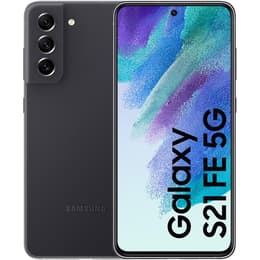
Galaxy S21 FE 5G
Galaxy S21 FE 5G
Starting at

Refurbished price:A$328.00

Versus A$1,252.00 new

See options
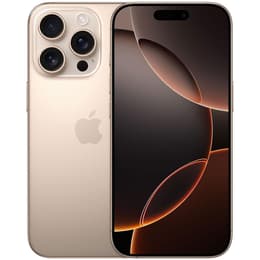
iPhone 16 Pro
iPhone 16 Pro
Starting at

Refurbished price:A$1,148.00

Versus A$1,999.00 new

See options

Ratings

The Samsung Galaxy S21 FE 5G, released in January 2022, and the Apple iPhone 16 Pro, launched in September 2024, represent distinct approaches to the premium smartphone experience. While the Galaxy S21 FE offers a feature-rich Android platform with a focus on accessibility, the iPhone 16 Pro showcases Apple's latest advancements in performance, camera technology, and ecosystem integration. These devices differ significantly in their operating systems, core specifications, and target user profiles, providing varied strengths for different daily needs.

Scores

Durability

When considering the long-term usability of these devices, their respective release timelines and software support policies are key differentiators.

  • Software Longevity: The iPhone 16 Pro, being a more recent release, benefits from Apple's extended software support, typically receiving major iOS updates for 5 to 7 years from its launch. The Galaxy S21 FE, launched in early 2022, received Android OS updates for approximately four years and security updates for five years, meaning its major OS update cycle concluded in early 2026, with security updates continuing until early 2027.
  • Build Durability: Both devices offer robust construction. The Galaxy S21 FE features a Gorilla Glass Victus front and an aluminum frame, complemented by an IP68 rating for dust and water resistance. The iPhone 16 Pro elevates this with a Ceramic Shield front and a titanium frame, also boasting an IP68 rating, which contributes to its overall resilience.
  • Practical Lifespan: Users prioritizing the latest software features and security patches for the longest possible duration will find the iPhone 16 Pro offers a longer practical lifespan in terms of software. For those content with a stable, slightly older software version and ongoing security, the Galaxy S21 FE remains a capable device.

Release year

2022

2024

Compatible with latest Update

Yes

Yes

Foldable

No

No

Performance

The performance capabilities of these two smartphones cater to different user expectations, driven by their respective hardware and software optimizations.

  • Processing Power: The iPhone 16 Pro is equipped with Apple's A18 Pro chip, designed for demanding applications, advanced AI features, and graphics-intensive tasks, ensuring smooth operation and responsiveness across the iOS ecosystem. The Galaxy S21 FE utilizes either the Qualcomm Snapdragon 888 5G or the Exynos 2100 processor, which provides capable performance for everyday multitasking, gaming, and media consumption within the Android environment.
  • Multitasking and Storage: The iPhone 16 Pro typically comes with 8GB of RAM and offers a wide range of storage options up to 1TB, supporting extensive app usage and large media libraries. The Galaxy S21 FE is available with 6GB or 8GB of RAM and storage options up to 256GB, which is suitable for most users' needs.
  • Battery Behavior: The iPhone 16 Pro features a 3582 mAh battery, optimized by its efficient processor and iOS, providing up to 27 hours of video playback. The Galaxy S21 FE houses a larger 4500 mAh battery, which, combined with its display and processor, aims for all-day power, though real-world usage can vary based on network and app patterns.

Memory (GB)

8 GB

8 GB

Screen quality

Both devices offer high-quality displays, but they differ in their underlying technology and visual characteristics.

  • Display Technology and Size: The iPhone 16 Pro features a 6.3-inch Super Retina XDR OLED display, known for its deep blacks, high contrast, and vibrant color reproduction. The Galaxy S21 FE sports a 6.4-inch Dynamic AMOLED 2X display, also delivering rich colors and excellent contrast.
  • Resolution and Refresh Rate: The iPhone 16 Pro provides a resolution of 2622 x 1206 pixels at 460 ppi, coupled with ProMotion technology for an adaptive refresh rate up to 120Hz, ensuring smooth scrolling and fluid animations. The Galaxy S21 FE offers a 1080 x 2400 pixel resolution with a 120Hz refresh rate, providing a clear and smooth viewing experience.
  • Brightness and Clarity: The iPhone 16 Pro's display can reach 1000 nits typical brightness and up to 2000 nits peak outdoor brightness, enhancing visibility in bright conditions and for HDR content. The Galaxy S21 FE has a typical brightness of around 700 nits, which is generally sufficient for most indoor and outdoor viewing.

Resolution

1080 x 2340

1206 x 2622

Screen type

Dynamic AMOLED 2X

LTPO Super Retina XDR OLED

Audiovisual

The camera systems on both smartphones are designed to capture high-quality images and videos, though they approach this with different hardware and software philosophies.

  • Rear Camera Systems: The iPhone 16 Pro features a versatile triple-camera setup, including a 48MP wide lens with sensor-shift optical image stabilization, a 48MP ultrawide lens, and a 12MP periscope telephoto lens offering 5x optical zoom. The Galaxy S21 FE comes with a triple rear camera system comprising a 12MP wide lens, a 12MP ultrawide lens, and an 8MP telephoto lens with 3x optical zoom.
  • Photography Features: The iPhone 16 Pro includes advanced features like a LiDAR scanner for improved low-light focusing and depth sensing, Apple ProRAW for professional-grade photo editing, and enhanced Night mode capabilities. The Galaxy S21 FE offers features such as Night mode with multi-frame processing, 30x Space Zoom (hybrid), and Director's View for creative video recording.
  • Video Recording: The iPhone 16 Pro supports 4K video recording at up to 120 frames per second, ProRes video, and Spatial video, catering to advanced videography needs. The Galaxy S21 FE can record 4K video at 30 or 60 frames per second, with features like Dual Recording to capture footage from both front and rear cameras simultaneously.

Main camera

12 megapixels

48 megapixels

Front camera

32 megapixels

12 megapixels

Miscellaneous

Beyond the core features, several practical elements contribute to the overall user experience of these devices.

  • Connectivity and Ports: The iPhone 16 Pro supports the latest Wi-Fi 7 standard and Bluetooth 5.3, along with 5G connectivity (sub-6 GHz and mmWave), and features a USB-C port. The Galaxy S21 FE supports Wi-Fi 6, Bluetooth 5.0, and 5G connectivity, also utilizing a USB-C port for charging and data transfer. Neither device includes a traditional headphone jack.
  • Biometric Security: The iPhone 16 Pro relies on Face ID for secure facial recognition. The Galaxy S21 FE incorporates an optical under-display fingerprint sensor for biometric authentication.
  • Design and Handling: The iPhone 16 Pro features a titanium frame and Ceramic Shield front, contributing to a premium feel and enhanced durability, weighing 199 grams. The Galaxy S21 FE has a plastic back with an aluminum frame and Gorilla Glass Victus front, weighing 177 grams, offering a lighter feel in hand. Both devices are rated IP68 for dust and water resistance.

Weight

177 oz

199 oz

Screen size (in)

6.4

6.3

Network

5G

5G

SIM card

Physical SIM

Physical SIM + eSIM

Carrier compatibility

Unlocked

Unlocked

Choosing between the Galaxy S21 FE 5G and the iPhone 16 Pro involves weighing priorities across different aspects of smartphone usage. Users who prioritize cutting-edge performance, a highly advanced camera system with extensive video capabilities, and the longest possible software support will find the iPhone 16 Pro well-suited to their needs. Its titanium build and Ceramic Shield offer enhanced durability, and the iOS ecosystem provides a consistent and integrated experience.

Conversely, the Galaxy S21 FE 5G presents a compelling option for those who prefer the Android operating system, a slightly larger display, and a capable camera system for everyday photography and social sharing. Its design, while different from the iPhone, still offers a robust and comfortable user experience.

Common user feedback for the iPhone 16 Pro often highlights its exceptional speed, the quality and versatility of its cameras, and the vibrant, smooth display. Some users might note its weight compared to non-Pro models. For the Galaxy S21 FE, users frequently praise its bright display and overall performance for its segment, though some heavy users have noted that battery life can require more frequent charging.

Ultimately, the decision rests on individual preferences for operating system, specific feature sets, and long-term software commitment. Both devices, whether new or as a quality-assured refurbished option, offer a reliable smartphone experience tailored to different user profiles.


See all articles

Our recent comparisons