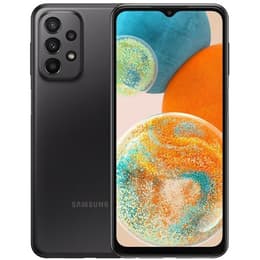
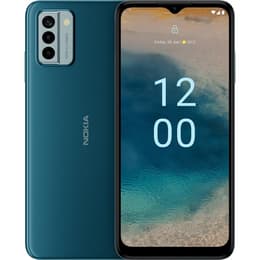

Galaxy A23 vs Nokia G22

Galaxy A23
Galaxy A23
See options
Nokia G22
Nokia G22
See options

The Samsung Galaxy A23 and the Nokia G22 are both Android smartphones designed for everyday use, released in 2022 and 2023 respectively. While both devices offer a similar core smartphone experience, they differentiate themselves through their display quality, performance capabilities, and a distinct approach to longevity and repairability.

Scores

Durability

When considering the long-term usability of these devices, several factors come into play, including software support, physical resilience, and ease of maintenance.

  • Release Timeline: The Samsung Galaxy A23 was released in March 2022, with a 5G variant following in August 2022. The Nokia G22 is a more recent device, launched in February 2023. This difference in release date means the Nokia G22 will generally receive software updates for a slightly longer period into the future.
  • Software Support: The Galaxy A23 is slated to receive two major Android OS upgrades and four years of security updates from its release. The Nokia G22 also promises two OS upgrades and three years of security updates, offering a clear commitment to software longevity.
  • Physical Durability & Repairability: The Samsung Galaxy A23 features Corning Gorilla Glass 5 for display protection, offering a good level of scratch and drop resistance. Its back and sides are made of plastic. In contrast, the Nokia G22 comes with Corning Gorilla Glass 3 for its display and boasts an IP52 rating for splash and dust resistance. A key differentiator for the Nokia G22 is its 'QuickFix' design, which allows users to easily replace common components like the screen, battery, and charging port with readily available parts and guides, promoting a longer practical lifespan. The Nokia G22 also incorporates a back cover made from 100% recycled plastic.

Release year

2022

2023

Compatible with latest Update

Yes

No

Operating system

Android

Android

Foldable

No

No

Performance

The responsiveness and capability of a smartphone's internal components directly impact daily usage, from launching applications to handling demanding tasks.

  • Processing Power: The Samsung Galaxy A23 (LTE variant) is equipped with a processor that handles everyday applications and multitasking smoothly. Its 5G variant features a more capable processor, providing enhanced performance for more intensive tasks and gaming. The Nokia G22 utilizes a processor that is well-suited for general smartphone functions, such as web browsing, social media, and light gaming.
  • Memory and Storage: Both devices offer various configurations of RAM, typically ranging from 4GB to 8GB for the Galaxy A23 and 4GB to 6GB for the Nokia G22, influencing their multitasking efficiency. Both also provide internal storage options of 64GB or 128GB, with support for expandable storage via a microSD card, allowing users to increase space for photos, videos, and applications.
  • Battery Life: Both smartphones are fitted with large batteries, with the Galaxy A23 featuring a 5000 mAh capacity and the Nokia G22 offering a 5050 mAh capacity. This substantial battery capacity in both models generally translates to a full day of use for most users, with the Nokia G22 specifically highlighting a potential for up to three days of battery life under certain usage conditions. Both support fast charging, with the Galaxy A23 supporting 25W and the Nokia G22 supporting 20W.

Memory (GB)

4 GB

4 GB

Screen quality

The display is a primary interface for any smartphone, and its characteristics significantly influence the visual experience for media consumption, browsing, and daily interactions.

  • Display Technology and Size: The Samsung Galaxy A23 features a 6.6-inch PLS LCD display, while the Nokia G22 comes with a 6.5-inch IPS LCD display. Both technologies offer good viewing angles and color reproduction for their class.
  • Resolution and Clarity: The Galaxy A23 provides a Full HD+ resolution (1080 x 2408 pixels), resulting in a sharper and more detailed image. The Nokia G22 offers an HD+ resolution (720 x 1600 pixels), which is suitable for general viewing but may show less detail compared to the Galaxy A23's display.
  • Refresh Rate and Brightness: The Galaxy A23 LTE variant has a 90Hz refresh rate, while its 5G variant offers a smoother 120Hz refresh rate, contributing to fluid scrolling and animations. The Nokia G22 also features a 90Hz refresh rate. The Nokia G22's display can reach up to 500 nits of brightness, which aids visibility in brighter outdoor conditions.

Resolution

1080 x 2408

720 x 1600

Screen type

PLS LCD

IPS LCD

Audiovisual

The camera systems on both devices are designed to capture everyday moments, with varying capabilities for different photographic scenarios.

  • Rear Camera System: Both the Samsung Galaxy A23 and the Nokia G22 feature a 50-megapixel main camera, capable of capturing detailed images in good lighting conditions. The Galaxy A23 further includes a 5-megapixel ultrawide lens, offering a broader field of view for landscapes or group shots, which is not present on the Nokia G22. Both phones also include 2-megapixel macro and 2-megapixel depth sensors for close-up photography and portrait effects. The 5G variant of the Galaxy A23 benefits from Optical Image Stabilization (OIS) on its main camera, which helps reduce blur in photos and videos.
  • Front Camera and Video Recording: Both devices are equipped with an 8-megapixel front-facing camera for selfies and video calls. For video recording, both the Galaxy A23 and the Nokia G22 can capture footage at 1080p resolution at 30 frames per second.
  • Audio Experience: The Nokia G22 includes OZO Audio recording and playback features, which can enhance the audio quality for recorded videos and media consumption. Both phones retain a 3.5mm audio jack for wired headphone connectivity.

Main camera

50 megapixels

50 megapixels

Front camera

8 megapixels

8 megapixels

Miscellaneous

Beyond core performance and display, practical features like connectivity, physical design, and additional sensors contribute to the overall user experience.

  • Connectivity Options: The Samsung Galaxy A23 is available in both 4G LTE and 5G variants, offering users the choice of faster network speeds where 5G infrastructure is available. The Nokia G22 supports 4G LTE connectivity. Both devices support dual-band Wi-Fi (802.11 a/b/g/n/ac) and Bluetooth 5.0 or 5.1, enabling reliable wireless connections. NFC for contactless payments is available on both, though it can be region-dependent.
  • Ports and Sensors: Both smartphones feature a USB-C 2.0 port for charging and data transfer, along with a 3.5mm headphone jack. For security and convenience, both the Galaxy A23 and Nokia G22 incorporate a side-mounted fingerprint sensor.
  • Design and Handling: The Galaxy A23 measures approximately 165.4 x 76.9 x 8.4 mm and weighs around 195-197 grams. The Nokia G22 has similar dimensions at about 165 x 76.2 x 8.5 mm and weighs around 196 grams. Both devices are constructed with plastic frames and backs, contributing to their relatively light feel. The Nokia G22 distinguishes itself with a back cover made from 100% recycled plastic, aligning with an eco-conscious design philosophy.

Weight

195 oz

196 oz

Screen size (in)

6.6

6.5

Network

4G

4G

SIM card

Dual Physical SIM

Dual Physical SIM

Carrier compatibility

Unlocked

Unlocked

Choosing between the Samsung Galaxy A23 and the Nokia G22 involves weighing priorities such as display quality, network speed, and long-term maintainability. Users often praise the Galaxy A23 for its vibrant display and the option of 5G connectivity, which can be a significant advantage for those in areas with 5G coverage or who require faster mobile data speeds. Some user feedback for the Galaxy A23 5G has noted occasional performance and heating concerns under heavy use.

The Nokia G22, on the other hand, garners positive attention for its emphasis on user repairability, allowing for easier and more affordable component replacements. Its use of recycled materials also appeals to environmentally conscious consumers. However, its HD+ display resolution is a point of consideration for users accustomed to sharper screens.

Users prioritizing a sharper display and the potential for 5G connectivity may find the Samsung Galaxy A23, particularly its 5G variant, better suited to their needs. This device is a strong contender for individuals who consume a lot of media or require faster download and upload speeds on the go. Conversely, users who value the ability to perform their own repairs, appreciate a clear commitment to software updates, and prefer an eco-friendly alternative will likely lean towards the Nokia G22. It is an excellent choice for those seeking a durable and sustainable smartphone experience.

Both devices offer a solid foundation for daily smartphone use, and considering a quality-assured refurbished option for either model can provide a practical and sustainable choice.
See all articles

Our recent comparisons