Galaxy S10 vs iPhone SE (2020)

Galaxy S10
Galaxy S10
Starting at

Refurbished price:A$359.00

Versus A$849.00 new

See options
iPhone SE (2020)
iPhone SE (2020)
Starting at

Refurbished price:A$108.00

Versus A$529.00 new

See options

Ratings

The Samsung Galaxy S10, released in March 2019, and the iPhone SE 2020, launched in April 2020, represent distinct approaches to smartphone design and functionality from their respective manufacturers. While the Galaxy S10 offered a premium Android experience with a focus on display technology and camera versatility, the iPhone SE 2020 provided a compact iOS device with flagship-level processing power in a familiar form factor. These devices cater to different user preferences, primarily differing in their operating systems, screen designs, and camera setups.

Scores

Durability

When considering the longevity of these devices, their release timelines and software support play a significant role. The Galaxy S10, launched in March 2019, received its last major operating system upgrade to Android 12 with One UI 4 in January 2022. Samsung typically provided three years of OS updates and an additional year of security updates for this series, meaning official security support likely concluded around March 2023. In contrast, the iPhone SE 2020, released in April 2020, has demonstrated a longer software support lifespan, still receiving official iOS updates as of March 2026. Apple generally provides 5-7 years of major iOS updates, extending its practical software longevity.

  • Software Updates: The iPhone SE 2020 offers a longer period of major iOS updates and security patches compared to the Galaxy S10, which has reached the end of its major OS and security update cycle.
  • Repairability: The iPhone SE 2020 received an iFixit repairability score of 6 out of 10, indicating that common repairs like display and battery replacements are relatively straightforward due to modular components. The Galaxy S10, however, scored 3 out of 10 from iFixit, noted for being difficult to repair due to extensive adhesive, a soldered charging port, and a fingerprint sensor fused to the display.
  • Expected Lifespan: Users prioritising extended software support and potentially easier common repairs may find the iPhone SE 2020 to offer a longer practical lifespan, while the Galaxy S10's hardware may continue to function, but without the latest software features or security patches.

Release year

2019

2020

Compatible with latest Update

No

Yes

Operating system

Android

iOS

Foldable

No

No

Performance

The performance of a smartphone is largely determined by its internal components, influencing how smoothly apps run and how efficiently it handles demanding tasks. Both devices offered robust performance for their respective release eras, though with different underlying architectures.

  • Processing Power: The iPhone SE 2020 is equipped with a current-generation processor from its release year, enabling it to handle demanding applications and multitasking with notable responsiveness. The Galaxy S10 features a powerful processor for its time, providing a snappy user experience and smooth operation for most tasks.
  • Multitasking and Storage: The Galaxy S10 offered various storage configurations and included a microSD card slot for expandable storage, providing flexibility for users with large media libraries. The iPhone SE 2020 comes with fixed internal storage options, which are not expandable.
  • Battery Behavior: The iPhone SE 2020's battery capacity often requires frequent charging for heavy users, with many reporting it may not last a full day with intensive use. The Galaxy S10's battery generally provided acceptable performance for a full day of moderate use, though some users noted it might need a top-up before extended evening use.

Memory (GB)

8 GB

3 GB

Screen quality

The display is a primary interface for smartphone interaction, and these two models present different visual experiences based on their underlying technologies and design philosophies.

  • Display Technology and Size: The Galaxy S10 features a 6.1-inch Dynamic AMOLED display, known for its deep blacks, vibrant colors, and high contrast. The iPhone SE 2020 uses a smaller 4.7-inch IPS LCD display, which offers good color accuracy but does not achieve the same contrast levels or black depth as an OLED panel.
  • Resolution and Clarity: The Galaxy S10 provides a higher resolution of 3040x1440 pixels, resulting in a very sharp image with a pixel density of 550 ppi. The iPhone SE 2020 has a resolution of 1334x750 pixels, offering a clear viewing experience at 326 ppi, which Apple refers to as Retina HD.
  • Brightness and Viewing Experience: Both devices offer sufficient brightness for typical indoor use. The Galaxy S10's larger, edge-to-edge display provides a more immersive viewing experience, particularly for media consumption. The iPhone SE 2020's smaller screen and traditional bezels result in a more compact form factor, which some users find easier for one-handed operation.

Resolution

1440 x 3040

750 x 1334

Screen type

Dynamic AMOLED

Retina IPS LCD

Audiovisual

Both smartphones offer capable camera systems, but they differ in their approach to photography and video capabilities, reflecting their respective design priorities.

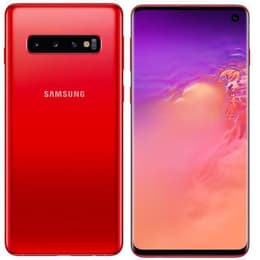
  • Rear Camera System: The Galaxy S10 features a versatile triple-camera setup on the rear, including a 12 MP wide-angle lens, a 12 MP telephoto lens with 2x optical zoom, and a 16 MP ultra-wide-angle lens. This configuration allows for a range of photographic perspectives. The iPhone SE 2020 has a single 12 MP wide-angle rear camera.
  • Photography Performance: In well-lit conditions, both phones are capable of producing detailed and colorful images. The Galaxy S10's ultra-wide lens offers creative flexibility, and its Live Focus mode allows for background blur effects. The iPhone SE 2020 benefits from its advanced image processing, enabling features like Portrait Mode despite having a single lens. However, the iPhone SE 2020 lacks a dedicated Night Mode, which can impact low-light performance compared to devices with such features.
  • Video Recording and Front Camera: Both devices support 4K video recording at up to 60 frames per second. The Galaxy S10 has a 10 MP front camera, while the iPhone SE 2020 features a 7 MP front camera.

Main camera

12 megapixels

12 megapixels

Front camera

10 megapixels

7 megapixels

Miscellaneous

Beyond core specifications, several practical elements contribute to the overall user experience, including connectivity, physical ports, and build quality.

  • Connectivity and Ports: The Galaxy S10 includes a 3.5mm headphone jack, a feature absent on the iPhone SE 2020. Both devices support 4G LTE, Wi-Fi, and Bluetooth. The Galaxy S10 uses a USB-C port for charging and data transfer, while the iPhone SE 2020 uses Apple's proprietary Lightning port.
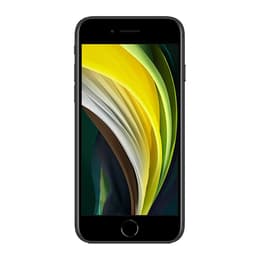
  • Biometric Security and Design: The Galaxy S10 features an in-display ultrasonic fingerprint sensor for biometric authentication. The iPhone SE 2020 utilizes a physical home button with Touch ID (capacitive fingerprint sensor). The Galaxy S10 has a more modern, nearly bezel-less design with a punch-hole front camera, while the iPhone SE 2020 retains the classic iPhone design with larger bezels above and below the screen.
  • Build Materials and Durability: Both phones feature a glass back and an aluminum frame, offering a premium feel. The Galaxy S10 is rated IP68 for water and dust resistance, providing protection against immersion in deeper water than the iPhone SE 2020's IP67 rating.

Weight

157 oz

148 oz

Screen size (in)

6.1

4.7

Network

4G

4G

SIM card

Physical SIM

Physical SIM + eSIM

Carrier compatibility

Unlocked

Unlocked

The Samsung Galaxy S10 and iPhone SE 2020 cater to different user priorities, reflecting their distinct design philosophies and operating systems. Users often praise the Galaxy S10 for its expansive and vibrant AMOLED display, versatile triple-camera system, and the inclusion of a headphone jack and expandable storage. Criticisms sometimes point to its battery life being merely adequate for heavy use and its lower repairability score.

Conversely, the iPhone SE 2020 is frequently lauded for its powerful processing capabilities, compact and familiar design with Touch ID, and Apple's long-term software support. Common concerns include its smaller LCD display with larger bezels, a single rear camera that lacks advanced features like Night Mode, and a battery that may struggle to last a full day for active users.

Users prioritizing a large, high-quality display, camera versatility with ultra-wide and telephoto options, and the flexibility of expandable storage and a headphone jack may find the Galaxy S10 better suited to their needs. Those who value a compact form factor, extended software longevity, robust processing power for demanding apps, and the iOS ecosystem will likely lean towards the iPhone SE 2020. Both devices remain viable options, and considering a quality-assured refurbished option can be an eco-friendly alternative for acquiring either model.


See all articles

Our recent comparisons