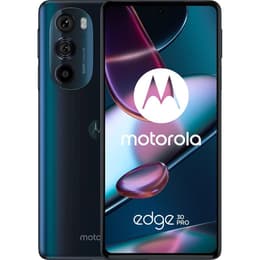

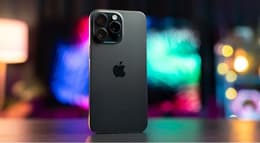
iPhone 12 Pro Max vs Motorola Edge 30 Pro

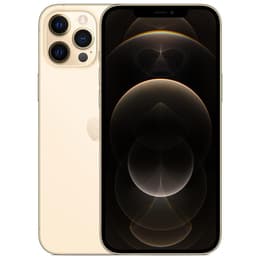
iPhone 12 Pro Max
iPhone 12 Pro Max
Starting at

Refurbished price:A$437.00

Versus A$1,249.00 new

See options
Motorola Edge 30 Pro
Starting at

Refurbished price:A$289.72

Versus A$2,709.00 new

See options

The iPhone 12 Pro Max, released in November 2020, and the Motorola Edge 30 Pro, launched in February 2022, represent distinct approaches to high-performance smartphones. While the iPhone operates on Apple's iOS ecosystem, the Motorola device runs on Android, offering different user experiences. Key differentiators include their display technologies, camera philosophies, and overall design.

Scores

Durability

The practical lifespan of a smartphone is influenced by its release timeline, software support, and physical durability. These two devices offer different expectations in these areas.

  • Release Timeline: The iPhone 12 Pro Max was released in late 2020, making it an older device compared to the Motorola Edge 30 Pro, which launched in early 2022. This difference in age impacts their remaining software support cycles.
  • Software Longevity: Apple typically provides iOS updates for 5-6 years, suggesting the iPhone 12 Pro Max will continue to receive major software updates for a few more years from its release. The Motorola Edge 30 Pro is guaranteed two major Android operating system upgrades, taking it up to Android 14, and three years of bi-monthly security updates.
  • Physical Durability: The iPhone 12 Pro Max features a Ceramic Shield front cover and a stainless steel frame, contributing to its robust build and IP68 water and dust resistance, allowing submersion up to 6 meters for 30 minutes. The Motorola Edge 30 Pro has a glass back and a plastic frame, with an IP52 rating for splash resistance.

Release year

2020

2022

Compatible with latest Update

Yes

Yes

Operating system

iOS

Android

Foldable

No

No

Performance

Both devices are designed for demanding tasks, but they achieve this through different hardware and software optimizations, leading to varied real-world performance characteristics.

  • Processing Power: The iPhone 12 Pro Max handles demanding applications and multitasking smoothly, offering consistent and responsive performance for gaming and everyday use. Users report it remains capable even years after its release. The Motorola Edge 30 Pro also delivers very fast and fluid performance, excelling in handling intensive apps and games. However, some users have noted that it can experience heating during prolonged heavy use, which might affect sustained performance.
  • Multitasking and Responsiveness: The iPhone 12 Pro Max, with its 6GB of RAM, provides a smooth experience when switching between applications. The Motorola Edge 30 Pro, available with 8GB or 12GB of RAM, generally keeps apps open in the background effectively, contributing to a fluid user interface.
  • Storage Options: Both phones offer multiple internal storage configurations, with the iPhone 12 Pro Max available in 128GB, 256GB, and 512GB options. The Motorola Edge 30 Pro also comes in 128GB, 256GB, and 512GB variants. Neither device supports expandable storage.

Memory (GB)

6 GB

8 GB

Screen quality

The visual experience on these smartphones is a significant factor, with each offering distinct display technologies and features that cater to different preferences.

  • Display Technology and Clarity: The iPhone 12 Pro Max features a 6.7-inch Super Retina XDR OLED display, known for its deep blacks, vibrant colors, and high pixel density of 458 pixels per inch (ppi), resulting in sharp and detailed visuals. The Motorola Edge 30 Pro also sports a 6.7-inch pOLED display with a resolution of 1080 x 2400 pixels, offering good clarity and color reproduction.
  • Brightness and HDR: Both devices support HDR content, with the iPhone 12 Pro Max reaching a peak brightness of 1200 nits for HDR content and 800 nits typical brightness, ensuring good visibility even in bright conditions. The Motorola Edge 30 Pro supports HDR10+ and has a typical brightness of around 500 nits.
  • Refresh Rate: A notable difference is the refresh rate. The iPhone 12 Pro Max has a standard 60Hz refresh rate, providing a consistent but not exceptionally fluid scrolling experience. The Motorola Edge 30 Pro offers a higher 144Hz refresh rate, which results in noticeably smoother scrolling and more fluid animations, particularly beneficial for gaming and general interface navigation.

Resolution

1284 x 2778

1080 x 2400

Screen type

Super Retina XDR OLED

OLED

Audiovisual

Photography and videography capabilities are often a deciding factor for many users, and both phones offer advanced camera systems with different strengths.

  • Rear Camera System: The iPhone 12 Pro Max features a versatile triple 12MP camera system, including Ultra Wide, Wide, and Telephoto lenses, with sensor-shift optical image stabilization on the Wide camera for improved low-light performance and stability. It offers 2.5x optical zoom in and 2x optical zoom out. The Motorola Edge 30 Pro comes with a 50MP main camera with optical image stabilization, a 50MP ultra-wide camera that also functions for macro shots, and a 2MP depth sensor. The high megapixel count on its main and ultra-wide sensors allows for detailed images.
  • Low-Light and Everyday Photography: The iPhone 12 Pro Max is praised for its strong low-light performance, aided by Night mode and the LiDAR Scanner for improved focus in dark conditions. Its Smart HDR 3 and Deep Fusion technologies enhance image quality in various lighting. User feedback for the Motorola Edge 30 Pro indicates that while it performs well in good lighting, its low-light camera performance can be inconsistent, with some users reporting grainy or noisy images.
  • Video Recording and Front Camera: Both phones offer high-quality video recording. The iPhone 12 Pro Max supports HDR video with Dolby Vision up to 60 frames per second in 4K. Its front camera is a 12MP TrueDepth sensor. The Motorola Edge 30 Pro can record 8K video at 24 frames per second and features a high-resolution 60MP front-facing camera capable of 4K video recording.

Main camera

12 megapixels

50 megapixels

Front camera

12 megapixels

60 megapixels

Miscellaneous

Beyond core performance, several practical features and design elements contribute to the overall user experience and daily usability of these devices.

  • Connectivity and Ports: Both smartphones support 5G connectivity, with the iPhone 12 Pro Max offering a broad range of 5G bands. The iPhone uses a Lightning port for charging and data transfer, while the Motorola Edge 30 Pro features a USB 3.1 Type-C port, which offers faster data speeds and broader compatibility. The Motorola device also supports Wi-Fi 6E, a newer standard than the iPhone's Wi-Fi 6.
  • Biometric Security: The iPhone 12 Pro Max relies solely on Face ID for biometric authentication. The Motorola Edge 30 Pro incorporates a side-mounted fingerprint sensor in addition to facial recognition.
  • Design and Handling: The iPhone 12 Pro Max has a premium feel with its stainless steel frame and flat edges, weighing 228 grams. The Motorola Edge 30 Pro, at 196 grams, is lighter and features a glass back with a plastic frame. Its dimensions are 163.1 mm x 75.95 mm x 8.8 mm, compared to the iPhone's 160.8 mm x 78.1 mm x 7.4 mm.

Weight

226 oz

196 oz

Screen size (in)

6,7

6,7

Network

5G

5G

SIM card

Physical SIM + eSIM

Dual Physical SIM

Carrier compatibility

Unlocked

Unlocked

The iPhone 12 Pro Max and Motorola Edge 30 Pro cater to users with differing priorities, reflecting their respective ecosystems and design philosophies. Users often praise the iPhone 12 Pro Max for its exceptional battery life, robust build quality, and consistent camera performance, particularly in video recording and low-light conditions. Its long-term software support is also a frequently cited advantage. However, some users express a desire for a higher refresh rate display and the inclusion of a fingerprint sensor.

The Motorola Edge 30 Pro is often lauded for its incredibly smooth 144Hz OLED display and its powerful processor, which delivers a highly responsive Android experience. Its fast charging capabilities are also a significant positive. Conversely, common criticisms revolve around its camera performance, especially in challenging lighting, and concerns about battery longevity under heavy use due to the powerful processor and high refresh rate. Its software update policy is also noted as being less extensive than some competitors.

Users prioritizing a highly fluid display, fast charging, and a pure Android experience may find the Motorola Edge 30 Pro well-suited to their needs. Those who value extended software support, a consistently strong camera system, and a premium, durable build might lean towards the iPhone 12 Pro Max. Both devices offer compelling features, and considering a quality-assured refurbished option for either model can provide an eco-friendly alternative for consumers.

See all articles

Our recent comparisons