
Compare models
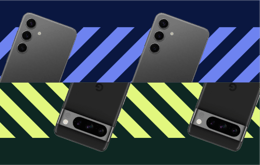
Galaxy A54 vs Google Pixel 9a
- 1-year warranty
- Free standard shipping
- Free 30-day returns
Differences at a glance
The Samsung Galaxy A54 (2023) and the Google Pixel 9a (2025) are mid-range Android smartphones designed to deliver reliable everyday performance, quality displays, and versatile capabilities. While both devices serve users seeking modern mobile features without unnecessary complexity, they differ significantly in their launch timelines, software support lifespans, and hardware approaches. The Samsung Galaxy A54 runs Samsung's custom interface over Android, whereas the Google Pixel 9a operates on clean software provided directly by Google. Understanding these foundational elements helps users identify which device aligns better with their practical requirements.
Available Models
Colour
Storage
Scores
Durability
Evaluating the lifespan and durability of these smartphones involves looking at their release timing, software update commitments, and construction quality to determine how long they remain functional and secure.
- Release timeline and update support: The Galaxy A54 arrived in early 2023 with a multi-year software support window, while the newer Pixel 9a launched in 2025 and benefits from an extended commitment of seven years of OS and security updates.
- Software longevity: Users prioritizing long-term software relevance will find that the Pixel 9a extends operating system support further into the future due to its later release year.
- Build and repair factors: Both models feature water and dust resistance ratings alongside solid outer construction, though professional repair accessibility varies slightly by regional service availability.
Release year
2023
2025
Operating system
Android
Android
Foldable
No
No
Performance
Daily operation, multitasking smoothness, and energy efficiency vary between the two devices based on their internal hardware configurations and battery capacities.
- Storage and memory configurations: The Galaxy A54 offers expandable storage via a memory card slot alongside standard configurations, whereas the Pixel 9a relies strictly on fixed internal storage capacities paired with higher baseline RAM for multitasking.
- Everyday system speed: Both devices handle standard web browsing, social media applications, and routine multitasking smoothly, though the newer processor in the Pixel 9a provides additional headroom for demanding applications.
- Battery behavior: Each phone includes a large capacity battery designed to easily sustain a full day of mixed usage, with power management systems that adapt well to routine tasks.
Screen quality
Display characteristics shape the visual experience for media consumption, reading, and outdoor visibility across both smartphone models.
- Display technology: Both phones utilize vibrant OLED screen panels that deliver deep contrast levels, rich colors, and wide viewing angles for everyday content consumption.
- Refresh rate and fluidity: Each device supports a smooth 120Hz maximum refresh rate, ensuring fluid scrolling through web pages and responsive touch interactions.
- Outdoor brightness: The Pixel 9a achieves higher peak outdoor brightness levels for improved legibility under direct sunlight, while the Galaxy A54 maintains clear visibility during typical daylight conditions.
Resolution
1080 x 2340
1080x2424
Screen type
Super AMOLED
P-OLED
Audiovisual
Photography and media recording capabilities differ in sensor resolution, lens selection, and automated image processing approaches between the two manufacturers.
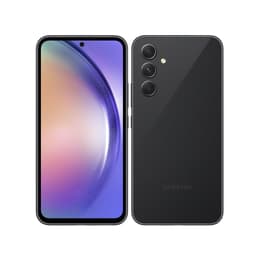
- Camera hardware setup: The Galaxy A54 features a triple-lens rear array including a macro sensor, whereas the Pixel 9a uses a streamlined dual-lens system focusing on a primary wide lens and an ultra-wide sensor.
- Everyday and low-light imaging: Both models excel at capturing clear daylight photos, with computational processing helping preserve detail in challenging lighting conditions.
- Video and audio output: Each device records stable high-resolution video equipped with digital stabilization, paired with clear microphone pickup and balanced internal speakers for media playback.
Miscellaneous
Practical daily usability elements, physical dimensions, and connectivity standards determine how comfortably each smartphone integrates into a user's routine.
- Connectivity and ports: Both models support 5G networks, modern Wi-Fi standards, and Bluetooth, utilizing reversible USB-C ports for charging and data transfer without legacy headphone jacks.
- Physical handling: The Galaxy A54 is slightly heavier with a glass back panel, whereas the Pixel 9a adopts a lighter, streamlined profile that sits comfortably in one hand.
- Security sensors: Both devices incorporate reliable biometric authentication methods, including under-display fingerprint sensors and facial recognition capabilities for quick unlocking.
Weight
202 oz
186 oz
Screen size (in)
6.4
6.3
Network
5G
5G
SIM card
Physical SIM + eSIM
Physical SIM + eSIM
Carrier compatibility
Unlocked
Unlocked
What the community thinks
User feedback and community discussions highlight distinct preferences for each of these smartphones. Owners of the Galaxy A54 frequently praise its dependable battery endurance, expandable storage option via a card slot, and balanced daily performance. Conversely, Pixel 9a users often emphasize satisfaction with its clean software environment, superior camera consistency in tricky lighting, and extended update longevity. Choosing a quality-assured refurbished option through sustainable platforms like Back Market provides an eco-friendly alternative for acquiring either device while reducing electronic waste.
Users prioritizing expandable storage and media flexibility may prefer the Galaxy A54, while users prioritizing long-term software support and streamlined photography tools will lean toward the Pixel 9a. Both devices offer robust capabilities suited to different consumer preferences, ensuring that buyers can select the model that matches their specific daily usage patterns.