

Galaxy S23 vs Google Pixel 7 Pro

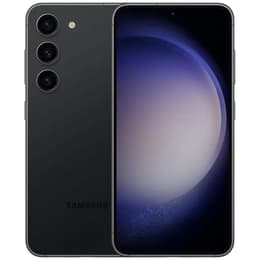
Galaxy S23
Galaxy S23
Starting at

Refurbished price:A$504.00

Versus A$1,458.00 new

See options
Google Pixel 7 Pro
Google Pixel 7 Pro
Starting at

Refurbished price:A$412.00

Versus A$1,379.00 new

See options

Ratings

The Samsung Galaxy S23, released in February 2023, and the Google Pixel 7 Pro, launched in October 2022, are both prominent Android smartphones. While both devices offer a premium experience, they cater to slightly different user priorities. The Galaxy S23 emphasizes a compact design and refined performance, while the Pixel 7 Pro focuses on advanced computational photography and a larger display. Both run on the Android operating system, but they offer distinct software experiences: Samsung's One UI versus Google's more streamlined, stock Android approach.

Scores

Durability

When considering the long-term usability of these devices, several factors contribute to their expected lifespan, including software support and physical resilience.

  • Release Timeline: The Google Pixel 7 Pro was released in October 2022, while the Samsung Galaxy S23 followed in February 2023. This gives the Galaxy S23 a slight advantage in terms of its newer launch date.
  • OS Support Duration: The Galaxy S23 launched with Android 13 and is expected to receive four major OS updates and five years of security updates. The Pixel 7 Pro also launched with Android 13 and was initially set for three years of OS upgrades, later increased to five years, with security updates extending to 2027. Samsung generally offers a longer period of major Android version updates.
  • Physical Durability: Both devices feature robust construction with Gorilla Glass Victus on the Pixel 7 Pro and the newer Gorilla Glass Victus 2 on the Galaxy S23, offering good scratch and drop resistance. Both also carry an IP68 rating for dust and water resistance, indicating similar levels of protection against environmental elements.

Performance

Both smartphones deliver robust performance for daily tasks and demanding applications, though their underlying architectures differ.

  • Processor Capabilities: The Galaxy S23 is equipped with a processor optimized specifically for Samsung devices, providing smooth performance for multitasking, gaming, and heavy applications. The Pixel 7 Pro features Google's custom-designed processor, which excels in AI-driven tasks and computational photography. While benchmarks suggest the Galaxy S23's processor offers higher raw performance, particularly for intensive gaming, the Pixel 7 Pro's processor is highly optimized for its software and AI features, resulting in a very responsive user experience.
  • RAM and Storage: The Galaxy S23 typically comes with 8GB of RAM, with storage options including 128GB, 256GB, and 512GB. The Pixel 7 Pro often includes 12GB of RAM, providing additional capacity for extensive multitasking and keeping more applications active in the background. It is worth noting that the 128GB variant of the Galaxy S23 uses an older storage format (UFS 3.1) compared to the faster UFS 4.0 found in higher storage options and the Pixel 7 Pro.
  • Battery Behavior: The Pixel 7 Pro has a larger 5000 mAh battery compared to the Galaxy S23's 3900 mAh battery. However, the Galaxy S23's processor is often noted for its energy efficiency, which can lead to comparable or even better real-world battery longevity for some users, especially with moderate usage. For heavy users, the Galaxy S23 may require more frequent charging.

Memory (GB)

8 GB

12 GB

Screen quality

The display is a primary interaction point, and both devices offer high-quality viewing experiences with some key differences.

  • Display Technology and Size: The Galaxy S23 features a 6.1-inch Dynamic AMOLED 2X display, known for its vibrant colors and deep blacks. The Pixel 7 Pro boasts a larger 6.7-inch LTPO AMOLED curved-edge display, providing more screen real estate.
  • Resolution and Clarity: The Galaxy S23 offers a 2340 x 1080 pixel resolution, resulting in a sharp image on its smaller screen. The Pixel 7 Pro has a higher 3120 x 1440 pixel resolution, which, combined with its larger size, maintains excellent clarity.
  • Brightness and Refresh Rate: Both phones feature adaptive refresh rates up to 120Hz for smooth scrolling and responsiveness. The Galaxy S23 can reach a peak brightness of 1750 nits, while the Pixel 7 Pro reaches up to 1500 nits. Both are suitable for outdoor visibility, but the S23 offers a slight edge in extremely bright conditions.

Audiovisual

Both smartphones offer advanced camera systems, but they approach photography with different philosophies and strengths.

  • Camera System Capabilities: The Galaxy S23 features a versatile triple camera setup with a 50MP main sensor, a 12MP ultrawide, and a 10MP telephoto lens offering 3x optical zoom. The Pixel 7 Pro also has a 50MP main sensor and a 12MP ultrawide, but its telephoto lens is a 48MP sensor with 5x optical zoom, allowing for greater reach without digital assistance.
  • Photography Performance: The Pixel 7 Pro is widely recognized for its computational photography, often producing natural-looking images with excellent detail and dynamic range, particularly in challenging lighting conditions. The Galaxy S23 delivers consistently good results across various scenarios, with users often noting its vibrant color reproduction. For zoom photography, the Pixel 7 Pro's 5x optical zoom provides a strong advantage, while the S23's 3x optical zoom is also capable.
  • Video Recording Quality: Both devices are capable of high-quality video recording. The Galaxy S23 can record up to 8K resolution, while the Pixel 7 Pro maxes out at 4K. Both offer good stabilization, but some users report the S23 Ultra (a larger variant of the S23) has slightly superior audio capture in noisier environments.

Miscellaneous

Beyond core performance and display, several other features contribute to the overall user experience.

  • Connectivity Options: Both devices support 5G networks and Wi-Fi 6E for fast wireless data transfer. The Galaxy S23 features Bluetooth 5.3, while the Pixel 7 Pro uses Bluetooth 5.2, a minor difference in everyday use.
  • Ports and Biometrics: Both smartphones utilize a USB-C port for charging and data transfer and lack a traditional 3.5mm headphone jack. For security, the Galaxy S23 employs an ultrasonic in-display fingerprint sensor, while the Pixel 7 Pro uses an optical in-display fingerprint sensor. Both also offer face recognition for unlocking.
  • Dimensions and Handling: The Galaxy S23 is a more compact device, weighing 168g with a 6.1-inch display. The Pixel 7 Pro is larger and heavier at 212g, featuring a 6.7-inch display. This difference impacts one-handed usability and pocketability, with the S23 being more manageable for users preferring a smaller phone.

Screen size (in)

6.1

67

SIM card

Physical SIM + eSIM

Physical SIM + eSIM

Carrier compatibility

Unlocked

Unlocked

User feedback often highlights the Pixel 7 Pro's exceptional camera capabilities, particularly its computational photography, and its clean, streamlined Android experience. Users also appreciate its larger display for media consumption. Some common criticisms include its raw performance not matching the latest chipsets for intense gaming, and some users have reported issues with the optical fingerprint reader.

The Galaxy S23 receives praise for its compact design, consistent and powerful performance, and vibrant display. Its battery life, while improved over its predecessor, can be a point of concern for very heavy users. Samsung's One UI offers extensive customization options, which is a positive for many users, though some prefer the simplicity of stock Android.

Users prioritizing a top-tier camera experience, a large high-resolution screen, and a clean Android interface with Google's AI features may find the Google Pixel 7 Pro well-suited to their needs. Conversely, users who value a compact form factor, consistent high performance for demanding applications, and a highly customizable software experience may prefer the Samsung Galaxy S23. Both devices are excellent choices, and considering a quality-assured refurbished option can be a sustainable way to acquire either of these capable smartphones.


See all articles

Our recent comparisons