
Galaxy A51 vs Galaxy A73 5G

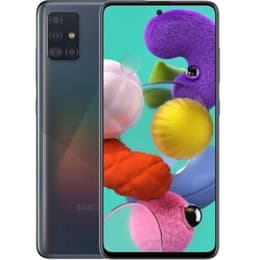
Galaxy A51
Galaxy A51
Starting at

Refurbished price:A$196.16

Versus A$592.00 new

See options
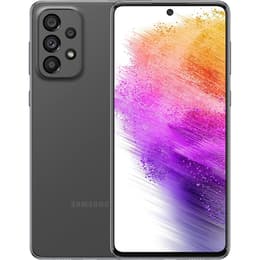
Galaxy A73 5G
Galaxy A73 5G
See options

Ratings

The Samsung Galaxy A51, released in late 2019, and the Samsung Galaxy A73 5G, launched in early 2022, are both mid-range Android smartphones from Samsung's popular A series. While the A51 offered a strong feature set for its time, the A73 5G represents a significant generational leap, bringing enhanced performance, a more advanced camera system, and 5G connectivity. Both devices run on Samsung's One UI over Android, providing a consistent user experience, but they cater to slightly different user expectations due to their release timelines and core capabilities.

Scores

Durability

The practical lifespan of a smartphone is heavily influenced by its initial release date and the manufacturer's software support policy. The Galaxy A51, being an older model, has reached the end of its major software update cycle, while the Galaxy A73 5G still has several years of support remaining.

  • Software Longevity: The Galaxy A51, launched with Android 10, received three major Android updates, concluding its OS support around early 2024 for the 4G variant and May 2024 for the 5G variant. In contrast, the Galaxy A73 5G, released with Android 12, is promised four major Android updates and five years of security updates, with its last major OS update expected to be Android 16 (One UI 8) and security updates continuing until April 2027.
  • Physical Durability: The Galaxy A51 features Gorilla Glass 3 on its display and a plastic build, which some users found to be less robust, with reports of it being prone to bending under significant pressure. The Galaxy A73 5G upgrades to Gorilla Glass 5 for screen protection and also uses a plastic back and frame, but it includes an IP67 rating for dust and water resistance, offering better protection against environmental elements.
  • Repairability: Both devices generally score around 6.5 out of 10 for repairability. Key components like the screen and battery are replaceable, but the use of adhesive for the back cover and battery can make repairs challenging for average users. The Galaxy A51 also had instances where software updates introduced component pairing, potentially affecting the functionality of third-party replacement parts like the fingerprint sensor.

Release year

2019

2022

Compatible with latest Update

No

Yes

Operating system

Android

Android

Foldable

No

No

Performance

Performance differences between these two models are notable, reflecting the advancements in mobile processor technology over their respective release periods. The Galaxy A73 5G offers a more responsive and capable experience for demanding tasks.

  • Everyday Responsiveness: The Galaxy A51, powered by an Exynos 9611 processor in its 4G variant, was noted by some users to exhibit occasional sluggishness, particularly with multitasking and app loading. The Galaxy A73 5G, featuring a Snapdragon 778G 5G processor, provides a smoother experience for general use and handles demanding applications and games effectively, maintaining fluidity even with its high refresh rate display.
  • Multitasking and Storage: Both devices offer various RAM configurations, with the A51 available in 4GB, 6GB, or 8GB, and the A73 5G in 6GB or 8GB. The A73 5G's more efficient processor and higher potential RAM configurations contribute to better handling of multiple applications simultaneously. Both support expandable storage via microSD, up to 512GB for the A51 4G and up to 1TB for the A73 5G.
  • Battery Behavior: The Galaxy A51 has a 4000 mAh battery, with user experiences varying from lasting a full day to experiencing faster drain for heavy users. The Galaxy A73 5G comes with a larger 5000 mAh battery, generally providing good endurance for extensive daily use, though some users have reported faster drain, potentially linked to software or 5G network usage.

Memory (GB)

6 GB

6 GB

Screen quality

Both smartphones feature Samsung's Super AMOLED display technology, known for its vibrant colors and deep blacks, but the Galaxy A73 5G introduces significant enhancements in smoothness and outdoor visibility.

  • Display Technology and Clarity: Both the Galaxy A51 and Galaxy A73 5G utilize Super AMOLED panels with a Full HD+ resolution (1080x2400 pixels), delivering clear and vibrant visuals. The A73 5G features a Super AMOLED Plus display, which can offer slightly improved brightness and thinner construction.
  • Refresh Rate and Smoothness: A key differentiator is the refresh rate. The Galaxy A51 has a standard 60Hz refresh rate, providing a smooth but conventional viewing experience. The Galaxy A73 5G significantly upgrades this to a 120Hz refresh rate, resulting in noticeably smoother scrolling, animations, and a more fluid overall user interface, which is particularly beneficial for gaming and fast-paced content.
  • Screen Size and Protection: The Galaxy A51 has a 6.5-inch display protected by Gorilla Glass 3. The Galaxy A73 5G offers a slightly larger 6.7-inch display with the more durable Gorilla Glass 5, providing better resistance against scratches and minor drops.

Resolution

1080 x 2400

1080 x 2400

Screen type

Super AMOLED

Super AMOLED Plus

Audiovisual

The camera systems on both devices are capable for their respective generations, but the Galaxy A73 5G offers a more advanced setup, particularly in main sensor resolution and stabilization.

  • Rear Camera System: The Galaxy A51 features a quad-camera setup with a 48MP main sensor, 12MP ultrawide, 5MP macro, and 5MP depth sensor. The Galaxy A73 5G elevates this with a 108MP main sensor that includes Optical Image Stabilization (OIS), alongside a 12MP ultrawide, 5MP macro, and 5MP depth sensor. The higher resolution and OIS on the A73 5G's main camera contribute to more detailed and stable photos, especially in challenging conditions.
  • Photography Performance: In daylight, both phones produce good images, though Samsung's characteristic oversaturation can be present. The A73 5G's larger main sensor and OIS generally lead to better low-light performance and sharper images with less blur. Both devices offer a versatile range of lenses for different shooting scenarios.
  • Video and Front Camera: Both the Galaxy A51 and A73 5G are capable of recording 4K video at 30 frames per second. For selfies, both phones are equipped with a 32MP front-facing camera, delivering detailed self-portraits. The A73 5G's OIS can also benefit video stability.

Main camera

48 megapixels

108 megapixels

Front camera

32 megapixels

32 megapixels

Miscellaneous

Beyond core specifications, several practical elements differentiate the user experience and connectivity options between these two Samsung smartphones.

  • Connectivity and Ports: The Galaxy A51 supports 4G LTE networks, while the Galaxy A73 5G offers next-generation 5G connectivity, enabling faster download and upload speeds in supported areas. The A51 includes a 3.5mm headphone jack, which is absent on the A73 5G, relying solely on its USB-C port for wired audio or charging. Both support Wi-Fi and Bluetooth for wireless connections.
  • Biometric Security: Both devices feature in-display fingerprint sensors for secure unlocking. However, some users of the Galaxy A51 reported inconsistencies with its fingerprint sensor's reliability.
  • Design and Handling: The Galaxy A51 weighs 172g (4G variant) and measures 7.9mm thick, while the Galaxy A73 5G is slightly heavier at 181g and thinner at 7.6mm. The A73 5G's slim profile contributes to a comfortable in-hand feel, despite its larger screen size. Both phones feature plastic builds, with the A73 5G offering an IP67 rating for dust and water resistance, a notable advantage for durability.

Weight

172 oz

181 oz

Screen size (in)

6.5

6.7

Network

4G

5G

SIM card

Physical SIM

Dual Physical SIM

Carrier compatibility

Unlocked

Unlocked

The Samsung Galaxy A51 and Galaxy A73 5G cater to different user needs, largely due to the technological advancements made between their release years. The Galaxy A51 was praised for its vibrant Super AMOLED display, capable cameras for its time, and a design that felt good in hand. However, common criticisms included underwhelming performance for demanding tasks, occasional software glitches like Bluetooth issues and fingerprint sensor inconsistencies, and a lack of official water resistance.

The Galaxy A73 5G, on the other hand, is generally lauded for its smooth 120Hz Super AMOLED Plus display, significantly improved performance thanks to its more powerful processor, a high-resolution 108MP main camera with OIS, and the inclusion of 5G connectivity and IP67 water resistance. User feedback indicates a generally positive experience, though some have noted occasional lag during intense multitasking, potential signal issues in specific scenarios, and some reports of faster battery drain for certain usage patterns.

Users prioritizing a more modern experience with smoother performance, a higher refresh rate display, enhanced camera capabilities, and better ingress protection will find the Galaxy A73 5G to be the more suitable choice. Its longer software support also ensures greater future readiness. Conversely, for those who require a 3.5mm headphone jack or are seeking a device for lighter everyday use where cutting-edge performance is not a primary concern, the Galaxy A51 could still be a consideration, especially as a quality-assured refurbished option. Choosing between these two depends on whether the benefits of a newer, more powerful device outweigh the appeal of a more budget-friendly, yet still functional, older model.


See all articles

Our recent comparisons