Galaxy A51 vs iPhone 11

Galaxy A51
Galaxy A51
Starting at

Refurbished price:A$196.16

Versus A$592.00 new

See options
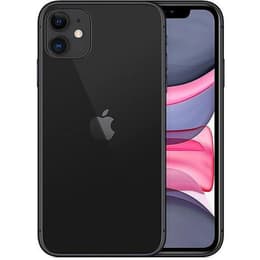
iPhone 11
iPhone 11
Starting at

Refurbished price:A$246.00

Versus A$769.00 new

See options

Ratings

The Samsung Galaxy A51, released in late 2019 and early 2020, and the Apple iPhone 11, launched in September 2019, represent two distinct approaches to smartphone design and functionality from a similar era. While both devices offer capable performance for everyday use, they differentiate themselves primarily through their operating systems, display technologies, and camera philosophies. The Galaxy A51 runs on Android, offering a customizable experience, whereas the iPhone 11 operates on Apple's iOS, known for its integrated ecosystem.

Scores

Durability

When considering the long-term usability of these devices, their release timelines and software support are key factors. Both phones are now several years old, impacting their future update cycles.

  • Software Longevity: The iPhone 11, launched with iOS 13, has received updates up to iOS 17 and is expected to support iOS 26, released in Fall 2025, with security updates potentially extending into late 2026 or beyond. Apple typically provides 5 to 7 years of major iOS updates. In contrast, the Galaxy A51, which debuted with Android 10, was upgradable to Android 13, but its software support officially ended in early 2024, meaning it no longer receives major Android versions or security patches.
  • Repairability: Both devices present a moderate challenge for repairs. The Galaxy A51 has a repairability score around 6 to 6.5 out of 10, with components like the battery and screen being replaceable, though requiring adhesive and specific tools. The iPhone 11 also holds an iFixit score of 6 out of 10, indicating that while screen and battery replacements are feasible, they also involve adhesive.
  • Physical Durability: The iPhone 11 features an IP68 rating for water and dust resistance, offering protection against submersion up to 2 meters for 30 minutes. The Galaxy A51 does not carry an official IP rating, suggesting less resistance to water and dust exposure. The iPhone 11 utilizes strengthened glass on the front and back with an aluminum frame, while the Galaxy A51 features a plastic back and frame with Gorilla Glass 3 on the front.

Release year

2019

2019

Compatible with latest Update

No

Yes

Operating system

Android

iOS

Foldable

No

No

Performance

The performance of these two smartphones varies significantly due to their underlying hardware and software optimizations, influencing how smoothly they handle daily tasks and demanding applications.

  • Processing Power: The iPhone 11 is equipped with a high-performance processor that delivers smooth and responsive operation, even with demanding applications and multitasking. This allows for fluid navigation and efficient handling of graphics-intensive tasks. The Galaxy A51 features a mid-range processor that capably manages everyday applications and general usage. However, users might observe slower performance or occasional stutters when running more intensive applications or engaging in heavy multitasking.
  • Storage and Memory: Both devices offer various internal storage configurations, typically ranging from 64GB to 256GB. A notable difference is that the Galaxy A51 includes a microSD card slot, allowing users to expand storage up to 512GB, providing flexibility for those who require extensive storage for media and files. The iPhone 11 does not offer expandable storage. In terms of memory, the Galaxy A51 comes with 4GB, 6GB, or 8GB of RAM, while the iPhone 11 features 4GB of RAM. Apple's iOS is optimized to operate efficiently with its available memory, often resulting in comparable multitasking capabilities despite numerical differences in RAM.
  • Battery Performance: The Galaxy A51 houses a 4000 mAh battery, generally providing a full day of use for many users, though some reports indicate average battery life under heavy usage. The iPhone 11 is powered by a 3110 mAh battery, which is often sufficient to last through a full day for typical users, benefiting from iOS's power management.

Memory (GB)

6 GB

4 GB

Screen quality

The visual experience on these devices is a key differentiator, primarily due to their distinct display technologies and specifications.

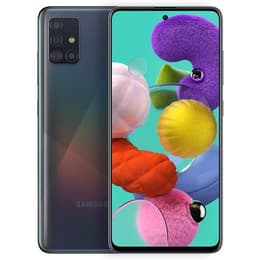
  • Display Technology and Clarity: The Galaxy A51 features a 6.5-inch Super AMOLED display with a resolution of 1080 x 2400 pixels, resulting in a pixel density of approximately 405 PPI. This Super AMOLED technology provides deep blacks, vibrant colors, and high contrast. The iPhone 11 utilizes a 6.1-inch Liquid Retina IPS LCD display with a resolution of 1792 x 828 pixels, offering a pixel density of 326 PPI. While the LCD panel delivers accurate color reproduction, it does not achieve the same level of contrast or true blacks as an AMOLED screen.
  • Brightness and Refresh Rate: Both devices offer sufficient brightness for outdoor visibility. The Galaxy A51 typically reaches around 600 nits of peak brightness, with some measurements showing up to 565 nits. The iPhone 11 has a typical maximum brightness of 625 nits. Both smartphones feature a standard 60Hz refresh rate, providing a smooth but not exceptionally fluid scrolling experience compared to devices with higher refresh rates.
  • Viewing Experience: The larger screen size of the Galaxy A51 offers a more expansive viewing area for media consumption and productivity. The Super AMOLED panel enhances the visual experience with its rich colors and deep contrast, making it suitable for watching videos and browsing photos. The iPhone 11's LCD, while having a lower resolution and pixel density, is known for its color accuracy and consistent viewing angles.

Resolution

1080 x 2400

828 x 1792

Screen type

Super AMOLED

Liquid Retina IPS LCD

Audiovisual

The camera systems on the Galaxy A51 and iPhone 11 offer different strengths, catering to varied photography and videography preferences.

  • Rear Camera Setup: The Galaxy A51 features a versatile quad-camera system on the rear, comprising a 48MP main sensor, a 12MP ultrawide lens, a 5MP macro lens, and a 5MP depth sensor. This setup provides a range of photographic options, from detailed wide shots to close-ups and portraits with adjustable background blur. The iPhone 11 comes with a dual 12MP camera system, featuring a wide lens and an ultrawide lens. While it has fewer lenses, its software processing plays a significant role in image quality.
  • Photography Performance: In well-lit conditions, both phones are capable of capturing clear and detailed images. The iPhone 11 excels in low-light environments due to its dedicated Night Mode and Deep Fusion technology, which enhance detail and reduce noise. Its camera system is also praised for consistent color science and natural-looking photos. The Galaxy A51 performs well in good lighting, offering good detail and color, but its low-light performance is not as strong as the iPhone 11.
  • Video Recording and Front Camera: Both devices support video recording up to 4K resolution at 30 or 60 frames per second. The iPhone 11 offers advanced video features such as cinematic video stabilization and audio zoom, contributing to higher quality video capture. For selfies, the Galaxy A51 is equipped with a 32MP front camera, while the iPhone 11 features a 12MP front camera, both capable of capturing detailed self-portraits and supporting video calls. The iPhone 11 also includes stereo speakers, providing a more immersive audio experience for media consumption compared to the Galaxy A51's single bottom-firing speaker.

Main camera

48 megapixels

12 megapixels

Front camera

32 megapixels

12 megapixels

Miscellaneous

Beyond core performance and camera capabilities, several practical elements contribute to the overall user experience of these two smartphones.

  • Connectivity and Ports: Both the Galaxy A51 and iPhone 11 support 4G LTE for cellular data and Bluetooth 5.0 for wireless accessories. For Wi-Fi, the iPhone 11 supports the newer Wi-Fi 6 standard, offering potentially faster and more efficient wireless connections compared to the Galaxy A51's Wi-Fi 5 (802.11ac). Neither device supports 5G connectivity. In terms of physical ports, the Galaxy A51 features a USB-C port for charging and data transfer, along with a traditional 3.5mm headphone jack. The iPhone 11 uses Apple's proprietary Lightning port and omits the headphone jack, requiring adapters for wired audio.
  • Biometric Security: The Galaxy A51 incorporates an in-display fingerprint sensor for secure unlocking and authentication. The iPhone 11 relies on Face ID, Apple's facial recognition system, for biometric security. Both methods offer convenient and secure access to the device.
  • Design and Build: The Galaxy A51 has dimensions of 158.5 x 73.6 x 7.9 mm and weighs 172g, featuring a plastic back and frame. The iPhone 11 measures 150.9 x 75.7 x 8.3 mm and weighs 194g, with a glass back and an aluminum frame. The iPhone 11's slightly heavier and thicker build, combined with its glass construction, contributes to a different in-hand feel compared to the lighter, plastic-bodied Galaxy A51.

Weight

172 oz

194 oz

Screen size (in)

6.5

6.1

Network

4G

4G

SIM card

Physical SIM

Physical SIM + eSIM

Carrier compatibility

Unlocked

Unlocked

The Samsung Galaxy A51 and iPhone 11, while both released around the same time, cater to different user preferences through their distinct ecosystems and hardware focuses. User sentiment often praises the Galaxy A51 for its vibrant Super AMOLED display, offering deep blacks and rich colors, along with the flexibility of expandable storage and the inclusion of a headphone jack. Some users, however, have noted that its performance can sometimes feel less fluid under demanding tasks, and its low-light camera capabilities are not as robust as some competitors.

The iPhone 11 is frequently lauded for its strong and consistent performance, capable of handling a wide range of applications smoothly, and its impressive camera system, particularly its low-light performance and video recording features. Its extended software support also contributes to its appeal for users seeking longevity. Criticisms often point to its LCD display, which, while color-accurate, does not offer the same contrast as OLED panels, and the absence of expandable storage or a traditional headphone jack.

Users prioritizing a vibrant, high-resolution AMOLED display, the convenience of expandable storage, and a 3.5mm headphone jack may find the Galaxy A51 to be a suitable choice. Conversely, individuals who value strong and consistent performance, superior camera capabilities across various lighting conditions, and a longer period of software updates will likely lean towards the iPhone 11. Both devices, available as quality-assured refurbished options, offer an eco-friendly alternative for consumers looking to make informed and sustainable choices.

See all articles

Our recent comparisons