

Galaxy A35 vs Google Pixel 8a

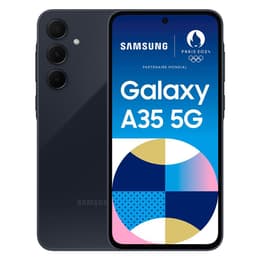
Galaxy A35
Galaxy A35
See options
Google Pixel 8a
Google Pixel 8a
Starting at

Refurbished price:A$464.00

Versus A$938.69 new

See options

The Samsung Galaxy A35 and the Google Pixel 8A are both Android smartphones released in 2024, targeting users seeking a balanced experience without the premium cost of flagship devices. While both offer modern features and robust software support, they differentiate themselves primarily through their approach to performance, camera processing, and overall design philosophy. The Galaxy A35, launched in March 2024, runs on Samsung's One UI based on Android, while the Google Pixel 8A, released in May 2024, features a clean Android experience with Google's unique software enhancements.

Scores

Durability

When considering the long-term usability of these devices, their respective software support policies are a key factor.

  • Software Longevity: The Google Pixel 8A stands out with a commitment to seven years of OS and security updates, extending its relevance until at least May 2031. This is a significant advantage for users who prefer to keep their devices for an extended period. The Samsung Galaxy A35, while still offering substantial support, is promised four major OS updates and five years of security updates, which means it will receive updates until Android 18 and security patches until 2029.
  • Build and Durability: Both devices feature an IP67 rating for dust and water resistance, providing protection against everyday elements. The Galaxy A35 incorporates Gorilla Glass Victus+ for display protection, offering a more robust screen compared to the Pixel 8A's Gorilla Glass 3.
  • Practical Lifespan: Given the extended software support, the Pixel 8A is designed to remain current and secure for a longer duration, potentially making it a more future-proof option for users prioritizing software longevity. The Galaxy A35 also offers a respectable lifespan, aligning with typical upgrade cycles for many users.

Performance

The performance of a smartphone is crucial for daily tasks, and these two devices offer distinct experiences.

  • Processing Capabilities: The Google Pixel 8A is equipped with a processor that handles demanding applications and multitasking smoothly, often matching the responsiveness of higher-end devices. This results in a fluid user experience, even with graphics-intensive games or multiple apps running simultaneously. The Galaxy A35, while capable of handling everyday tasks adequately, may exhibit occasional sluggishness or stuttering, particularly when launching heavier applications or navigating the interface.
  • Multitasking and Storage: The Pixel 8A typically comes with 8GB of RAM, contributing to its smooth multitasking performance. The Galaxy A35 is available with 6GB or 8GB of RAM. Both devices offer 128GB or 256GB internal storage options. The Galaxy A35 also provides the flexibility of expandable storage via a microSD card, a feature not present on the Pixel 8A.
  • Battery Behavior: The Galaxy A35 features a larger 5,000mAh battery, while the Pixel 8A has a 4,492mAh battery. In real-world usage, the Galaxy A35 generally offers better battery endurance, often lasting longer on a single charge. The Pixel 8A can also last a full day with moderate use, but heavy users might find themselves needing to recharge sooner.

Memory (GB)

6 GB

8 GB

Screen quality

Both smartphones provide vibrant displays, though with differences in size and protection that impact the viewing experience.

  • Display Technology and Size: The Samsung Galaxy A35 features a larger 6.6-inch Super AMOLED display, offering an expansive viewing area. The Google Pixel 8A has a more compact 6.1-inch OLED display. Both panels deliver deep blacks and vibrant colors, characteristic of OLED technology.
  • Resolution and Refresh Rate: Both devices offer Full HD+ resolutions (2340 x 1080 for A35, 2400 x 1080 for Pixel 8A) for clear and sharp visuals. They also support a 120Hz refresh rate, contributing to smoother scrolling and a more fluid visual experience.
  • Brightness and Protection: The Pixel 8A's display can reach a peak brightness of up to 2,000 nits, making it highly visible in bright outdoor conditions. The Galaxy A35 also offers good brightness, though slightly less than the Pixel 8A. For protection, the Galaxy A35 uses Gorilla Glass Victus+, which is more resistant to scratches and drops than the Pixel 8A's Gorilla Glass 3.

Audiovisual

The camera systems on these phones approach photography with different strengths, influenced by hardware and software processing.

  • Rear Camera Setup: The Google Pixel 8A features a dual-camera system with a 64-megapixel main sensor and a 13-megapixel ultrawide lens. The Samsung Galaxy A35 has a triple-camera setup, including a 50-megapixel main sensor, an 8-megapixel ultrawide lens, and a 5-megapixel macro lens.
  • Photography Performance: The Pixel 8A generally excels in overall image quality, dynamic range, and low-light performance, largely due to Google's advanced computational photography. Its images often appear more detailed and well-balanced. The Galaxy A35 captures good photos in well-lit conditions with vibrant colors, but its ultrawide lens may struggle with detail, and low-light performance is less consistent than the Pixel 8A. The A35's dedicated macro lens offers close-up photography capabilities that the Pixel 8A lacks.
  • Video and Audio: Both phones are capable of recording 4K video at 30 frames per second. User experiences suggest the Pixel 8A often provides better video quality. For audio, both devices offer a good media consumption experience, with the Galaxy A35 featuring impressive audio quality, especially with Dolby Atmos enabled.

Miscellaneous

Beyond core features, several practical elements contribute to the overall user experience of these smartphones.

  • Connectivity and Ports: Both devices support 5G connectivity and modern Wi-Fi standards. The Pixel 8A features a faster USB 3.2 Type-C port, while the Galaxy A35 uses a USB 2.0 Type-C port. Neither phone includes a traditional headphone jack.
  • Biometric Security: Both the Galaxy A35 and Pixel 8A incorporate in-display fingerprint sensors for secure unlocking. The Pixel 8A also offers facial recognition. User feedback for the Pixel 8A's in-display fingerprint sensor has been mixed, with some finding it less reliable.
  • Design and Handling: The Galaxy A35 has a plastic frame with a glass back, giving it a more premium feel, and weighs 209 grams. The Pixel 8A features an aluminum frame with a plastic back and is lighter at 188 grams. The Galaxy A35 is noticeably taller and wider due to its larger screen, which might appeal to users preferring a larger device, while the Pixel 8A offers a more compact form factor.
  • Charging: The Galaxy A35 supports 25W wired charging, while the Pixel 8A supports 18W wired charging. The Pixel 8A also includes 7.5W wireless charging, a feature absent from the Galaxy A35.

Screen size (in)

6.6

6.1

Network

5G

5G

SIM card

Physical SIM + eSIM

Physical SIM + eSIM

Carrier compatibility

Unlocked

Unlocked

User feedback for the Google Pixel 8A frequently praises its camera capabilities, often highlighting its ability to produce high-quality images with impressive dynamic range, even in challenging conditions. Its smooth performance and long-term software support are also commonly cited as strong advantages. However, some users have noted concerns regarding its battery life, particularly with heavy usage, and the reliability of its in-display fingerprint sensor. Occasional reports of the device warming up during intensive tasks have also surfaced.

The Samsung Galaxy A35 receives commendation for its vibrant and expansive Super AMOLED display, robust build quality with a glass back, and generally reliable battery life. Users appreciate its design and the inclusion of expandable storage. Conversely, criticisms often point to its performance, with some users experiencing occasional lag or stuttering, especially when compared to more powerful devices. Its camera performance, while good in daylight, is sometimes considered less consistent in low-light scenarios than competitors.

Users prioritizing a superior camera experience, extended software longevity, and a consistently responsive operating system will find the Google Pixel 8A well-suited to their needs. Its compact size may also appeal to those who prefer a smaller device. Conversely, users who value a larger display, expandable storage, and a slightly longer battery life, along with a more premium-feeling build, may lean towards the Samsung Galaxy A35. Both devices offer compelling features, and choosing between them often comes down to these specific priorities. For those considering a more sustainable choice, both models are available as quality-assured refurbished options.

See all articles

Our recent comparisons