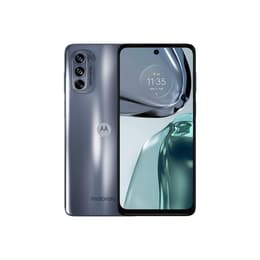
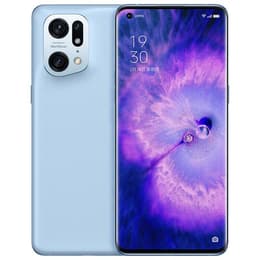

Motorola Moto G62 5G vs Oppo Find X5 Pro

Motorola Moto G62 5G
Starting at

Refurbished price:A$229.00

Versus A$890.00 new

See options
Oppo Find X5 Pro
Oppo Find X5 Pro
Starting at

Refurbished price:A$639.00

Versus A$1,769.00 new

See options

The Motorola Moto G62 5G (released in June 2022) and the Oppo Find X5 Pro (launched in March 2022) are both Android smartphones, yet they cater to different user expectations. The Moto G62 5G focuses on delivering essential smartphone features with 5G connectivity, while the Oppo Find X5 Pro positions itself as a premium device with advanced performance, display, and camera capabilities. Both devices run on the Android operating system, offering a familiar software experience with their respective custom interfaces.

Scores

Durability

The longevity of a smartphone is influenced by its build quality, software support, and the durability of its components. These two devices present different approaches to these aspects.

  • Release Timeline and Software Support: Both devices were released in 2022. The Motorola Moto G62 5G launched with Android 12 and is expected to receive at least one major OS update to Android 13, along with security updates for a reasonable period. The Oppo Find X5 Pro also launched with Android 12 (ColorOS 12.1) and is upgradable to Android 14 (ColorOS 14), with Oppo promising timely software updates, suggesting a potentially longer period of active software support.
  • Build Materials and Durability: The Moto G62 5G features a plastic back and frame, offering a splash-resistant design with an IP52 rating. In contrast, the Oppo Find X5 Pro boasts a more premium construction with a ceramic back, aluminum frame, and Corning Gorilla Glass Victus on the front, providing IP68 dust and water resistance. This higher rating indicates better protection against immersion in water and dust ingress, contributing to its physical longevity.
  • Expected Practical Lifespan: Users can expect the Moto G62 5G to serve well for everyday tasks for several years, especially with its 5G capability. The Oppo Find X5 Pro, with its more robust build, higher performance, and potentially longer software support, is designed for a more extended high-performance lifespan, suitable for users who keep their devices for longer periods.

Release year

2022

2022

Compatible with latest Update

No

Yes

Operating system

Android

Android

Foldable

No

No

Performance

Performance is a key differentiator, impacting how smoothly applications run, how quickly tasks are completed, and the overall responsiveness of the device.

  • Processor Capabilities and Responsiveness: The Motorola Moto G62 5G is equipped with a processor that handles daily tasks and general navigation adequately. While it supports 5G connectivity, it is not designed for intensive gaming or very demanding applications, with some users noting it can lag with heavy multitasking. The Oppo Find X5 Pro, on the other hand, features a significantly more powerful processor, enabling it to manage demanding applications, graphic-intensive games, and extensive multitasking with ease and fluidity.
  • Storage and RAM: The Moto G62 5G offers storage options of 64GB or 128GB, paired with 4GB, 6GB, or 8GB of RAM, and includes expandable storage via a microSD card slot. The Oppo Find X5 Pro comes with larger internal storage options, typically 256GB or 512GB, and 8GB, 12GB, or 16GB of RAM, without expandable storage. The higher RAM in the Find X5 Pro contributes to smoother app switching and retention in memory.
  • Battery Behavior: Both devices house a 5000 mAh battery. The Moto G62 5G provides decent battery life, generally lasting a full day for most users. The Oppo Find X5 Pro also offers strong battery performance, often lasting a full day even with heavy use, and can extend into a second day for lighter users. The Find X5 Pro also features significantly faster wired (80W) and wireless (50W) charging, allowing for quick power top-ups.

Memory (GB)

4 GB

12 GB

Screen quality

The display is the primary interface for user interaction, and its quality significantly impacts the viewing experience for media, browsing, and daily use.

  • Display Technology and Resolution: The Motorola Moto G62 5G features a 6.5-inch IPS LCD display with a Full HD+ resolution (1080x2400 pixels). The Oppo Find X5 Pro sports a larger 6.7-inch LTPO2 AMOLED display with a Quad HD+ resolution (1440 x 3216 pixels). The AMOLED technology in the Find X5 Pro provides deeper blacks and more vibrant colors compared to the IPS LCD of the Moto G62 5G.
  • Refresh Rate and Brightness: Both phones offer a 120Hz refresh rate, contributing to smoother scrolling and more fluid animations. However, the Oppo Find X5 Pro's display is adaptive, scaling from 1Hz to 120Hz to optimize battery consumption, and offers a higher peak brightness of 1300 nits, making it more visible in bright outdoor conditions. The Moto G62 5G's display brightness is generally satisfactory for indoor use but may struggle more in direct sunlight.
  • Viewing Experience: The Oppo Find X5 Pro's higher resolution and AMOLED panel deliver a sharper, more immersive viewing experience with excellent contrast and color accuracy, suitable for high-quality media consumption. The Moto G62 5G provides a clear and smooth viewing experience for everyday tasks and casual media, but without the same level of detail or vibrancy.

Resolution

1080 x 2400

1440 x 3216

Screen type

IPS LCD

LTPO2 AMOLED

Audiovisual

Camera capabilities are a significant factor for many users, influencing the quality of photos and videos captured in various conditions.

  • Rear Camera Systems: The Motorola Moto G62 5G features a triple rear camera setup with a 50-megapixel main sensor, an 8-megapixel ultrawide, and a 2-megapixel macro lens. The Oppo Find X5 Pro also has a triple rear camera system, but with two 50-megapixel sensors (main with OIS and ultrawide with a 110-degree field of view) and a 13-megapixel telephoto lens offering 2x optical zoom. The Find X5 Pro benefits from a dedicated imaging NPU (MariSilicon X) and a collaboration with Hasselblad, enhancing image processing and color accuracy.
  • Photography Performance: The Moto G62 5G's main camera performs well in good lighting, but its low-light photography is considered average. The Oppo Find X5 Pro excels in both good and low-light conditions, producing detailed images with vibrant colors and good dynamic range, particularly with its main and ultrawide lenses. However, its 2x telephoto zoom is noted as a limitation compared to some rivals.
  • Video Recording and Front Camera: Both phones are capable of recording video, with the Oppo Find X5 Pro supporting 4K video capture at up to 60 frames per second, including enhanced 4K Night Video. The Moto G62 5G has a 16-megapixel front camera, while the Find X5 Pro features a higher-resolution 32-megapixel front camera, which can capture detailed selfies.

Main camera

50 megapixels

50 megapixels

Front camera

16 megapixels

32 megapixels

Miscellaneous

Beyond core features, several practical elements contribute to the overall user experience and device utility.

  • Connectivity and Ports: Both devices support 5G connectivity, Wi-Fi, Bluetooth, and NFC. The Moto G62 5G uses Wi-Fi 802.11 a/b/g/n/ac and Bluetooth 5.1, while the Oppo Find X5 Pro supports the newer Wi-Fi 6 (802.11ax) and Bluetooth 5.2, offering potentially faster and more stable wireless connections. The Moto G62 5G retains a 3.5mm headphone jack and a USB Type-C 2.0 port. The Oppo Find X5 Pro omits the headphone jack but features a faster USB Type-C 3.1 port.
  • Sensors and Biometrics: Both phones include essential sensors like an accelerometer, gyroscope, ambient light sensor, and proximity sensor. The Moto G62 5G has a side-mounted fingerprint sensor. The Oppo Find X5 Pro integrates an in-display fingerprint sensor, along with face recognition.
  • Physical Characteristics: The Moto G62 5G weighs 184 grams and measures 161.8 x 74 x 8.6 mm. The Oppo Find X5 Pro is slightly heavier at 218 grams and measures 163.7 x 73.9 x 8.5 mm. The ceramic back of the Find X5 Pro offers a distinct feel compared to the plastic build of the Moto G62 5G.

Weight

184 oz

218 oz

Screen size (in)

6,5

6.7

Network

5G

5G

SIM card

Dual Physical SIM

Physical SIM + eSIM

Carrier compatibility

Unlocked

Unlocked

Connector

USB-C

USB-C

The Motorola Moto G62 5G and the Oppo Find X5 Pro cater to distinct user needs, reflecting their different design philosophies and feature sets.

Users often praise the Moto G62 5G for its clean Android software experience, smooth 120Hz display for its category, decent battery life, and the inclusion of a 3.5mm headphone jack and expandable storage. Criticisms sometimes point to its average low-light camera performance and the processor's limitations for intensive tasks. It is generally seen as a reliable option for those seeking a functional 5G smartphone without needing top-tier specifications.

The Oppo Find X5 Pro receives acclaim for its premium ceramic design, vibrant and sharp AMOLED display with adaptive refresh rate, powerful performance for demanding applications and gaming, and exceptionally fast charging speeds. Its main and ultrawide cameras are highly regarded, especially for low-light performance, though its 2x telephoto zoom is a frequent point of criticism for users expecting more versatility. Some users also note the absence of a headphone jack and expandable storage.

Users prioritizing a smooth display for everyday browsing, a clean software experience, and practical features like a headphone jack and expandable storage may find the Motorola Moto G62 5G well-suited to their needs. Conversely, users who demand high performance for gaming and heavy multitasking, a visually stunning display, advanced main camera capabilities, and very fast charging will likely lean towards the Oppo Find X5 Pro. Both devices offer a pathway to owning a capable smartphone, and considering a quality-assured refurbished option can be a sustainable choice for either model, providing access to these features while extending the product's lifecycle.


See all articles

Our recent comparisons