Compare models

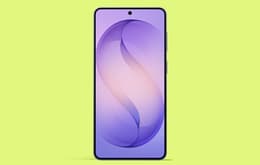
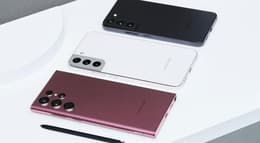
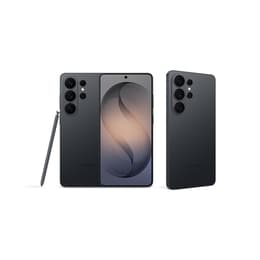
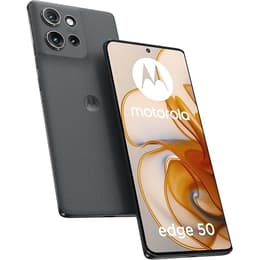
Galaxy S26 Ultra vs Motorola Edge 50

  • 1-year warranty
  • Free standard shipping
  • Free 30-day returns
Galaxy S26 Ultra
Starting at

Refurbished price:A$1,516.00

Versus A$2,199.00 new

See options
Motorola Edge 50
Starting at

Refurbished price:A$490.00

Versus A$832.00 new

See options

Differences at a glance

The Samsung Galaxy S26 Ultra (2026) and the Motorola Edge 50 (2024) are high-end smartphones designed to cater to distinct segments of mobile users. While the Galaxy S26 Ultra functions as a feature-dense flagship running Android 16, the Motorola Edge 50 offers a balanced mid-range experience running Android 14 with an emphasis on slim handling and curved visuals. Choosing between these devices depends on how users weigh long-term software support against everyday convenience and hardware focus.

Available Models

Colour

Storage (GB)

Scores

Durability

When examining hardware longevity and software support, the Galaxy S26 Ultra and Motorola Edge 50 diverge based on their release timelines and intended device class.

  • Software Support: The Galaxy S26 Ultra benefits from extended software update commitments spanning multiple years, whereas the Motorola Edge 50 follows a shorter support window typical of its release year.
  • Build Integrity: Both devices feature robust dust and water resistance ratings (IP68), though the Galaxy S26 Ultra incorporates advanced protective glass layers designed to withstand drops.
  • Lifespan Outlook: Users seeking an extended software lifecycle will find the Galaxy S26 Ultra well-suited for long-term ownership, while the Motorola Edge 50 serves as a reliable medium-term daily driver.

Release year

2026

2024

Operating system

Android

Android

Foldable

No

No

Performance

Underneath the surface, these two smartphones handle demanding tasks, multitasking, and power management quite differently based on their internal architecture.

  • Everyday Responsiveness: The Galaxy S26 Ultra handles heavy apps, complex multitasking, and high-end gaming smoothly thanks to its current-generation processor and generous RAM allocation, while the Motorola Edge 50 manages standard daily routines, browsing, and media streaming comfortably with mid-tier hardware.
  • Battery Behavior: Both devices pack substantial 5000 mAh batteries, but the Galaxy S26 Ultra utilizes efficient power scaling to sustain long usage sessions under heavy loads, whereas the Motorola Edge 50 relies on optimized software to get most users through a full day.
  • Storage Options: The Galaxy S26 Ultra starts at higher baseline storage capacities, while the Motorola Edge 50 provides sufficient onboard space for typical photo libraries and application suites.

Screen quality

Display characteristics represent a major focal point for both models, offering expansive viewing areas with distinct panel configurations.

  • Display Technology: The Galaxy S26 Ultra features a large AMOLED panel with high resolution and deep contrast, while the Motorola Edge 50 utilizes a curved P-OLED display that delivers vibrant colors and wide viewing angles.
  • Outdoor Visibility: High peak brightness levels on the Galaxy S26 Ultra ensure legible viewing under direct sunlight, and the Motorola Edge 50 performs adequately in bright outdoor settings.
  • Motion Smoothness: Both devices support high refresh rates up to 120Hz or higher, resulting in fluid scrolling through web pages, documents, and user interface menus.

Resolution

1440x3120

1220x2712

Audiovisual

Optics and media capabilities differ significantly, reflecting the specialized hardware choices made by each manufacturer.

  • Camera Systems: The Galaxy S26 Ultra employs a versatile multi-lens rear array featuring a high-resolution main sensor and dedicated zoom options, whereas the Motorola Edge 50 utilizes a triple-camera setup focused on everyday portraits and landscapes.
  • Low-Light Performance: Advanced image processing on the Galaxy S26 Ultra captures sharp details in dim environments, while the Motorola Edge 50 balances exposure effectively for casual night photography.
  • Media Output: Stereo speakers on both models provide clear audio delivery for hands-free calls, video playback, and casual gaming sessions.

Miscellaneous

Practical daily usability elements, physical dimensions, and connectivity standards shape how each phone feels in hand.

  • Physical Handling: The Galaxy S26 Ultra presents a larger, heavier footprint designed for maximum screen estate, whereas the Motorola Edge 50 offers a lighter, slimmer profile with curved edges that sit comfortably in one hand.
  • Connectivity: Both models include modern 5G connectivity, Wi-Fi standards, and Bluetooth capabilities for seamless accessory pairing.
  • Security Sensors: Quick biometric authentication is handled via responsive in-display fingerprint sensors and facial recognition features on both devices.

Weight

214 oz

180 oz

Screen size (in)

6.9

6.7

Network

5G

5G

SIM card

Physical SIM + eSIM

Physical SIM

Carrier compatibility

Unlocked

Unlocked

What the community thinks

User feedback from online communities highlights distinct preferences for each device. Owners of the Galaxy S26 Ultra frequently praise its expansive screen clarity, robust processing headroom, and versatile multi-lens camera setup. Some users, however, note that its larger physical dimensions can feel heavy during extended one-handed use. On the other hand, Motorola Edge 50 users appreciate its lightweight, comfortable ergonomics, distinctive eco-leather back textures, and smooth curved display, though heavy users occasionally point out that intensive tasks push its mid-range processor to its limits.

Users prioritizing maximum performance, expansive display workspace, and long-term software support may prefer the Galaxy S26 Ultra. Meanwhile, users prioritizing a lightweight build, comfortable daily ergonomics, and streamlined handling will find the Motorola Edge 50 well-suited to their needs. For those exploring sustainable choices, looking into a quality-assured refurbished option through platforms like Back Market provides an eco-friendly alternative to acquire either model. Ultimately, the right choice depends entirely on individual workflow requirements and physical handling preferences.