
Galaxy A35 vs Google Pixel 8

Galaxy A35
Galaxy A35
See options
Google Pixel 8
Google Pixel 8
Starting at

Refurbished price:A$465.00

Versus A$1,245.00 new

See options

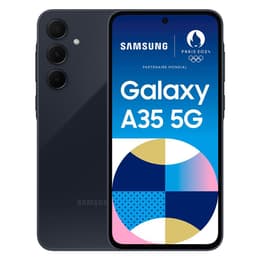
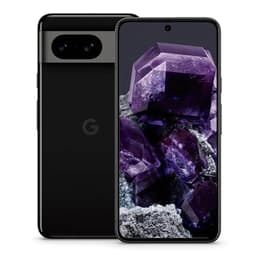
The Samsung Galaxy A35, released in March 2024, and the Google Pixel 8, launched in October 2023, are both Android smartphones offering distinct experiences. While the Galaxy A35 focuses on a larger display and expandable storage, the Pixel 8 emphasizes advanced computational photography and a longer software support commitment. Both devices run on the Android operating system, providing access to a wide ecosystem of applications and services.

Scores

Durability

The practical lifespan of a smartphone is influenced by its release timeline, software support, and physical durability. The Google Pixel 8, released in October 2023, is slightly older than the Samsung Galaxy A35, which launched in March 2024.

  • Software Longevity: The Google Pixel 8 offers a substantial commitment of seven years of OS and security updates, extending its software support well into the future. In contrast, the Samsung Galaxy A35 is slated to receive four major OS upgrades and five years of security updates. This difference means the Pixel 8 will continue to receive new features and security patches for a significantly longer period.
  • Physical Durability: The Pixel 8 features an IP68 rating for dust and water resistance, along with Gorilla Glass Victus on both its front and back, encased in an aluminum frame. The Galaxy A35 offers IP67 dust and water resistance, with Gorilla Glass Victus+ on the front, a plastic frame, and a glass back. The Pixel 8's higher IP rating indicates slightly better protection against immersion.
  • Repairability: The Samsung Galaxy A35 generally scores well in repairability, with ratings around 8.4 out of 10, indicating good accessibility for spare parts and repair manuals. The Google Pixel 8 has a repairability score of approximately 7 out of 10, suggesting that while self-repairs are possible, some components might be more challenging to replace due to adhesive use.

Release year

2024

2023

Operating system

Android

Android

Foldable

No

No

Performance

Performance in daily use is shaped by the internal components and how they handle various tasks, from simple navigation to more demanding applications.

  • Everyday Responsiveness: The Google Pixel 8, powered by its custom-designed processor, offers snappier performance and a smoother experience, particularly for AI-driven tasks and image processing. The Galaxy A35 handles everyday tasks adequately, but users may notice occasional lag when launching heavier applications or during intensive multitasking.
  • Multitasking Capabilities: The Pixel 8 comes with 8GB of RAM, contributing to its smooth handling of multiple applications simultaneously. The Galaxy A35 is available with either 6GB or 8GB of RAM, with the 8GB variant offering comparable multitasking fluidity to the Pixel 8.
  • Battery Behavior: The Galaxy A35 features a larger 5000 mAh battery, which often translates to longer usage times under mixed conditions. The Pixel 8, with its 4575 mAh battery, provides decent battery life, but heavy users might find themselves needing to recharge before the end of a full day. Both devices support fast wired charging, with the Pixel 8 also offering wireless charging capabilities.

Memory (GB)

6 GB

8 GB

Screen quality

The visual experience on a smartphone is largely determined by its display technology, resolution, and brightness capabilities.

  • Display Technology and Clarity: Both the Samsung Galaxy A35 and the Google Pixel 8 feature vibrant OLED displays, known for their deep blacks and rich colors. The Galaxy A35 uses a Super AMOLED panel, while the Pixel 8 utilizes an OLED panel. Both offer Full HD+ resolutions, providing sharp and clear visuals for everyday content consumption.
  • Brightness and Outdoor Visibility: The Pixel 8's display can reach a higher peak brightness of 2000 nits, making it exceptionally easy to view content outdoors, even in direct sunlight. The Galaxy A35 offers a peak brightness of 1000 nits, which is sufficient for most outdoor use cases, though it may struggle slightly in very bright conditions.
  • Refresh Rate and Viewing Experience: Both devices feature a 120Hz refresh rate, contributing to smoother scrolling and more fluid animations. The Pixel 8's display is adaptive, capable of adjusting its refresh rate between 60Hz and 120Hz to optimize power consumption. The Galaxy A35 has a larger 6.6-inch display, offering a more expansive canvas for media consumption, while the Pixel 8 features a slightly more compact 6.2-inch display, which may appeal to users preferring a smaller device for one-handed use.

Resolution

1080x2340

1080 x 2400

Audiovisual

The camera systems on both smartphones are designed to capture moments, but they approach image processing and feature sets differently.

  • Rear Camera System: The Samsung Galaxy A35 features a triple-camera setup with a 50MP main sensor with Optical Image Stabilization (OIS), an 8MP ultrawide lens, and a 5MP macro lens. The Google Pixel 8 comes with a dual-camera system, including a 50MP main sensor with OIS and a 12MP ultrawide lens with autofocus.
  • Photography Performance: The Pixel 8 is widely recognized for its advanced computational photography, delivering sharper images with better color accuracy and superior low-light performance. The Galaxy A35's main camera delivers vibrant and detailed photos in good lighting conditions, with generally good low-light performance when using night mode. The Pixel 8's ultrawide lens generally captures more detail and has a broader field of view compared to the A35's. The A35 includes a dedicated macro lens, a feature not present on the Pixel 8.
  • Video Recording and Front Camera: Both devices are capable of recording video in 4K resolution at 30 frames per second (fps) with their main cameras. The Pixel 8 extends its video capabilities to 4K at 60fps for the rear camera and also supports 4K video recording with its front camera. For selfies and video calls, the Galaxy A35 has a 13MP front-facing camera, while the Pixel 8 features a 10.5MP front camera with autofocus.
  • Audio Experience: Both smartphones offer stereo speakers for an immersive audio experience during media consumption.

Miscellaneous

Beyond core features, several practical elements contribute to the overall user experience of a smartphone.

  • Connectivity: Both the Galaxy A35 and Pixel 8 support 5G connectivity for fast mobile data speeds, and both include Bluetooth 5.3 for wireless accessories. However, the Pixel 8 features the newer Wi-Fi 7 standard, offering potentially faster and more efficient wireless connections where available, while the Galaxy A35 supports Wi-Fi 6.
  • Ports and Biometrics: Both devices utilize a USB-C port for charging and data transfer. The Pixel 8 features USB-C 3.2, offering faster data speeds compared to the Galaxy A35's USB-C 2.0. The Galaxy A35 offers expandable storage via a microSD card slot, a feature absent in the Pixel 8. Both phones include an under-display optical fingerprint sensor, and the Pixel 8 additionally offers secure face unlock.
  • Build Materials and Handling: The Galaxy A35 features a glass front with Gorilla Glass Victus+, a plastic frame, and a glass rear. It is slightly larger and heavier at 161.7 x 78.0 x 8.2mm and 209g. The Pixel 8 has a glass front and back (Gorilla Glass Victus) and an aluminum frame, giving it a more compact feel at 150.5 x 70.8 x 8.9mm and 187g.

Weight

209 oz

187 oz

Screen size (in)

6.6

6.2

Network

5G

5G

SIM card

Physical SIM + eSIM

Physical SIM + eSIM

Carrier compatibility

Unlocked

Unlocked

User feedback for the Google Pixel 8 often highlights its snappy performance, clean Android experience, and exceptional camera capabilities, particularly in challenging lighting conditions. Users also appreciate Google's commitment to long-term software updates. Some common criticisms include average battery life for certain usage patterns and occasional reports of the device getting warm during intensive tasks.

The Samsung Galaxy A35 receives praise for its vibrant and expansive display, generally decent battery life, and solid performance for everyday tasks. Its daylight camera performance is also well-regarded. However, some users note that the processor can exhibit occasional lag, the ultrawide camera may not always meet expectations, and low-light photos can sometimes appear noisy.

Users prioritizing advanced photography, a compact device, a clean software experience with extensive long-term updates, and strong performance for demanding applications will find the Google Pixel 8 well-suited to their needs. Conversely, users who value a larger display for media consumption, potentially longer battery life, expandable storage, and a reliable device for general daily use without requiring top-tier performance or advanced camera features may lean towards the Samsung Galaxy A35. Both devices offer compelling options, and considering a quality-assured refurbished option can be an eco-friendly alternative for either model.


See all articles

Our recent comparisons