Galaxy Z Fold4 vs iPhone 14 Plus

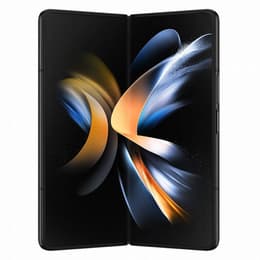
Galaxy Z Fold4
Galaxy Z Fold4
Starting at

Refurbished price:A$734.00

Versus A$3,628.00 new

See options
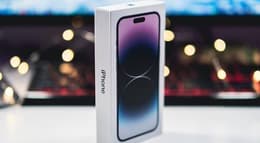
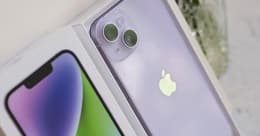
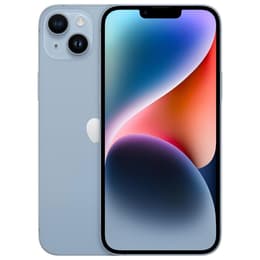
iPhone 14 Plus
iPhone 14 Plus
Starting at

Refurbished price:A$480.00

Versus A$1,249.00 new

See options

Ratings

The Samsung Galaxy Z Fold4, released in August 2022, is a foldable smartphone that transforms from a traditional phone into a tablet-sized device. It operates on Android with Samsung's One UI, offering a distinct user experience. In contrast, the iPhone 14 Plus, launched in October 2022, is a conventional large-screen smartphone running Apple's iOS. The primary distinction between these two devices lies in their form factor: one offers a versatile folding display, while the other provides a consistent, expansive traditional screen.

Scores

Durability

Both the Galaxy Z Fold4 and the iPhone 14 Plus were introduced in 2022, placing them in a similar generation of mobile technology. Their expected practical lifespans are influenced by software support and physical durability.

  • Software Longevity: The iPhone 14 Plus typically receives iOS updates for approximately five to six years from its release, ensuring extended access to new features and security patches. The Galaxy Z Fold4 is generally supported with four years of major Android operating system updates and five years of security updates.
  • Build Materials: The Galaxy Z Fold4 features an Armor Aluminum frame and Gorilla Glass Victus+ on its cover screen and back panel, with its inner foldable display utilizing Ultra-Thin Glass protected by additional layers. It carries an IPX8 water resistance rating, indicating protection against submersion but no official dust resistance. The iPhone 14 Plus incorporates a Ceramic Shield front cover, a glass back, and an aluminum frame, offering IP68 dust and water resistance.
  • Repairability: The intricate design of foldable smartphones like the Galaxy Z Fold4 generally makes them more complex to repair. The iPhone 14 Plus, while still requiring professional service, features a design that is considered more accessible for certain repairs compared to some previous iPhone models.

Release year

2022

2022

Compatible with latest Update

Yes

Yes

Operating system

Android

iOS

Foldable

Yes

No

Performance

The performance of these devices is tailored to their respective operating systems and form factors, influencing how they handle daily tasks and demanding applications.

  • Processing Capabilities: The Galaxy Z Fold4 is equipped with a powerful processor designed to efficiently manage its dual-screen setup and support advanced multitasking. This allows for smooth operation across various applications and demanding tasks. The iPhone 14 Plus features a robust processor known for its strong performance in both single-core and multi-core operations, contributing to a fluid and responsive iOS experience.
  • Multitasking and RAM: With its larger internal display and Android 12L's taskbar, the Galaxy Z Fold4 is well-suited for PC-like multitasking, enabling users to run multiple apps side-by-side and drag-and-drop content between them. It typically includes 12GB of RAM to facilitate this. The iPhone 14 Plus, with 6GB of RAM, provides a seamless experience for switching between applications within the iOS ecosystem.
  • Battery Behavior: The Galaxy Z Fold4 houses a 4400 mAh battery, and users generally report good all-day usage, benefiting from the efficiency of its processor and display technology. The iPhone 14 Plus, with a 4325 mAh battery, is recognized for its extended battery life, often providing more than a full day of power for many users.

Memory (GB)

12 GB

6 GB

Screen quality

The display experience is a key differentiator, with the Galaxy Z Fold4 offering a unique foldable design and the iPhone 14 Plus providing a large, traditional screen.

  • Display Technology and Size: The Galaxy Z Fold4 features a 7.6-inch Foldable Dynamic AMOLED 2X main display and a 6.2-inch Dynamic AMOLED 2X cover display, offering vibrant colors and deep blacks. The iPhone 14 Plus comes with a 6.7-inch Super Retina XDR OLED display, known for its high contrast and color accuracy.
  • Resolution and Clarity: The Galaxy Z Fold4's main display has a resolution of 2176 x 1812 pixels (~373 ppi), while its cover screen is 2316 x 904 pixels (~401 ppi). The iPhone 14 Plus offers a resolution of 2778 x 1284 pixels (~458 ppi), providing sharp and detailed visuals.
  • Brightness and Refresh Rate: Both devices offer high peak brightness levels, with the Galaxy Z Fold4's main display reaching up to 1200 nits and the iPhone 14 Plus also achieving up to 1200 nits for HDR content. The Galaxy Z Fold4 features an adaptive refresh rate of up to 120Hz on both its displays, contributing to smoother scrolling and animations. The iPhone 14 Plus has a standard 60Hz refresh rate.

Resolution

1812 x 2176

1284 x 2778

Screen type

Foldable Dynamic AMOLED 2X

Super Retina XDR OLED

Audiovisual

Both devices offer capable camera systems, though their configurations and specific strengths differ, catering to various photography and videography needs.

  • Rear Camera Systems: The Galaxy Z Fold4 features a versatile triple-camera setup on its rear, including a 50MP main sensor, a 12MP ultrawide lens, and a 10MP telephoto lens with 3x optical zoom. The iPhone 14 Plus is equipped with a dual-camera system, comprising a 12MP main camera with sensor-shift optical image stabilization and a 12MP ultrawide camera. It does not include a dedicated telephoto lens.
  • Front and Specialty Cameras: For selfies and video calls, the Galaxy Z Fold4 has a 10MP camera on its cover screen and a 4MP under-display camera on the inner foldable screen. The iPhone 14 Plus features a 12MP front camera with autofocus, enhancing clarity for self-portraits and video calls.
  • Photography and Video Features: Both devices deliver good image quality in everyday conditions. The Galaxy Z Fold4's improved main sensor and telephoto lens offer flexibility for various shots. The iPhone 14 Plus excels in low-light photography and includes advanced video features like Cinematic mode and Action mode for enhanced stabilization. Both phones are capable of 4K video recording.

Main camera

50 megapixels

12 megapixels

Front camera

4 megapixels

12 megapixels

Miscellaneous

Beyond core features, several practical elements contribute to the overall user experience and daily convenience of these devices.

  • Connectivity and Ports: Both the Galaxy Z Fold4 and iPhone 14 Plus support 5G cellular networks, ensuring fast mobile data speeds. The Galaxy Z Fold4 supports Wi-Fi 6E, while the iPhone 14 Plus supports Wi-Fi 6, both offering robust wireless connectivity. For physical connections, the Galaxy Z Fold4 uses a USB-C port, a common standard across many modern electronics. The iPhone 14 Plus utilizes Apple's proprietary Lightning port.
  • Biometric Security: The Galaxy Z Fold4 incorporates a side-mounted fingerprint sensor for secure unlocking and authentication. The iPhone 14 Plus relies on Face ID, Apple's facial recognition technology.
  • Physical Characteristics: The Galaxy Z Fold4, due to its foldable design, has different dimensions when folded (155.1 x 67.1 x 14.2-15.8 mm) and unfolded (155.1 x 130.1 x 6.3 mm), and weighs 263 grams. This makes it thicker and heavier than a traditional smartphone. The iPhone 14 Plus measures 160.8 x 78.1 x 7.8 mm and weighs 203 grams, offering a large screen in a more conventional, lighter form factor.

Weight

263 oz

203 oz

Screen size (in)

7.6

6,7

Network

5G

5G

SIM card

Physical SIM + eSIM

Physical SIM + eSIM

Carrier compatibility

Unlocked

Unlocked

User feedback for the Galaxy Z Fold4 often highlights its innovative foldable design as a major advantage, particularly for productivity and media consumption, transforming a phone into a tablet-like experience. Users appreciate the enhanced multitasking capabilities and the improved camera system compared to its predecessor. Common criticisms include its bulkier form factor when folded, the visible crease on the inner display, and the lower resolution of the under-display camera.

The iPhone 14 Plus receives praise for its large, immersive display and exceptional battery life, often cited as one of its strongest features. Its camera performance for everyday photos and videos is also well-regarded. However, some users note the 60Hz refresh rate of the display and the absence of a telephoto lens as limitations when compared to higher-end models or some competing devices.

Users prioritizing a versatile device for advanced multitasking, extensive media viewing, and a unique form factor may find the Galaxy Z Fold4 well-suited to their needs. Its ability to switch between a compact phone and a large tablet offers distinct advantages for certain workflows. Conversely, users seeking a large-screen smartphone with outstanding battery endurance, a consistent and intuitive operating system, and a strong, reliable camera for general use will likely lean towards the iPhone 14 Plus. Both devices represent different approaches to the premium smartphone experience, catering to distinct user preferences. For those considering either of these models, exploring quality-assured refurbished options can provide an eco-friendly alternative.

See all articles

Our recent comparisons