Dell Latitude 5310 13" vs Dell Latitude 5420 14"

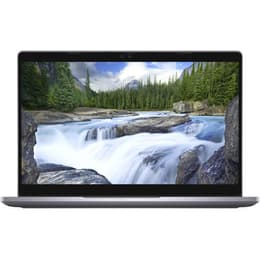
Dell Latitude 5310 13"
See options
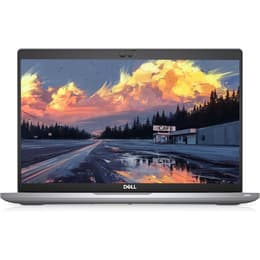
Dell Latitude 5420 14"
Starting at

Refurbished price:A$408.00

Versus A$1,199.00 new

See options

The Dell Latitude 5310, released in 2020, and the Dell Latitude 5420, launched in 2021, are business-oriented laptops designed for productivity and reliability. While both devices operate on the Windows platform and share the Latitude series' focus on professional use, the 5420 introduces updated internal components and a slightly larger display, offering a generational refresh over its predecessor.

Scores

Durability

When considering the practical lifespan of these business laptops, several factors come into play, including their release timelines, software support, and inherent build quality.

  • Release Timeline: The Latitude 5310 was released in 2020, while the Latitude 5420 followed in 2021. This one-year difference means the 5420 will generally receive software updates and security patches for a longer duration, extending its usable life from a software perspective.
  • OS Support: Both models run on the Windows operating system, and their long-term software support is primarily dictated by Microsoft's update policies and Dell's driver availability. The newer 5420 benefits from being a more recent model, likely supporting future Windows versions for a longer period.
  • Build Quality: Both Latitude models are constructed with durability in mind, featuring robust chassis suitable for daily professional use. The 5310 features a metal case, noted for good workmanship, though some stability concerns have been mentioned. The 5420 also boasts a solid lid and base unit, with some configurations incorporating bioplastics for enhanced durability. Both are generally considered repairable, a common trait for business laptops, which contributes to their extended practical lifespan.

Release year

2020

2020

Last Os Compatibility

Yes

Yes

Operating system

Windows 11

Windows 11

Performance

The performance capabilities of these laptops are largely influenced by their respective processor generations and memory configurations, impacting how smoothly they handle various tasks.

  • Processing Power: The Latitude 5310 is equipped with 10th Gen Intel Core processors, providing solid performance for everyday office applications, web browsing, and multitasking. The Latitude 5420, featuring 11th Gen Intel Core processors, offers enhanced performance, leading to faster application loading, smoother multitasking, and more efficient handling of demanding software.
  • Memory and Storage: Both models support DDR4 RAM and utilize fast M.2 PCIe NVMe SSDs for quick boot times and rapid data access. The Latitude 5310 can be configured with up to 32GB of RAM, while the 5420 offers configurations up to 64GB of RAM, providing more headroom for intensive multitasking and future-proofing.
  • Battery Behavior: The Latitude 5310 typically comes with a 60Wh battery, offering long battery life for extended unplugged use. The Latitude 5420 is available with either a 42Wh or 63Wh battery. While the 63Wh option can provide substantial battery life, real-world usage reports for the 42Wh variant suggest more frequent charging for heavy users.

Memory (GB)

16 GB

16 GB

Processor

Core i5 - Gen 10 (U)

Core i5-1135G7

Graphic card

Integrated Graphics

Intel Iris Xe Graphics

Screen quality

The visual experience on these laptops differs primarily in screen size and display technology variations across configurations.

  • Display Size and Resolution: The Latitude 5310 features a 13.3-inch Full HD (1920x1080) display, providing a compact viewing area suitable for portability. The Latitude 5420 offers a slightly larger 14-inch Full HD (1920x1080) display, which can enhance the viewing experience for productivity tasks. Both commonly feature anti-glare coatings to reduce reflections.
  • Panel Technology and Brightness: Both models typically use IPS or WVA (Wide Viewing Angle) panel technology, offering comfortable viewing angles. The 5310's display generally offers brightness levels between 220 and 300 nits. The 5420's display options range from 220 to 311 nits, with some premium configurations reaching up to 400 nits, which can be beneficial for outdoor use or brightly lit environments.
  • Refresh Rate: Both laptops feature a standard 60Hz refresh rate, which is suitable for general business applications and media consumption, providing a smooth visual experience for typical usage scenarios.

Resolution

1920 x 1080

1920 x 1080

Screen type

IPS

LCD

Audiovisual

The audio-visual components of these laptops are designed to support professional communication and media consumption, with some notable differences in camera features.

  • Camera System: Both the Latitude 5310 and 5420 include an integrated webcam suitable for video conferencing. The 5420 often features a Full HD IR webcam with a privacy shutter and support for facial recognition, enhancing security and convenience. The 5310 also offers an HD webcam, with optional IR for facial recognition and a privacy shutter on some configurations.
  • Microphone and Speakers: Both laptops are equipped with dual-array microphones for clear voice capture during calls. They also feature down-firing stereo speakers, providing adequate audio output for video calls and general media consumption. User feedback for the 5310 suggests good speaker quality for a business laptop, offering clear and loud sound.
  • Video Recording Quality: The video recording capabilities are standard for business laptops, primarily focused on clear communication rather than high-fidelity content creation.

Miscellaneous

Beyond core performance and display, several practical elements differentiate these two Latitude models, affecting connectivity, portability, and user interaction.

  • Connectivity Options: The Latitude 5310 includes a range of ports such as USB-C (with Thunderbolt 3 on some configurations), USB-A, HDMI, Ethernet, and a microSD card reader. The Latitude 5420 offers more advanced connectivity, featuring two Thunderbolt 4 ports (USB-C) which provide greater bandwidth and versatility, alongside USB 3.2 Gen 1 (USB-A), HDMI 2.0, Ethernet, and a microSD card reader. Both support Wi-Fi 6 and Bluetooth, with the 5420 potentially offering newer Bluetooth versions and optional LTE for mobile broadband.
  • Portability and Dimensions: The Latitude 5310, with its 13.3-inch screen, is slightly more compact and lighter, starting around 1.22 kg (2.69 lbs). The 14-inch Latitude 5420 is marginally larger and heavier, starting around 1.37 kg (3.03 lbs). This difference impacts ease of carrying for users who prioritize minimal weight.
  • Security Features: Both models offer robust security features common in business laptops, including optional fingerprint readers and facial recognition via IR cameras, along with webcam privacy shutters.

Weight

7500 oz

1370 oz

Screen size

13

14

The Dell Latitude 5310 and 5420 both serve as reliable workhorses within the business laptop segment, each catering to slightly different user priorities. User feedback for the Latitude series often highlights their robust build quality, comfortable keyboards, and consistent performance for productivity tasks. Common praise for the 5310 includes its long battery life and solid construction. Some users have noted concerns regarding fan noise when plugged in. For the 5420, its enhanced connectivity, particularly the inclusion of Thunderbolt 4 ports, and improved processing power are frequently lauded. However, some configurations of the 5420 have received criticism for average display brightness and variable battery life depending on the installed battery capacity.

Users prioritizing a more compact and lighter device for frequent travel, coupled with strong everyday performance and extended battery life, may find the Dell Latitude 5310 well-suited to their needs. Conversely, those who require a slightly larger screen for enhanced productivity, more advanced connectivity options for a wider range of peripherals, and the benefits of a newer generation processor for more demanding applications, might lean towards the Dell Latitude 5420. Both models represent durable and capable options for professionals, and considering a quality-assured refurbished option for either can be a sustainable choice for budget-conscious buyers.

See all articles

Our recent comparisons