
Galaxy A33 5G vs Motorola Edge 50 Fusion

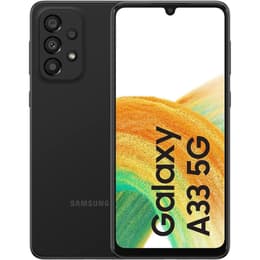
Galaxy A33 5G
Galaxy A33 5G
Starting at

Refurbished price:A$205.00

Versus A$495.00 new

See options
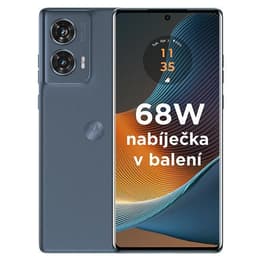
Motorola Edge 50 Fusion
See options

The Samsung Galaxy A33 5G and the Motorola Edge 50 Fusion are both mid-range smartphones offering distinct experiences. Released in April 2022, the Galaxy A33 5G runs on Samsung's One UI atop Android, while the Motorola Edge 50 Fusion, launched in May 2024, features a near-stock Android experience with Motorola's Hello UI. Key differences lie in their display technology, camera configurations, and software support timelines, catering to varying user preferences.

Scores

Durability

When considering the longevity of these devices, their release timelines and software support policies are important factors. The Samsung Galaxy A33 5G, released in April 2022, benefits from Samsung's commitment to extended software support. The Motorola Edge 50 Fusion, a newer device from May 2024, also offers a competitive update schedule.

  • Software Longevity: The Galaxy A33 5G is promised four years of Android OS updates and five years of security patches, expected to receive updates up to Android 16. The Motorola Edge 50 Fusion is slated for three years of Android OS updates and four years of security updates, with Android 17 being its anticipated final major OS update.
  • Physical Durability: Both devices offer robust protection. The Galaxy A33 5G features an IP67 rating for dust and water resistance and Corning Gorilla Glass 5 on its display. The Motorola Edge 50 Fusion steps up with an IP68 rating, providing enhanced dust and water immersion protection, also featuring Gorilla Glass 5 for screen durability.
  • Practical Lifespan: Given their respective update policies, the Galaxy A33 5G is designed for a slightly longer period of major OS updates, potentially offering a more extended practical lifespan for users prioritizing the latest Android versions. However, the Edge 50 Fusion's newer release means its support window extends further into the future from the current date.

Release year

2022

2024

Compatible with latest Update

Yes

Yes

Operating system

Android

Android

Foldable

No

No

Performance

The performance of a smartphone is crucial for daily tasks, app usage, and multitasking. Both the Galaxy A33 5G and the Motorola Edge 50 Fusion are equipped with capable processors designed for efficient operation, though they approach performance from different generations of hardware.

  • Processing Power: The Galaxy A33 5G is powered by an octa-core processor that handles everyday applications smoothly, with users reporting adequate performance for general use. The Motorola Edge 50 Fusion features a more recent octa-core processor, which provides a responsive experience for daily tasks and multitasking.
  • Multitasking and Storage: The Galaxy A33 5G typically comes with 6GB or 8GB of RAM and offers 128GB or 256GB of internal storage, expandable via microSD, allowing for reasonable multitasking and ample space for files. The Motorola Edge 50 Fusion often provides 8GB or 12GB of RAM and storage options up to 512GB, also with microSD expansion, which can contribute to smoother transitions between multiple demanding applications.
  • Battery Behavior: Both devices house a 5000mAh battery, generally providing a full day of use for most users. The Galaxy A33 5G supports 25W fast charging. The Motorola Edge 50 Fusion distinguishes itself with 68W TurboPower fast charging, allowing for quicker recharges.

Memory (GB)

4 GB

12 GB

Screen quality

The display is a primary interface for any smartphone, and both the Galaxy A33 5G and the Motorola Edge 50 Fusion offer vibrant viewing experiences, though with distinct characteristics that cater to different visual preferences.

  • Display Technology and Clarity: The Galaxy A33 5G features a 6.4-inch Super AMOLED display, known for its deep blacks and vibrant colors, with a resolution of 1080x2400 pixels. The Motorola Edge 50 Fusion boasts a larger 6.7-inch pOLED display, also with a 1080x2400 pixel resolution, offering similar clarity but with a slightly larger viewing area.
  • Refresh Rate and Brightness: The Galaxy A33 5G provides a 90Hz refresh rate for smooth scrolling and animations. The Motorola Edge 50 Fusion elevates this with a 144Hz refresh rate, offering an even more fluid visual experience, particularly noticeable in fast-paced content. The Edge 50 Fusion also achieves a higher peak brightness of 1600 nits, compared to the A33 5G's typical brightness, which can improve visibility in bright outdoor conditions.
  • Design and Protection: Both displays are protected by Corning Gorilla Glass 5. The Edge 50 Fusion's pOLED panel often features curved edges, contributing to a more immersive, edge-to-edge viewing experience, while the A33 5G has a flat display with a U-shaped notch.

Resolution

1080 x 2400

1080 x 2400

Screen type

Super AMOLED

P-OLED

Audiovisual

For many users, camera capabilities are a deciding factor, and both the Samsung Galaxy A33 5G and the Motorola Edge 50 Fusion offer versatile camera systems designed to capture a range of moments, each with its own strengths.

  • Rear Camera Systems: The Galaxy A33 5G features a quad-camera setup with a 48MP main sensor that includes Optical Image Stabilization (OIS), an 8MP ultrawide lens, a 5MP macro lens, and a 2MP depth sensor. The Motorola Edge 50 Fusion opts for a dual-camera system, comprising a 50MP main sensor with OIS and a 13MP ultrawide lens that also functions for macro shots.
  • Photography Performance: The Galaxy A33 5G's main camera, supported by OIS, performs well in various lighting conditions, with users noting good detail and color accuracy in daylight, though some report occasional oversaturation. The Edge 50 Fusion's 50MP main sensor also delivers capable results, particularly in good lighting, and its ultrawide lens maintains consistent color performance. Both devices are capable of 4K video recording at 30 frames per second.
  • Front Camera and Audio: For selfies and video calls, the Galaxy A33 5G has a 13MP front camera. The Motorola Edge 50 Fusion offers a higher resolution 32MP front camera, which can capture detailed images. In terms of audio, the Galaxy A33 5G includes stereo speakers. The Edge 50 Fusion also features a stereo speaker system with Dolby Atmos support, aiming for an enhanced media consumption experience.

Main camera

48 megapixels

50 megapixels

Front camera

13 megapixels

32 megapixels

Miscellaneous

Beyond core performance and display, several practical features contribute to the overall user experience and daily convenience of a smartphone. Both the Galaxy A33 5G and the Motorola Edge 50 Fusion offer a range of connectivity options, sensors, and design elements.

  • Connectivity and Ports: Both devices support 5G connectivity for faster mobile data speeds and feature USB Type-C ports for charging and data transfer. The Galaxy A33 5G does not include a traditional headphone jack, a common trend in modern smartphones. The Motorola Edge 50 Fusion also omits the headphone jack.
  • Biometric Security and Sensors: The Galaxy A33 5G incorporates an in-display fingerprint sensor for secure unlocking. The Motorola Edge 50 Fusion also features an optical in-display fingerprint sensor, alongside facial recognition. Both phones include standard sensors like accelerometers, gyroscopes, and ambient light sensors.
  • Design and Handling: The Galaxy A33 5G measures 159.7 x 74 x 8.1 mm and weighs 186g, featuring a plastic back and frame. The Motorola Edge 50 Fusion is slightly larger with dimensions of 162 x 73.1 x 7.8 mm but lighter at 175g. It offers various back finishes, including vegan leather and vegan suede options, providing a distinct tactile experience. The Edge 50 Fusion's slimmer profile and lighter weight may contribute to a more comfortable in-hand feel for some users.

Weight

186 oz

175 oz

Screen size (in)

6.4

6.7

Network

5G

5G

SIM card

Physical SIM

Dual Physical SIM

Carrier compatibility

Unlocked

Unlocked

The Samsung Galaxy A33 5G and the Motorola Edge 50 Fusion each present a compelling package for different user needs. Users often praise the Galaxy A33 5G for its vibrant Super AMOLED display, reliable battery life, and the inclusion of Optical Image Stabilization (OIS) in its main camera, which is a notable feature for its segment. Its IP67 water and dust resistance and Samsung's commitment to four years of OS updates are also frequently highlighted as strong points. Some common criticisms include its performance being adequate but not exceptionally fast for demanding tasks, and occasional oversaturation in camera output.

On the other hand, the Motorola Edge 50 Fusion receives positive feedback for its larger, smoother 144Hz pOLED display and its significantly faster 68W TurboPower charging. Its sleek design, often with unique vegan leather or suede finishes, and IP68 rating are also well-regarded. User reviews suggest its camera performs capably in good lighting, and its battery life is robust. However, some users have noted that its performance, while generally smooth, can show limitations with graphically intensive games, and the camera app might not always be the most responsive. The curved display, while aesthetically pleasing, can be a divisive design choice for some.

Users prioritizing a slightly longer software update commitment and a proven, vibrant Super AMOLED display may find the Galaxy A33 5G aligns better with their needs. Conversely, those who value a larger, higher refresh rate display, faster charging speeds, and a more premium-feeling design with enhanced water resistance might lean towards the Motorola Edge 50 Fusion. Both devices offer solid performance for everyday use, making them suitable for students, professionals, or travelers seeking a reliable smartphone. Exploring quality-assured refurbished options for either model can provide an eco-friendly alternative for making an informed choice.


See all articles

Our recent comparisons