
Galaxy A23 vs Galaxy S20 FE

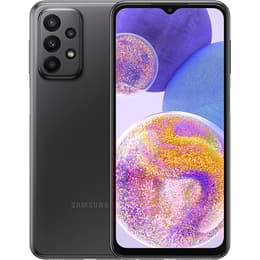
Galaxy A23
Galaxy A23
See options
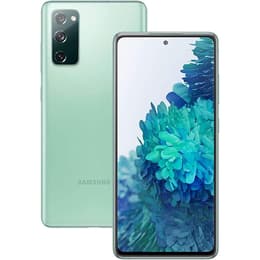
Galaxy S20 FE
Galaxy S20 FE
Starting at

Refurbished price:A$268.29

Versus A$578.00 new

See options

Ratings

The Samsung Galaxy A23, released in March 2022, and the Samsung Galaxy S20 FE (Fan Edition), launched in October 2020, represent different segments of Samsung's smartphone offerings. While the A23 is positioned as a more recent mid-range device, the S20 FE was introduced as a more accessible version of a flagship, offering premium features from its era. Key differentiators lie in their display technology, overall processing power, and camera capabilities, reflecting their original market positions.

Scores

Durability

When considering the longevity of these devices, both software support and physical resilience play significant roles.

  • Release Timeline and Software Support: The Galaxy A23, being a newer device from March 2022, launched with Android 12 and is expected to receive two major Android OS updates, likely up to Android 14 or 15, along with four years of security updates. In contrast, the Galaxy S20 FE, released in October 2020 with Android 10, received three major OS updates, concluding with Android 13, and its official software support for security patches ended around October 2025. This means the A23 offers a longer remaining period of software updates.
  • Physical Durability: The Galaxy A23 features a Gorilla Glass 5 front for screen protection, paired with a plastic back and frame. The Galaxy S20 FE, while older, includes Gorilla Glass 3 on the front, an aluminum frame, and a plastic back. Crucially, the S20 FE boasts an IP68 rating for dust and water resistance, a feature absent from the A23, providing enhanced protection against environmental elements.
  • Practical Lifespan: Users prioritizing the latest software features and security patches for the longest possible duration may find the A23 more suitable due to its newer release. However, for those valuing robust physical protection against water and dust, the S20 FE presents a more durable option in that regard.

Release year

2022

2020

Compatible with latest Update

Yes

No

Operating system

Android

Android

Foldable

No

No

Performance

The performance of a smartphone impacts daily responsiveness, app handling, and multitasking efficiency.

  • Processor Capabilities: The Galaxy A23 is powered by an octa-core processor, typically a Snapdragon 680 or 695 depending on the variant. This hardware is designed for everyday tasks and moderate usage. The Galaxy S20 FE, despite its earlier release, features a more powerful octa-core processor, either the Snapdragon 865 (for 5G models) or Exynos 990 (for 4G models), which were flagship-tier chipsets at its launch.
  • Real-world Usage: Users of the Galaxy A23 have reported instances of slow performance, with some applications taking longer to open and a general sense of sluggishness during navigation. This suggests it handles basic tasks adequately but may struggle with more demanding applications or heavy multitasking. In contrast, the Galaxy S20 FE generally offers a responsive experience, handling demanding apps and multitasking smoothly, making it well-suited for mobile gaming and intensive use.
  • Storage and RAM: The A23 comes with 4GB, 6GB, or 8GB of RAM and 64GB or 128GB of internal storage, expandable via microSD. The S20 FE typically offers 6GB or 8GB of RAM and 128GB or 256GB of storage, also expandable with a microSD card. The higher base RAM and storage options on the S20 FE contribute to its smoother multitasking and app management.

Memory (GB)

4 GB

6 GB

Screen quality

The display is a primary interface for smartphone interaction, influencing visual experience and usability.

  • Display Technology and Clarity: The Galaxy A23 features a 6.6-inch PLS TFT LCD with a resolution of 1080 x 2408 pixels (FHD+). This display provides clear visuals for general content consumption. The Galaxy S20 FE, on the other hand, sports a 6.5-inch Super AMOLED display with a resolution of 1080 x 2400 pixels. Super AMOLED technology typically delivers deeper blacks, higher contrast, and more vibrant colors compared to LCD panels.
  • Refresh Rate and Brightness: The A23 offers a 90Hz refresh rate, providing a smoother scrolling experience than standard 60Hz displays. However, some users have noted that its brightness can be a limitation, particularly in bright outdoor conditions. The S20 FE features a higher 120Hz refresh rate, contributing to exceptionally fluid scrolling and animations. Its Super AMOLED panel also generally achieves higher peak brightness, enhancing visibility outdoors.
  • Viewing Experience: Users prioritizing a vibrant, high-contrast display with very smooth motion will find the S20 FE's Super AMOLED 120Hz screen to offer a more premium viewing experience. For everyday use, the A23's LCD panel provides a large and clear display, suitable for general browsing and media.

Resolution

1080 x 2408

1080 x 2400

Screen type

PLS LCD

Super AMOLED

Audiovisual

The camera system is a significant factor for many users, impacting the quality of photos and videos captured.

  • Rear Camera Systems: The Galaxy A23 is equipped with a quad-camera setup, including a 50-megapixel main sensor with optical image stabilization (OIS), a 5-megapixel ultrawide lens, and two 2-megapixel sensors for macro and depth. The Galaxy S20 FE features a triple-camera system, comprising a 12-megapixel main sensor with OIS, a 12-megapixel ultrawide lens, and an 8-megapixel telephoto lens with 3x optical zoom and OIS.
  • Photography Performance: The A23's main camera can capture decent photos in good lighting conditions, but its performance in low-light environments tends to be grainy and noisy. The ultrawide and macro cameras are generally considered less impressive. The S20 FE's main camera delivers good quality images in both daylight and low-light scenarios. The inclusion of a dedicated telephoto lens on the S20 FE provides a significant advantage for zoomed-in shots without significant loss of detail.
  • Video Recording and Front Camera: The A23 supports video recording up to 1080p. Its front-facing camera is 8-megapixel. The S20 FE offers more advanced video capabilities, recording up to 4K at 60 frames per second from both its rear and 32-megapixel front cameras. This makes the S20 FE a more versatile option for users who frequently record high-quality video or take detailed selfies.

Main camera

50 megapixels

12 megapixels

Front camera

8 megapixels

32 megapixels

Miscellaneous

Beyond core features, several practical elements contribute to the overall user experience and device utility.

  • Connectivity and Ports: Both devices support Bluetooth 5.0. The Galaxy A23 includes a 3.5mm headphone jack and uses USB-C 2.0 for charging and data transfer. The Galaxy S20 FE omits the 3.5mm headphone jack but features faster USB-C 3.2 and supports Wi-Fi 6, offering potentially quicker data transfer and more stable wireless connections.
  • Biometric Security and Build: The A23 incorporates a side-mounted fingerprint sensor for secure unlocking. Its construction involves a plastic frame and back. The S20 FE features an in-display optical fingerprint sensor and an aluminum frame, contributing to a more robust feel. As mentioned, the S20 FE also has an IP68 rating for dust and water resistance, a notable durability feature.
  • Dimensions and Handling: The Galaxy A23 measures 165.4 x 76.9 x 8.4 mm and weighs 195 grams. The Galaxy S20 FE is slightly more compact and lighter at 159.8 x 74.5 x 8.4 mm and 190 grams. These differences can influence how each device feels in hand and its portability.

Weight

195 oz

190 oz

Screen size (in)

6.6

6.5

Network

4G

4G

SIM card

Dual Physical SIM

Physical SIM

Carrier compatibility

Unlocked

Unlocked

The Samsung Galaxy A23 and Galaxy S20 FE cater to different user priorities, each with distinct strengths and trade-offs.

The Galaxy A23 is often praised for its large battery capacity, which provides extended usage, and its main camera performs competently in well-lit conditions. However, common criticisms include its slower overall performance, the use of an LCD display rather than AMOLED, and limitations in screen brightness, particularly outdoors. Its ultrawide and macro cameras are also noted as less impressive, and video recording is capped at 1080p.

Conversely, the Galaxy S20 FE receives acclaim for its fast and responsive performance, attributed to its more powerful processor. Its camera system, especially with the versatile telephoto lens, is highly regarded, and users appreciate its long battery life and vibrant 120Hz Super AMOLED display. The IP68 dust and water resistance is another significant advantage. The primary concern for the S20 FE is its age, as software support has officially concluded, meaning no further Android version updates or regular security patches.

Users prioritizing a device with longer ongoing software support and a large battery for general daily tasks may find the Galaxy A23 well-suited to their needs. For those who value a more premium user experience with superior performance, a high-quality display, and a more capable camera system, including optical zoom and better video recording, the Galaxy S20 FE remains a strong contender, provided the end of software updates is an acceptable trade-off. Both models are available as quality-assured refurbished options, offering an eco-friendly alternative for consumers.


See all articles

Our recent comparisons