
Compare models
Galaxy A33 5G vs iPhone 16 Pro
- 1-year warranty
- Free standard shipping
- Free 30-day returns
Differences at a glance
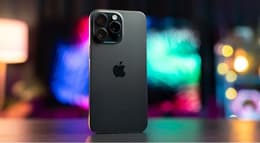
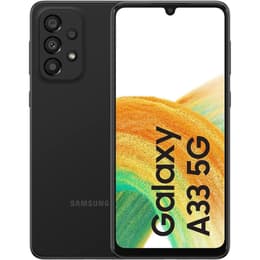
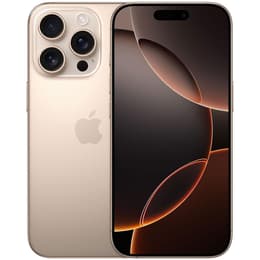
The Samsung Galaxy A33 5G, released in 2022, is an Android-based smartphone designed to offer a balanced experience in the mid-range segment. In contrast, the iPhone 16 Pro, launched in late 2024, represents Apple's high-end flagship, running on iOS. The primary distinctions between these two devices lie in their performance capabilities, camera systems, and overall ecosystem, reflecting their different market positions and release timelines.
Available Models
Colour
Storage (GB)
Scores
Durability
The longevity of a smartphone is influenced by its release timeline, software support, and physical durability.
- Release Timeline: The Galaxy A33 5G was introduced in March 2022, making it a device from an earlier generation. The iPhone 16 Pro, released in September 2024, benefits from a more recent launch, typically implying a longer period of relevance for current technologies and applications.
- Software Support: Samsung committed to four generations of Android OS updates and five years of security updates for the Galaxy A33 5G, meaning it will likely receive updates up to Android 16 and security patches until March 2027. The iPhone 16 Pro, running iOS 18 at launch and supporting iOS 26, is expected to receive software updates for a longer duration, aligning with Apple's typical extended support for its flagship models.
- Physical Durability: The Galaxy A33 5G features Corning Gorilla Glass 5 on its display and an IP67 rating for dust and water resistance, protecting against submersion in up to 1 meter of freshwater for 30 minutes. The iPhone 16 Pro offers enhanced durability with a Ceramic Shield front, a titanium frame, and an IP68 rating, allowing for submersion in up to 6 meters of water for 30 minutes.
Release year
2022
2024
Compatible with latest Update
Yes
Yes
Foldable
No
No
Performance
Performance differences between these two smartphones are notable, stemming from their distinct processors and system architectures.
- Processor Capabilities: The Galaxy A33 5G is powered by an octa-core processor, which handles everyday tasks and multitasking smoothly. The iPhone 16 Pro features a current-generation Apple-designed processor, delivering significantly faster CPU and GPU speeds, which translates to a more responsive experience for demanding applications, advanced gaming, and intensive computational tasks.
- System Responsiveness and Multitasking: The Galaxy A33 5G comes with 6GB or 8GB of RAM, providing adequate capacity for typical app usage and switching. The iPhone 16 Pro includes 8GB of RAM, which, combined with its optimized operating system and powerful processor, ensures seamless multitasking and fluid navigation even with numerous applications open simultaneously.
- Storage Options: The Galaxy A33 5G offers 128GB or 256GB of internal storage, with the flexibility of expanding storage up to 1TB via a microSD card. The iPhone 16 Pro provides a range of storage capacities from 128GB up to 1TB, utilizing fast NVMe storage, but does not support expandable storage.
Screen quality
The visual experience on both devices is shaped by their display technologies and specifications.
- Display Technology and Clarity: The Galaxy A33 5G features a 6.4-inch Super AMOLED display with a resolution of 1080 x 2400 pixels, offering vibrant colors and deep blacks. The iPhone 16 Pro boasts a 6.3-inch Super Retina XDR OLED display with a higher resolution of 2622 x 1206 pixels, resulting in exceptional clarity and detail.
- Refresh Rate and Brightness: The Galaxy A33 5G provides a 90Hz refresh rate for smoother scrolling and animations. The iPhone 16 Pro features ProMotion technology, offering an adaptive refresh rate that can scale from 1Hz up to 120Hz, providing a highly fluid visual experience while optimizing power consumption. For brightness, the iPhone 16 Pro reaches 1000 nits typical and up to 2000 nits peak brightness outdoors, significantly outperforming the Galaxy A33 5G, which has fair outdoor readability.
- Special Features: The iPhone 16 Pro includes the Dynamic Island, an interactive area around the front camera cutout that displays alerts and activities. Both displays are protected, with the Galaxy A33 5G using Corning Gorilla Glass 5 and the iPhone 16 Pro featuring Apple's Ceramic Shield.
Resolution
1080 x 2400
1206 x 2622
Screen type
Super AMOLED
LTPO Super Retina XDR OLED
Audiovisual
The camera systems on these two smartphones cater to different user expectations, with distinct capabilities and features.
- Rear Camera Systems: The Galaxy A33 5G is equipped with a quad-camera setup, including a 48 MP main sensor with optical image stabilization (OIS), an 8 MP ultrawide, a 5 MP macro, and a 2 MP depth sensor. The iPhone 16 Pro features a triple-camera system, comprising a 48 MP wide lens with OIS, a 48 MP ultrawide lens, and a 12 MP 5x telephoto lens with OIS, alongside a LiDAR scanner for improved depth sensing.
- Photography Performance: The Galaxy A33 5G's main camera performs well in everyday conditions, with OIS aiding in sharper images. The iPhone 16 Pro's larger sensors and advanced computational photography, including a new 48MP ultrawide and a 5x telephoto, deliver superior detail, dynamic range, and low-light performance across its lenses.
- Video Recording and Additional Features: The Galaxy A33 5G can record videos up to 4K at 30 frames per second. The iPhone 16 Pro offers extensive video capabilities, including 4K recording at up to 120 frames per second, ProRes video, and Spatial video recording, catering to professional content creation. It also introduces a new Camera Control button for quick access to camera functions.
Main camera
48 megapixels
48 megapixels
Front camera
13 megapixels
12 megapixels
Miscellaneous
Beyond core features, several practical elements differentiate the user experience of these devices.
- Connectivity and Ports: Both devices support 5G connectivity. The Galaxy A33 5G includes Wi-Fi 802.11 a/b/g/n/ac and Bluetooth 5.1, with a USB-C 2.0 port. The iPhone 16 Pro features more advanced Wi-Fi 7 and Bluetooth 5.3, along with a USB-C port, and in some regions, relies solely on dual eSIM for cellular connectivity.
- Biometric Security and Audio: The Galaxy A33 5G incorporates an in-display fingerprint sensor for secure unlocking. The iPhone 16 Pro utilizes Face ID for facial recognition. Both phones offer stereo speakers for an enhanced audio experience, but neither includes a 3.5mm headphone jack.
- Design and Handling: The Galaxy A33 5G measures 159.7 x 74 x 8.1 mm and weighs 186 grams, featuring a matte plastic back and sides. The iPhone 16 Pro is slightly more compact at 149.6 x 71.5 x 8.25 mm and weighs 199 grams, constructed with a titanium frame and a textured matte glass back, contributing to a premium feel.
Weight
186 oz
199 oz
Screen size (in)
6.4
6.3
Network
5G
5G
SIM card
Physical SIM
Physical SIM + eSIM
Carrier compatibility
Unlocked
Unlocked
What the community thinks
The Samsung Galaxy A33 5G and the iPhone 16 Pro cater to different segments of the smartphone market, offering distinct advantages. Users often praise the Galaxy A33 5G for its robust battery life, vibrant AMOLED display, and the inclusion of expandable storage, making it a practical choice for everyday use and media consumption. Some common criticisms for the A33 5G include the absence of a charger in the box and a less powerful ultrawide camera compared to its main sensor.
The iPhone 16 Pro, on the other hand, is frequently lauded for its exceptional performance, advanced camera system with versatile telephoto and ultrawide capabilities, and its high-quality, bright ProMotion display. User feedback on the iPhone 16 Pro's battery life is generally positive, with many noting improvements over previous Pro models, though some heavy users still report needing to charge more frequently.
Users prioritizing a long-lasting battery, expandable storage, and a capable Android experience for general tasks may find the Galaxy A33 5G well-suited to their needs. Conversely, those who require top-tier performance for demanding applications, a professional-grade camera system, a highly fluid display, and a longer software support window will likely lean toward the iPhone 16 Pro. Both devices offer a quality-assured refurbished option, providing a sustainable choice for consumers.