Compare models

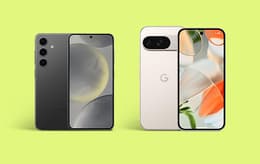
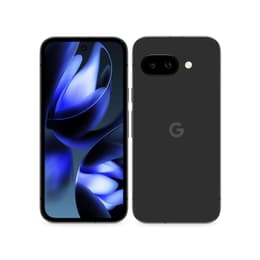
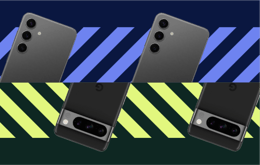
Galaxy A33 5G vs Google Pixel 9a

  • 1-year warranty
  • Free standard shipping
  • Free 30-day returns
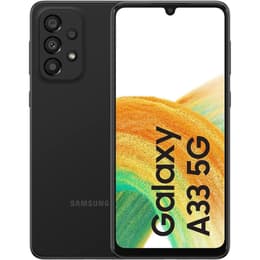
Galaxy A33 5G
Starting at

Refurbished price:A$178.00

Versus A$495.00 new

See options
Google Pixel 9a
Starting at

Refurbished price:A$570.00

Versus A$731.50 new

See options

Differences at a glance

The Samsung Galaxy A33 5G (2022) and the Google Pixel 9a (2025) are mid-range smartphones designed to deliver dependable everyday features without unnecessary complexity. While both devices serve users seeking reliable mobile technology running on the Android operating system, they originate from different release years and follow distinct design philosophies. The Galaxy A33 5G prioritizes balanced core essentials within an established hardware ecosystem, whereas the Google Pixel 9a introduces a more recent generation of hardware capabilities and extended software commitments. Evaluating their distinct characteristics helps users determine which device aligns closely with their daily routines.

Available Models

Colour

Storage (GB)

Scores

Durability

When examining longevity and durability, both smartphones approach software support and physical resilience through different timelines and specifications.

  • Software longevity: The Google Pixel 9a benefits from an extended official software support window spanning multiple years from its release, while the Galaxy A33 5G operates on an earlier release schedule with a more finite remaining update cycle.
  • Build quality: Both models include robust dust and water resistance ratings, helping protect internal components against accidental exposure to moisture during daily travel.
  • Expected lifespan: Users tracking long-term usability will find that the newer release date of the Pixel 9a provides a longer period of active security patches compared to the older Galaxy model.

Release year

2022

2025

Operating system

Android

Android

Foldable

No

No

Performance

Everyday system fluidity and application handling vary between these two handsets based on their internal hardware configurations and multitasking capabilities.

  • Multitasking capacity: Both devices handle common daily tasks such as web browsing, messaging, and media streaming smoothly, supported by ample memory configurations.
  • System responsiveness: Apps launch promptly and transition seamlessly on both smartphones, though the newer processor architecture in the Pixel 9a offers extra headroom for demanding background operations.
  • Battery behavior: Each device integrates a high-capacity battery designed to sustain typical daily usage patterns, though individual charging speeds and power management approaches differ between the manufacturers.

Screen quality

Visual output and display responsiveness play an essential role in media consumption and reading tasks across both mobile platforms.

  • Display technology: Both models utilize vibrant OLED panels that deliver deep contrast levels, sharp text clarity, and vivid color reproduction for photos and videos.
  • Refresh rate: The Pixel 9a features a higher refresh rate capability for smoother scrolling movements, while the Galaxy A33 5G relies on a standard fixed refresh rate for interface animations.
  • Outdoor visibility: High peak brightness levels on both displays ensure that content remains legible under direct sunlight or bright outdoor conditions.

Resolution

1080 x 2400

1080x2424

Screen type

Super AMOLED

P-OLED

Audiovisual

Optics and multimedia performance differ noticeably in how each handset captures everyday moments and reproduces audio during playback.

  • Camera systems: The Galaxy A33 5G features a versatile multi-lens rear setup including macro options, whereas the Pixel 9a focuses on a streamlined dual-lens configuration optimized for computational photography in varied lighting.
  • Video and low-light: Both devices record stable video clips and handle dim environments adequately, though computational image processing algorithms vary in color tuning and shadow detail.
  • Media audio: Built-in stereo speakers on both smartphones provide clear sound output for casual listening and hands-free calling without requiring external headphones.

Miscellaneous

Practical physical traits and connectivity standards complete the daily user experience for both mobile devices.

  • Connectivity features: Both models support fast 5G cellular networks, modern Wi-Fi standards, and Bluetooth pairing for wireless accessories.
  • Physical dimensions: The Galaxy A33 5G and Pixel 9a share comparable handheld form factors, though minor variations in weight and thickness influence pocketability and single-handed reach.
  • Authentication: Each smartphone incorporates secure biometric authentication via in-display fingerprint sensors for quick unlocking.

Weight

186 oz

186 oz

Screen size (in)

6.4

6.3

Network

5G

5G

SIM card

Physical SIM

Physical SIM + eSIM

Carrier compatibility

Unlocked

Unlocked

What the community thinks

Deciding between the Samsung Galaxy A33 5G and the Google Pixel 9a depends largely on individual user priorities and preferences regarding device age and software lifecycles. Users prioritizing an extended software support window and smoother display refresh rates may find the Google Pixel 9a well-suited to their needs. Conversely, users seeking a familiar interface with versatile multi-lens camera options often lean toward the established design of the Samsung Galaxy A33 5G. For buyers exploring sustainable shopping habits, a quality-assured refurbished option provides an eco-friendly alternative that extends the lifecycle of these electronics. Assessing these practical factors ensures an informed choice tailored to personal workflow requirements.