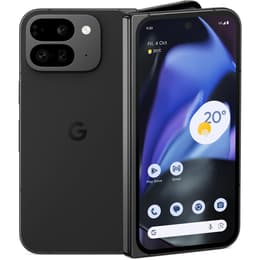

Galaxy A33 5G vs Google Pixel 9 Pro Fold

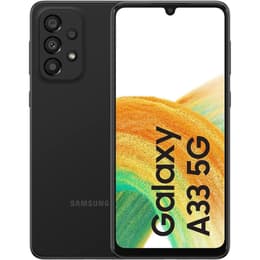
Galaxy A33 5G
Galaxy A33 5G
Starting at

Refurbished price:A$206.00

Versus A$495.00 new

See options
Google Pixel 9 Pro Fold
See options

The Samsung Galaxy A33 5G, released in April 2022, is a traditional smartphone offering a balanced set of features for everyday use. In contrast, the Google Pixel 9 Pro Fold, launched in September 2024, represents a premium foldable device with a dual-screen design and advanced capabilities. These two devices cater to different user preferences, primarily distinguished by their form factor, performance tier, and software longevity.

Scores

Durability

The longevity and update support for these devices vary significantly due to their release timelines and product categories.

  • Software Support: The Galaxy A33 5G launched with Android 12 and is expected to receive four major OS updates, bringing it up to Android 16, along with five years of security updates, concluding around April 2027. The Google Pixel 9 Pro Fold, released with Android 14 and quickly updated to Android 15, benefits from Google's extended support policy, promising seven years of OS and security updates, extending its support until 2031.
  • Physical Durability: The Galaxy A33 5G features an IP67 rating for dust and water resistance, and its display is protected by Gorilla Glass 5. The Pixel 9 Pro Fold, as a foldable, offers IPX8 water resistance, meaning it can withstand submersion in water, but typically does not carry a dust resistance rating due to its hinge mechanism.
  • Expected Lifespan: Users prioritizing a longer software update cycle and access to the latest Android features will find the Pixel 9 Pro Fold offers a considerably extended practical lifespan. The Galaxy A33 5G provides a solid, but shorter, period of guaranteed updates.

Release year

2022

2024

Compatible with latest Update

Yes

Yes

Operating system

Android

Android

Foldable

No

Yes

Performance

The performance capabilities of the Galaxy A33 5G and the Google Pixel 9 Pro Fold reflect their different market segments and release years.

  • Processing Power: The Galaxy A33 5G is equipped with an octa-core processor, suitable for daily tasks, social media, and moderate gaming. The Pixel 9 Pro Fold features a more advanced current-generation processor, designed to handle demanding applications, intensive multitasking, and complex AI features with greater efficiency and speed.
  • Multitasking and Storage: With 6GB or 8GB of RAM, the Galaxy A33 5G manages multiple apps adequately, and its 128GB or 256GB of internal storage can be expanded via a microSD card. The Pixel 9 Pro Fold comes with a substantial 16GB of RAM and offers 256GB or 512GB of faster internal storage, providing ample room for applications and media, and enabling smoother transitions between numerous open applications.
  • Overall Responsiveness: The Pixel 9 Pro Fold delivers a more fluid and responsive user experience across the system, from app loading times to navigating complex interfaces, due to its powerful hardware and optimized software. The Galaxy A33 5G offers reliable performance for its class, but will not match the speed of a flagship device.

Memory (GB)

4 GB

16 GB

Screen quality

The display experience is a major point of divergence between these two smartphones, primarily due to their form factors and display technologies.

  • Display Technology and Size: The Galaxy A33 5G features a 6.4-inch Super AMOLED flat display with a 1080x2400 pixel resolution and a 90Hz refresh rate, offering vibrant colors and good contrast for a traditional smartphone. The Pixel 9 Pro Fold boasts two OLED displays: an 8-inch foldable main screen with a 2152 x 2076 resolution and a dynamic 1-120Hz refresh rate, and a 6.3-inch cover display with a 1080 x 2424 resolution and a 60-120Hz refresh rate.
  • Brightness and Clarity: The Pixel 9 Pro Fold's displays offer significantly higher peak brightness levels (1600 nits for the main screen, 1800 nits for the cover screen), enhancing visibility in bright outdoor conditions compared to the Galaxy A33 5G. The larger, higher-resolution main display of the Pixel 9 Pro Fold provides a more expansive and immersive viewing experience for media and productivity.
  • Smoothness and Viewing Experience: Both devices offer smooth scrolling with their respective refresh rates, but the Pixel 9 Pro Fold's 120Hz adaptive refresh rate on both screens provides a more consistently fluid visual experience. The foldable design of the Pixel 9 Pro Fold allows for a tablet-like experience when unfolded, which is ideal for content consumption and multitasking.

Resolution

1080 x 2400

2076 x 2152

Screen type

Super AMOLED

Foldable LTPO OLED

Audiovisual

The camera systems on these devices reflect their different design philosophies and target user experiences.

  • Rear Camera Capabilities: The Galaxy A33 5G features a quad-camera setup with a 48MP main sensor with optical image stabilization (OIS), an 8MP ultrawide, a 5MP macro, and a 2MP depth sensor. It can record video up to 4K at 30 frames per second. The Pixel 9 Pro Fold offers a triple-camera system, including a 48MP main sensor with OIS, a 10.5MP ultrawide lens, and a 10.8MP telephoto lens with 5x optical zoom and up to 20x Super Res Zoom.
  • Photography Performance: The Pixel 9 Pro Fold leverages advanced computational photography to produce detailed images with accurate colors, particularly excelling in low-light conditions and portrait photography. The Galaxy A33 5G delivers competent photos in good lighting, but its performance in challenging conditions and zoom capabilities are more limited.
  • Video and Audio: Both devices are capable of recording quality video, with the Pixel 9 Pro Fold likely offering more advanced stabilization and features. For audio, the Pixel 9 Pro Fold's integration of a new modem also aims to improve call quality. The Galaxy A33 5G includes stereo speakers for media consumption.

Main camera

48 megapixels

48 megapixels

Front camera

13 megapixels

10 megapixels

Miscellaneous

Beyond core features, several practical elements differentiate the Galaxy A33 5G and the Google Pixel 9 Pro Fold.

  • Connectivity and Ports: Both devices support 5G connectivity. The Galaxy A33 5G uses Wi-Fi 5 (802.11 a/b/g/n/ac) and Bluetooth 5.1, with a USB-C 2.0 port. The Pixel 9 Pro Fold is expected to feature more advanced connectivity, including Wi-Fi 7 and a newer Bluetooth standard, along with a USB-C port that likely supports faster data transfer. It also includes a new modem for enhanced call quality and satellite emergency services.
  • Biometric Security: The Galaxy A33 5G uses an in-display optical fingerprint sensor. The Pixel 9 Pro Fold also features an under-display fingerprint sensor and is expected to include Face Unlock for convenient and secure access.
  • Design and Handling: The Galaxy A33 5G is a traditional slab phone, weighing 186g and measuring 8.1mm thick. The Pixel 9 Pro Fold, as a foldable, is heavier and thicker when folded, but offers a significantly larger screen when unfolded, with a slimmer profile of 5.1mm when open. The choice between these depends on whether a compact, traditional form factor or a versatile, expansive screen experience is preferred.

Weight

186 oz

257 oz

Screen size (in)

6.4

8.0

Network

5G

5G

SIM card

Physical SIM

Physical SIM + eSIM

Carrier compatibility

Unlocked

Unlocked

The Samsung Galaxy A33 5G and the Google Pixel 9 Pro Fold cater to distinct user needs and preferences, largely defined by their form factor, release generation, and feature sets. Users frequently praise the Galaxy A33 5G for its reliable battery life and vibrant Super AMOLED display, making it a solid choice for everyday communication and media consumption. Common criticisms often point to its mid-range processing power, which can feel less responsive compared to newer or higher-tier devices, and its camera performance in challenging lighting conditions.

Conversely, the Google Pixel 9 Pro Fold is often lauded by users for its innovative foldable design, offering a large, immersive display for productivity and entertainment, alongside its powerful performance and advanced camera capabilities driven by computational photography. Its extended software support is also a significant advantage for long-term usability. Some users may express concerns about the inherent bulk and weight of foldable devices, or the durability of the folding screen over time, though advancements continue to address these points.

Users prioritizing a straightforward, dependable smartphone experience with good battery life and a traditional design may find the Galaxy A33 5G well-suited to their needs. For those who value cutting-edge technology, a versatile large screen for multitasking and media, and a longer period of software updates, the Pixel 9 Pro Fold presents a compelling option. Both devices are available as quality-assured refurbished options, providing an eco-friendly alternative for consumers seeking to make informed and sustainable choices.


See all articles

Our recent comparisons