
iPhone
Compare models
Differences at a glance
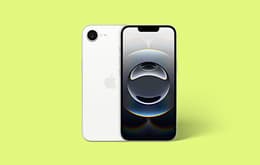
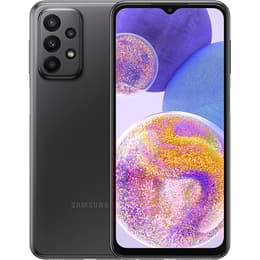
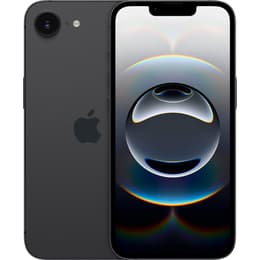
The Samsung Galaxy A23, released in March 2022, is an Android smartphone designed for everyday use, offering a large display and a versatile camera system. In contrast, the iPhone 16E, launched in February 2025 as part of Apple's iPhone 16 series and discontinued in March 2026, represents an entry-level iOS experience with a focus on core performance and a premium build. These devices cater to different operating system preferences and user priorities, with the Galaxy A23 emphasizing display size and battery capacity, while the iPhone 16E prioritizes processing power and camera quality within a more compact form factor.
Colour
Storage
When considering the practical lifespan of these devices, their release timelines and software support are key factors. The Galaxy A23, launched in March 2022, runs on Android 12 and typically receives several years of Android version updates and security patches. The iPhone 16E, released in February 2025 and discontinued in March 2026, benefits from Apple's longer software support cycle, starting with iOS 18.3 and currently running iOS 26.4. This means the iPhone 16E will likely receive major iOS updates for a significantly longer period than the Galaxy A23 will receive Android updates.
Release year
Operating system
Foldable
The performance capabilities of the Galaxy A23 and iPhone 16E differ significantly, largely due to their respective processors and operating system optimizations. The Galaxy A23 is equipped with an octa-core processor, designed for efficient handling of daily tasks and moderate multitasking. The iPhone 16E, on the other hand, features a more advanced A18 chip, which delivers substantial power for demanding applications, complex gaming, and advanced AI features.
The visual experience on the Galaxy A23 and iPhone 16E is shaped by their distinct display technologies and specifications. The Galaxy A23 features a large 6.6-inch PLS TFT LCD with a 90Hz refresh rate, providing a fluid scrolling experience and ample screen real estate. The iPhone 16E comes with a 6.1-inch Super Retina OLED XDR display, known for its vibrant colors, deep blacks, and high contrast, though it operates at a standard 60Hz refresh rate.
Resolution
The camera systems on the Galaxy A23 and iPhone 16E approach photography with different philosophies, impacting their overall capabilities. The Galaxy A23 features a versatile quad-camera setup, including a 50-megapixel main sensor with optical image stabilization, an ultrawide lens, a macro lens, and a depth sensor, offering a range of shooting options. The iPhone 16E, while having a single rear camera, boasts a highly capable 48-megapixel main sensor with optical image stabilization, designed for high-quality images and video, and a 12-megapixel front camera.
Front camera
Beyond core specifications, several practical elements differentiate the user experience between the Galaxy A23 and the iPhone 16E. These include connectivity standards, physical ports, biometric security, and overall design ergonomics.
Weight
Screen size (in)
Network
SIM card
Carrier compatibility
User feedback for the Samsung Galaxy A23 often highlights its strong battery life, large display, and the inclusion of a headphone jack and expandable storage as significant advantages. Some users note that its performance is suitable for everyday tasks but may not excel in demanding applications or high-end gaming. The camera system is generally praised for its versatility, though low-light performance can be inconsistent.
For the iPhone 16E, common praise points revolve around its powerful A18 chip, delivering a fluid and responsive iOS experience, and its high-quality main camera capable of excellent photos and videos. Users appreciate its premium build and the long-term software support from Apple. Criticisms sometimes point to the 60Hz display refresh rate, which some find less smooth compared to higher refresh rate Android devices, and the absence of an ultrawide camera or a headphone jack.
Users prioritizing a large display, extended battery life, and the flexibility of Android with expandable storage and a headphone jack may find the Galaxy A23 well-suited to their needs. It offers a comprehensive feature set for general use and media consumption. Conversely, users who value top-tier performance, a premium build, a highly capable main camera, and long-term software support within the Apple ecosystem will likely lean towards the iPhone 16E. Its compact size and Face ID security are also key differentiators.
Both devices offer distinct advantages, and choosing between them depends on individual priorities. For those seeking an eco-friendly, quality-assured refurbished option, both the Galaxy A23 and the iPhone 16E can provide excellent value, allowing consumers to make informed and sustainable choices.