Galaxy A23 vs iPhone 14 Pro

Galaxy A23
Galaxy A23
See options
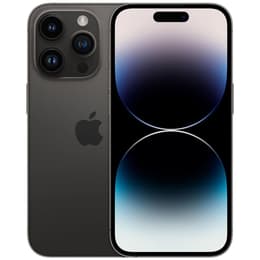
iPhone 14 Pro
iPhone 14 Pro
Starting at

Refurbished price:A$617.00

Versus A$1,749.00 new

See options

Ratings

The Samsung Galaxy A23, released in March 2022, is an Android-based smartphone designed to offer a balanced experience for everyday users. In contrast, the iPhone 14 Pro, launched in September 2022, represents Apple's flagship offering, featuring advanced technology and a premium user experience. These devices operate on distinct ecosystems, Android with Samsung's One UI and Apple's iOS, respectively, leading to fundamental differences in interface and app availability.

Scores

Durability

The expected lifespan and software support differ between these two devices, influencing their long-term usability.

  • Release Timeline: The Samsung Galaxy A23 was released in March 2022, while the iPhone 14 Pro followed in September 2022, making the iPhone the newer device by several months.
  • Software Longevity: The Galaxy A23 launched with Android 12 and is upgradable to Android 14, with Samsung typically providing several years of OS updates and security patches. The iPhone 14 Pro, launching with iOS 16, benefits from Apple's generally longer software support, often extending to five or more years from its release.
  • Repairability: The Galaxy A23 has been noted for being relatively repairable, with components like the back plate and battery designed for more straightforward replacement. In contrast, while the iPhone 14 Pro initially received praise for improved hardware accessibility, its repairability score was later adjusted due to software-based parts pairing requirements that complicate independent repairs.

Release year

2022

2022

Compatible with latest Update

Yes

Yes

Operating system

Android

iOS

Foldable

No

No

Performance

Performance capabilities vary significantly, impacting how smoothly each device handles daily tasks and demanding applications.

  • Everyday Responsiveness: The Galaxy A23 provides smooth performance for general use, including browsing, social media, and light multitasking, particularly for users upgrading from older devices. The iPhone 14 Pro offers a highly responsive experience, handling demanding applications, complex games, and extensive multitasking with ease, maintaining fluidity even under heavy loads.
  • Storage and Multitasking: The Galaxy A23 is available with various RAM configurations (4GB, 6GB, 8GB) and offers expandable storage via a microSD card, providing flexibility for users who need more space for media and apps. The iPhone 14 Pro comes with 6GB of RAM and a range of internal storage options from 128GB up to 1TB, but without expandable storage.
  • Battery Behavior: The Galaxy A23 features a large 5000mAh battery, designed to provide extended usage throughout the day for most users. The iPhone 14 Pro's battery generally offers solid performance, often lasting a full day with typical use, though heavy users might find themselves needing to recharge by evening.

Memory (GB)

4 GB

6 GB

Screen quality

The display technologies and characteristics present notable differences in visual experience.

  • Display Technology and Clarity: The Galaxy A23 features a 6.6-inch PLS LCD display, offering a clear viewing experience with a resolution of 1080x2408 pixels. The iPhone 14 Pro boasts a 6.1-inch Super Retina XDR OLED display, providing deep blacks, vibrant colors, and sharp detail with a resolution of 2556x1179 pixels.
  • Brightness and Outdoor Visibility: The iPhone 14 Pro's OLED panel can reach significantly higher peak brightness levels, up to 2000 nits, making content highly visible even in bright outdoor conditions. The Galaxy A23's LCD panel offers adequate brightness for most indoor and outdoor environments.
  • Refresh Rate and Smoothness: The Galaxy A23 supports a 120Hz refresh rate, contributing to smoother scrolling and a more fluid visual experience. The iPhone 14 Pro features ProMotion technology, allowing its display to dynamically adjust its refresh rate from 1Hz to 120Hz, which enhances smoothness for fast-moving content and conserves power for static images.

Resolution

1080 x 2408

1179 x 2556

Screen type

PLS LCD

LTPO Super Retina XDR OLED

Audiovisual

The camera systems on both devices cater to different photography needs and expectations.

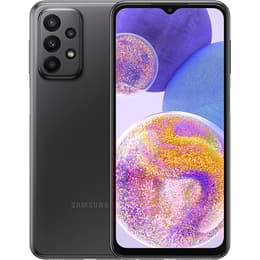
  • Rear Camera System: The Galaxy A23 is equipped with a quad-camera setup, including a 50MP main sensor with optical image stabilization (OIS), a 5MP ultrawide lens, and two 2MP sensors for macro and depth. The iPhone 14 Pro features a triple-camera system with a 48MP main sensor (with OIS), a 12MP ultrawide, and a 12MP telephoto lens, offering more versatile zoom capabilities.
  • Photography Performance: The iPhone 14 Pro excels in capturing detailed photos, particularly in low-light conditions, and offers advanced computational photography features. While the Galaxy A23's 50MP main sensor can capture good everyday photos, some users note that its stock camera app can produce softer images, with some opting for third-party camera applications for improved results.
  • Video Recording and Audio: The iPhone 14 Pro provides high-quality video recording with features like Action Mode for enhanced stabilization and improved low-light video performance. Both devices offer capable microphone quality for calls and recordings, and their speaker outputs are suitable for media consumption, though the iPhone 14 Pro generally delivers a richer audio experience.

Main camera

50 megapixels

48 megapixels

Front camera

8 megapixels

12 megapixels

Miscellaneous

Beyond core specifications, several practical elements contribute to the overall user experience.

  • Connectivity and Ports: The Galaxy A23 supports 4G or 5G connectivity (depending on the variant), Wi-Fi, Bluetooth 5.0, and includes a USB-C 2.0 port along with a 3.5mm headphone jack. The iPhone 14 Pro offers 5G connectivity, advanced Wi-Fi standards, Bluetooth, and utilizes Apple's Lightning port for charging and data transfer.
  • Biometric Security: The Galaxy A23 features a side-mounted fingerprint sensor for secure unlocking. The iPhone 14 Pro relies on Face ID, Apple's facial recognition system, for secure authentication.
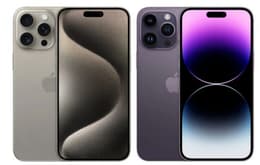
  • Design and Handling: The Galaxy A23 has dimensions of 165.4 x 76.9 x 8.4 mm and weighs 195 grams, featuring a plastic build with a Gorilla Glass 5 front. The iPhone 14 Pro, at 6.1 inches, is more compact but heavier due to its stainless steel frame and Ceramic Shield front, with a textured matte glass back. Some users find the iPhone 14 Pro's weight and squared edges can lead to hand fatigue.

Weight

195 oz

206 oz

Screen size (in)

6.6

6,1

Network

4G

5G

SIM card

Dual Physical SIM

Physical SIM + eSIM

Carrier compatibility

Unlocked

Unlocked

User feedback for the Samsung Galaxy A23 often highlights its value as an everyday smartphone, particularly for those seeking a large display and long battery life without needing top-tier performance. Some users appreciate its smoothness for general tasks, especially when coming from older devices, and the option for expandable storage is a frequent praise point. However, criticisms sometimes point to potential lag, especially with the 4GB RAM variant, and the stock camera's performance in certain conditions.

The iPhone 14 Pro receives consistent praise for its vibrant OLED display, smooth performance, and capable camera system, particularly its low-light photography and video features. The Dynamic Island and Always-On display are also frequently cited as positive user experiences. Common criticisms include its weight and the feel of its stainless steel frame, which some users find less comfortable for extended holding. Some professional photographers have noted that while the camera is excellent, it can struggle with overheating during rapid, intensive RAW shooting.

Users prioritizing a large display, expandable storage, and a long-lasting battery for general daily use may find the Samsung Galaxy A23 well-suited to their needs. Conversely, those who value a premium build, advanced camera capabilities, a highly responsive operating system, and a compact form factor will likely lean towards the iPhone 14 Pro. Both devices offer distinct advantages, and considering a quality-assured refurbished option for either model can be a sustainable choice for consumers.

See all articles

Our recent comparisons