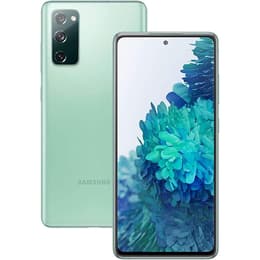
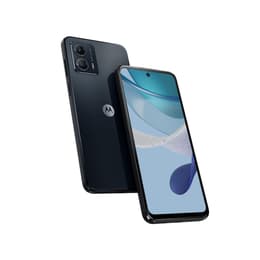

Galaxy S20 FE vs Motorola Moto G53

Galaxy S20 FE
Galaxy S20 FE
Starting at

Refurbished price:A$268.29

Versus A$578.00 new

See options
Motorola Moto G53
Motorola Moto G53
Starting at

Refurbished price:A$203.77

Versus A$975.00 new

See options

The Samsung Galaxy S20 FE, released in October 2020, and the Motorola Moto G53, launched in December 2022, are both smartphones designed to offer a balanced user experience. While the Galaxy S20 FE aimed to bring flagship-level features to a broader audience, the Moto G53 focuses on delivering essential modern capabilities, including 5G connectivity, at a more accessible point. Both devices operate on the Android platform, though they differ in their software experiences and update timelines.

Scores

Durability

The practical lifespan of a smartphone is significantly influenced by its release timeline and ongoing software support.

  • Release Timeline: The Samsung Galaxy S20 FE was released in October 2020, making it an older device compared to the Motorola Moto G53, which launched in December 2022. This difference in release year impacts their respective software support cycles.
  • OS Support Duration: The Galaxy S20 FE was initially promised three major Android OS upgrades and five years of security patches. Its software support officially concluded with the October 2025 security update, meaning it will remain on Android 13 and receive no further official security patches. The Moto G53, being a newer device, launched with Android 13 and typically receives fewer major OS updates and security patches compared to Samsung's premium lines, though its support window extends further into the future from its release date.
  • Repairability: The Galaxy S20 FE is considered moderately repairable, with a score of approximately 7.5 out of 10. Key components like the battery and screen can be replaced, though some adhesive is used. Information on the Moto G53's specific repairability score is less readily available, but budget-friendly devices often present a mix of straightforward and challenging repair aspects.

Release year

2020

2022

Compatible with latest Update

No

Yes

Operating system

Android

Android

Foldable

No

No

Performance

Performance in daily use is a key differentiator, affecting how smoothly applications run and how efficiently tasks are handled.

  • Processor Capabilities: The Galaxy S20 FE is equipped with a more powerful processor, allowing it to handle demanding applications, complex games, and intensive multitasking with greater ease and responsiveness. The Moto G53 features a processor designed for efficient everyday use, capably managing general tasks like web browsing, social media, and lighter applications. However, users engaging in graphically intensive gaming or heavy multitasking may notice slower response times.
  • Storage and RAM: Both devices offer various storage configurations, typically starting at 128GB, and both support expandable storage via a microSD card, providing flexibility for users with large media libraries or numerous applications. The Galaxy S20 FE generally comes with higher RAM options, contributing to smoother transitions between multiple open applications and more stable performance during heavy usage.
  • Battery Behavior: The Galaxy S20 FE features a 4500 mAh battery, which generally provides a full day of use for most users, with some reporting up to two days for lighter usage. It also supports faster wired and wireless charging. The Moto G53 has a larger 5000 mAh battery, and combined with its power-efficient components, it often delivers excellent battery longevity, frequently lasting up to two days on a single charge for moderate users. However, its wired charging speeds are slower, and it lacks wireless charging capabilities.

Memory (GB)

6 GB

8 GB

Screen quality

The display is a primary interface for smartphone interaction, and differences in technology and specifications can significantly impact the visual experience.

  • Display Technology and Resolution: The Samsung Galaxy S20 FE features a 6.5-inch Super AMOLED display with a Full HD+ resolution (1080x2400 pixels), resulting in sharp images and vibrant colors with deep blacks. The Motorola Moto G53 comes with a 6.5-inch IPS LCD panel, offering an HD+ resolution (720x1600 pixels). This difference means the S20 FE provides a noticeably clearer and more detailed viewing experience.
  • Refresh Rate and Brightness: Both devices offer a 120Hz refresh rate, contributing to smoother scrolling and more fluid animations. However, the Super AMOLED panel of the S20 FE generally achieves higher peak brightness levels, making it more comfortable to view outdoors or in brightly lit environments compared to the Moto G53's LCD screen.
  • Viewing Experience: The Galaxy S20 FE's display technology provides superior contrast and color accuracy, enhancing the experience for media consumption and detailed content viewing. The Moto G53's LCD, while offering a smooth refresh rate, presents a less immersive visual experience due to its lower resolution and inherent limitations in color reproduction and contrast compared to AMOLED.

Resolution

1080 x 2400

720x1600

Screen type

Super AMOLED

IPS LCD

Audiovisual

Camera capabilities are often a deciding factor for many users, and these two devices offer distinct photographic experiences.

  • Rear Camera System: The Samsung Galaxy S20 FE features a versatile triple-camera setup, including a 12MP main sensor with optical image stabilization (OIS), a 12MP ultrawide lens, and an 8MP telephoto lens with 3x optical zoom. This configuration allows for a wide range of photographic styles, from expansive landscapes to detailed zoomed-in shots. The Motorola Moto G53 has a dual-camera system, comprising a 50MP main sensor and a 2MP macro lens. It lacks an ultrawide or dedicated telephoto lens, limiting its versatility.
  • Photography Performance: The S20 FE generally delivers strong image quality in various conditions, with its main camera producing detailed and vibrant photos. The 3x optical zoom is particularly useful for capturing distant subjects without significant loss of quality. The Moto G53's 50MP main camera can capture good images in well-lit conditions, but its performance in low light and its overall detail capture are generally less refined than the S20 FE. The 2MP macro lens offers limited utility.
  • Video Recording and Front Camera: The Galaxy S20 FE supports 4K video recording at 60 frames per second from both its front and rear cameras, offering higher quality and smoother footage. Its 32MP front camera provides high-resolution selfies. The Moto G53 records video at 1080p at 30 frames per second and features an 8MP front camera, suitable for casual video calls and selfies.

Main camera

12 megapixels

50 megapixels

Front camera

32 megapixels

8 megapixels

Miscellaneous

Beyond core features, several practical elements contribute to the overall user experience and device utility.

  • Connectivity and Ports: Both devices support 5G connectivity, enabling faster mobile data speeds. The Galaxy S20 FE supports Wi-Fi 6 (802.11ax) and Bluetooth 5.0, while the Moto G53 uses Wi-Fi 5 (802.11ac) and Bluetooth 5.1. Both feature a USB Type-C port for charging and data transfer. The Moto G53 retains a 3.5mm headphone jack, which is absent on the Galaxy S20 FE.
  • Sensors and Security: The Galaxy S20 FE incorporates an in-display optical fingerprint sensor and supports face unlock for biometric security. The Moto G53 features a side-mounted fingerprint sensor integrated into the power button. Both include standard sensors like accelerometers and gyroscopes.
  • Build Materials and Durability: The Galaxy S20 FE features an aluminum frame and a plastic back with a matte finish, offering IP68 water and dust resistance. This provides robust protection against immersion in water. The Moto G53 has a plastic back and frame with a water-repellent design, offering IP52 splash resistance, which protects against light splashes and rain but not full submersion.
  • Dimensions and Handling: The Galaxy S20 FE measures 159.8 x 74.5 x 8.4 mm and weighs 190g. The Moto G53 is slightly taller at 162.7 x 74.66 x 8.19 mm and weighs 183g. Both are relatively large devices, but the Moto G53 is marginally lighter.

Weight

190 oz

183 oz

Screen size (in)

6.5

6.5

Network

4G

5G

SIM card

Physical SIM

Dual Physical SIM

Carrier compatibility

Unlocked

Unlocked

The Samsung Galaxy S20 FE and Motorola Moto G53 cater to different user priorities, reflecting their respective market positions and release timelines. Users often praise the Galaxy S20 FE for its strong overall performance, vibrant Super AMOLED display with a high refresh rate, and versatile camera system, particularly the inclusion of a telephoto lens and 4K video capabilities. Criticisms sometimes point to its plastic back, which some users perceive as less premium, and its software support ending in late 2025.

The Motorola Moto G53 is frequently lauded for its exceptional battery life, reliable 5G connectivity, and a clean, near-stock Android software experience. Its 120Hz refresh rate is also a highlight for smooth interactions. However, common concerns include its lower-resolution HD+ LCD display, which offers less visual clarity and vibrancy compared to the S20 FE, and a less capable camera system, particularly the absence of an ultrawide lens and limited video recording options.

Users prioritizing a superior display, more powerful performance for demanding applications, and a versatile camera system with optical zoom may find the Galaxy S20 FE better suited to their needs. Its IP68 water and dust resistance also offers enhanced durability. Conversely, individuals who value extended battery life, a more recent software release (Android 13 at launch), and the inclusion of a 3.5mm headphone jack, while accepting compromises in screen resolution and camera versatility, may lean towards the Moto G53. Both devices offer 5G connectivity, making them suitable for modern network demands.

For those considering either of these models, exploring quality-assured refurbished options can provide an eco-friendly alternative, extending the life of these devices and offering a sustainable choice.


See all articles

Our recent comparisons