
Galaxy A23 5G vs Motorola Edge 50

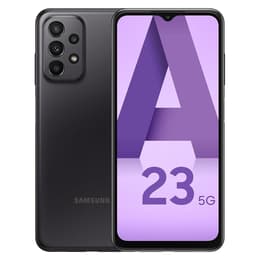
Galaxy A23 5G
Galaxy A23 5G
Starting at

Refurbished price:A$219.00

Versus A$457.00 new

See options
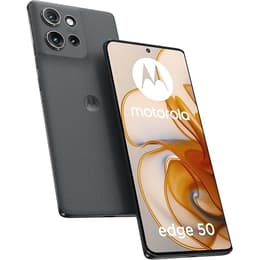
Motorola Edge 50
Motorola Edge 50
See options

The Samsung Galaxy A23 5G, released in September 2022, and the Motorola Edge 50 Fusion, launched in April 2024, are both smartphones designed for everyday use. While the Galaxy A23 5G offers a robust and familiar user experience, the Edge 50 Fusion presents a more contemporary design and updated internal components. This comparison will explore their practical differences to help users determine which device aligns best with their needs.

Scores

Durability

When considering the long-term usability of these devices, their release timelines and software support policies are key factors.

  • Release Timeline: The Samsung Galaxy A23 5G was released in September 2022, making it an older model compared to the Motorola Edge 50 Fusion, which launched in April 2024. This difference in release date impacts their expected software support duration.
  • Software Support: The Galaxy A23 5G launched with Android 12 and has received updates up to Android 15, offering a solid period of major OS upgrades. The Motorola Edge 50 Fusion, starting with Android 14, is expected to receive three major Android updates, up to Android 17, and four years of security updates. This means the Edge 50 Fusion will likely receive software support for a longer overall period due to its newer release.
  • Build and Durability: Both devices feature Gorilla Glass 5 for screen protection. The Edge 50 Fusion also boasts an IP68 rating for dust and water resistance, providing enhanced protection against environmental elements, a feature not present on the Galaxy A23 5G.

Release year

2022

2024

Compatible with latest Update

Yes

Yes

Operating system

Android

Android

Foldable

No

No

Performance

The performance of a smartphone is crucial for daily tasks, app usage, and multitasking. Both devices offer capable performance for their respective segments.

  • Processing Power: The Galaxy A23 5G is equipped with a processor that handles everyday applications and light gaming smoothly. The Motorola Edge 50 Fusion features a more recent processor, providing a more responsive experience for demanding applications and multitasking. Users may notice a difference in speed when opening apps or switching between multiple tasks.
  • Memory and Storage: The Galaxy A23 5G is available with various RAM configurations, including 4GB, 6GB, and 8GB, and offers 64GB or 128GB of internal storage, expandable via a microSD card. The Edge 50 Fusion typically comes with 8GB or 12GB of RAM and storage options up to 512GB, without a microSD slot in some configurations. Higher RAM in the Edge 50 Fusion can contribute to smoother multitasking.
  • Battery Life and Charging: Both phones are equipped with a 5000 mAh battery, suggesting comparable endurance for a full day of use. However, the Motorola Edge 50 Fusion supports significantly faster 68W wired charging, allowing for quicker power replenishment compared to the Galaxy A23 5G's 25W charging.

Memory (GB)

4 GB

12 GB

Screen quality

The display is a primary interface for users, and there are notable differences in the screen technology and features of these two phones.

  • Display Technology and Size: The Samsung Galaxy A23 5G features a 6.6-inch PLS LCD display. In contrast, the Motorola Edge 50 Fusion offers a 6.7-inch pOLED display, which typically provides deeper blacks, higher contrast, and more vibrant colors.
  • Resolution and Refresh Rate: Both devices offer a Full HD+ resolution (1080 x 2408 pixels for A23 5G, 1080 x 2400 pixels for Edge 50 Fusion), ensuring clear visuals. The Galaxy A23 5G has a 120Hz refresh rate, providing smooth scrolling. The Edge 50 Fusion surpasses this with a 144Hz refresh rate, offering an even more fluid visual experience, particularly noticeable during fast-paced content or gaming.
  • Brightness: The Edge 50 Fusion's pOLED display can reach a peak brightness of 1600 nits, which improves visibility in bright outdoor conditions. While the Galaxy A23 5G's LCD panel offers adequate brightness for most situations, it may not match the peak luminance of the Edge 50 Fusion.

Resolution

1080 x 2408

1220x2712

Audiovisual

For many users, camera capabilities are a significant consideration. Both smartphones offer multi-camera setups with distinct strengths.

  • Rear Camera System: The Galaxy A23 5G features a quad-camera setup with a 50 MP main sensor with optical image stabilization (OIS), a 5 MP ultrawide, a 2 MP macro, and a 2 MP depth sensor. The Motorola Edge 50 Fusion has a dual-camera system, including a 50 MP main sensor with OIS and a 13 MP ultrawide lens that also functions for macro photography. The Edge 50 Fusion's higher resolution ultrawide camera may offer more detailed wide-angle shots.
  • Photography Performance: The main cameras on both devices are capable of capturing detailed images in good lighting conditions. The OIS on both main sensors helps in reducing blur from handshakes. User feedback for the A23 5G suggests its main camera is decent, but the auxiliary lenses are less impressive. The Edge 50 Fusion's camera system is generally well-regarded for its performance in its category.
  • Front Camera and Video: The Galaxy A23 5G includes an 8 MP front camera. The Edge 50 Fusion features a higher resolution 32 MP front camera, which can result in more detailed selfies and clearer video calls. The Edge 50 Fusion also supports 4K video recording at 30 frames per second, while the A23 5G records at Full HD.

Front camera

8 megapixels

32 megapixels

Miscellaneous

Beyond core specifications, several practical features contribute to the overall user experience and device utility.

  • Connectivity and Ports: Both devices support 5G connectivity, ensuring access to faster mobile networks. The Galaxy A23 5G retains a 3.5mm headphone jack, which is absent on the Motorola Edge 50 Fusion. Both utilize a USB-C port for charging and data transfer.
  • Biometrics and Sensors: The Galaxy A23 5G features a side-mounted fingerprint sensor for secure unlocking. The Motorola Edge 50 Fusion incorporates an under-display optical fingerprint sensor, offering a more integrated design. Both include standard sensors like accelerometers and gyroscopes.
  • Design and Handling: The Galaxy A23 5G has a glass front and a plastic back and frame, weighing 197g. The Edge 50 Fusion also uses a glass front (Gorilla Glass 5) but offers options for a plastic or silicone polymer back, and is lighter at 177g. The Edge 50 Fusion also features a curved display, contributing to a more modern aesthetic and potentially a more comfortable grip.

Weight

197 oz

180 oz

Screen size (in)

6.6

6.7

Network

5G

5G

SIM card

Physical SIM

Physical SIM

Carrier compatibility

Unlocked

Unlocked

The Samsung Galaxy A23 5G and Motorola Edge 50 Fusion cater to users with differing priorities. The Galaxy A23 5G is often praised for its reliable battery life and a 120Hz display, offering a consistent experience for general use. However, some users have noted concerns regarding its performance with lower RAM variants and the quality of its auxiliary cameras.

The Motorola Edge 50 Fusion, being a newer device, generally receives positive feedback for its vibrant pOLED display, faster charging capabilities, and IP68 water and dust resistance. User sentiment also highlights its appealing design and capable main camera. Some criticisms include the absence of a headphone jack and occasional software update inconsistencies.

Users prioritizing extended software support, a vibrant OLED display, faster charging, and enhanced durability with an IP68 rating may find the Motorola Edge 50 Fusion better suited to their needs. Conversely, those who value a traditional headphone jack, expandable storage, and a slightly more established software ecosystem might lean towards the Samsung Galaxy A23 5G. Both devices are available as quality-assured refurbished options, providing an eco-friendly alternative for consumers.


See all articles

Our recent comparisons