Galaxy A15 5G vs Motorola Edge 50 Fusion

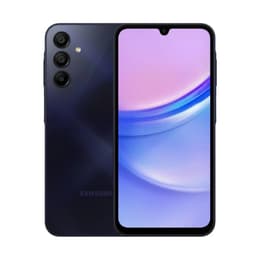
Galaxy A15 5G
Galaxy A15 5G
Starting at

Refurbished price:A$257.00

Versus A$329.00 new

See options
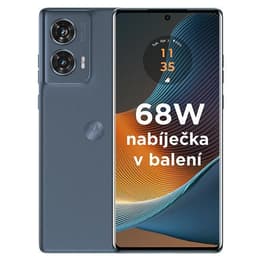
Motorola Edge 50 Fusion
See options

The Samsung Galaxy A15 5G (released December 2023) and the Motorola Edge 50 Fusion (released May 2024) are both Android smartphones designed for everyday use. While the Galaxy A15 5G focuses on extended software support and a reliable display, the Edge 50 Fusion offers a more recent design, enhanced display features, and faster charging capabilities. Both devices operate on the Android platform, providing a familiar user experience.

Scores

Durability

These devices present different timelines for software longevity and physical resilience.

  • Release Timeline and OS Support: The Samsung Galaxy A15 5G, launched in December 2023, is expected to receive four major Android upgrades and five years of security patches, extending its software relevance significantly. The Motorola Edge 50 Fusion, released in May 2024, offers three years of Android updates and four years of security patches.
  • Repairability and Durability: The Galaxy A15 5G features a plastic body and glass front, with some user reports indicating the screen can be prone to shattering from drops. It does not have an official water resistance rating. The Motorola Edge 50 Fusion incorporates Corning Gorilla Glass 5 for screen protection and boasts an IP68 rating for dust and water resistance, suggesting a higher degree of protection against environmental elements.
  • Expected Practical Lifespan: Users prioritizing long-term software updates and security will find the Galaxy A15 5G's policy beneficial. The Edge 50 Fusion's IP68 rating and Gorilla Glass 5 contribute to its physical durability, potentially extending its practical lifespan in varied environments.

Release year

2023

2024

Operating system

Android

Android

Foldable

No

No

Performance

Both smartphones are equipped to handle daily tasks, though their performance characteristics differ in demanding scenarios.

  • Processor Capabilities: The Samsung Galaxy A15 5G is powered by a processor that capably manages general applications and light multitasking. However, some users have noted that it can feel somewhat slow, with basic tasks taking a moment longer to load. The Motorola Edge 50 Fusion features a processor that provides smooth performance for everyday use and multitasking. While it handles most applications efficiently, it may show limitations with graphically intensive games or very demanding applications.
  • Storage and RAM: The Galaxy A15 5G is available with various RAM configurations, including 4GB, 6GB, and 8GB, paired with 128GB or 256GB of internal storage, and offers expandable storage up to 1TB via a microSD card. The Edge 50 Fusion comes with higher RAM options, typically 8GB or 12GB, and internal storage up to 512GB, but it does not support microSD card expansion.
  • Battery Behavior: Both devices are equipped with a 5000 mAh battery, providing substantial power for extended use. The Galaxy A15 5G is noted for its excellent battery longevity, often lasting up to two days on a single charge for many users. The Edge 50 Fusion also offers robust battery life, easily lasting through a full day of moderate to heavy use, with some reports suggesting it can extend to two days for lighter users.

Memory (GB)

8 GB

12 GB

Screen quality

The visual experience on both devices is distinct, primarily due to differences in display technology and refresh rates.

  • Display Technology and Clarity: The Samsung Galaxy A15 5G features a 6.5-inch Super AMOLED display, offering deep blacks and vibrant colors, which enhances the viewing experience for media consumption. The Motorola Edge 50 Fusion sports a slightly larger 6.7-inch pOLED display, also known for its rich colors and contrast. Both provide a Full HD+ resolution (1080x2340 pixels), ensuring clear and sharp visuals.
  • Brightness and Refresh Rate: The Galaxy A15 5G's display reaches a peak brightness of 800 nits in high brightness mode, providing adequate visibility in various lighting conditions. It also features a 90Hz refresh rate, contributing to smoother scrolling and a more fluid user interface. The Edge 50 Fusion offers a higher peak brightness of 1600 nits, which significantly improves outdoor visibility and HDR content viewing. Its 144Hz refresh rate delivers an even smoother visual experience, particularly noticeable during fast-paced content or scrolling.
  • Screen Design: The Edge 50 Fusion incorporates a curved 'endless edge' display, which contributes to a more immersive viewing experience and a sleek design.

Resolution

1080x2340

1080 x 2400

Audiovisual

Both smartphones offer capable camera systems for capturing everyday moments, with some differences in their photographic and video capabilities.

  • Rear Camera Systems: The Samsung Galaxy A15 5G includes a triple rear camera setup with a 50MP main sensor, a 5MP ultrawide lens, and a 2MP macro lens. The 50MP main camera generally produces good images with balanced colors in adequate lighting. The Motorola Edge 50 Fusion features a dual rear camera system, comprising a 50MP main sensor with optical image stabilization (OIS) and a 13MP ultrawide lens that also functions as a macro lens. The Edge 50 Fusion's main camera performs well in most lighting conditions, and its ultrawide lens maintains consistent color.
  • Low-Light and Video Performance: While the Galaxy A15 5G's main camera can capture decent photos, its low-light performance and the utility of its secondary lenses are less pronounced. Video recording is available up to 1080p at 30 frames per second. The Edge 50 Fusion's main camera, aided by OIS, can produce good results in various lighting, and it supports video recording up to 4K at 30 frames per second.
  • Front Camera and Audio: For selfies and video calls, the Galaxy A15 5G has a 13MP front camera. The Edge 50 Fusion offers a higher resolution 32MP front camera, capable of detailed images. The Edge 50 Fusion also features a stereo speaker system with Dolby Atmos support, enhancing the audio experience for media consumption.

Miscellaneous

Beyond core features, several practical elements differentiate these two devices in terms of connectivity, design, and user interaction.

  • Connectivity and Ports: Both smartphones support 5G connectivity, ensuring access to faster mobile networks. The Samsung Galaxy A15 5G includes a 3.5mm headphone jack, a feature absent on the Motorola Edge 50 Fusion. Both utilize a USB-C port for charging and data transfer. The Edge 50 Fusion also supports eSIM, offering flexibility in network management.
  • Biometrics and Sensors: The Galaxy A15 5G features a side-mounted fingerprint sensor for secure unlocking. The Motorola Edge 50 Fusion incorporates an optical under-screen fingerprint sensor, providing a seamless aesthetic. Both devices include standard sensors like accelerometers, gyroscopes, and proximity sensors.
  • Design and Build: The Galaxy A15 5G has a plastic body and a glass front, weighing 200 grams. The Edge 50 Fusion, with its vegan leather or suede finishes, offers a distinct tactile experience and a lighter build at 175 grams. Its slimmer profile and curved display contribute to a comfortable in-hand feel.

Weight

200 oz

175 oz

Screen size (in)

6.5

6.7

Network

5G

5G

SIM card

Physical SIM

Dual Physical SIM

Carrier compatibility

Unlocked

Unlocked

User feedback for the Samsung Galaxy A15 5G frequently highlights its vibrant AMOLED display, impressive battery life, and Samsung's commitment to extended software updates as strong advantages. However, some users have noted that its processing power can lead to a less responsive experience for demanding tasks, and the secondary cameras are not as capable as the main sensor. The build quality, primarily plastic, is also a point of consideration for some.

The Motorola Edge 50 Fusion is often praised for its attractive design, high-refresh-rate pOLED display, and robust battery life with fast charging capabilities. Its IP68 rating for dust and water resistance is also a significant positive for many users. Criticisms sometimes point to its mid-range performance, which may not satisfy users with heavy gaming needs, and a shorter software update commitment compared to some competitors. The absence of expandable storage is also a factor for some users.

Users prioritizing long-term software support and a consistently bright, colorful display for media consumption may find the Samsung Galaxy A15 5G well-suited to their needs. Conversely, individuals who value a more premium design, a smoother display experience, faster charging, and enhanced physical durability with water resistance might lean towards the Motorola Edge 50 Fusion. Both devices offer a solid foundation for daily smartphone use, and considering a quality-assured refurbished option for either model can be an eco-friendly alternative for consumers.

See all articles

Our recent comparisons