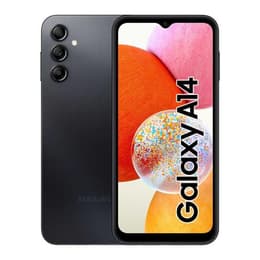
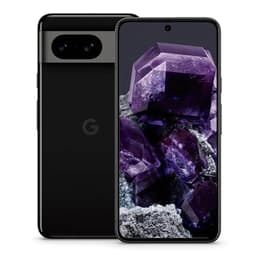

Galaxy A14 vs Google Pixel 8

Galaxy A14
Galaxy A14
Starting at

Refurbished price:A$216.00

Versus A$390.00 new

See options
Google Pixel 8
Google Pixel 8
Starting at

Refurbished price:A$465.00

Versus A$1,245.00 new

See options

Ratings

The Samsung Galaxy A14, released in early 2023, and the Google Pixel 8, launched in late 2023, represent distinct approaches to the smartphone experience. While the Galaxy A14 focuses on delivering essential features within an accessible framework, the Pixel 8 emphasizes advanced computational capabilities and a premium user experience. Both devices operate on the Android platform, but they cater to different user priorities through their hardware and software implementations.

Scores

Durability

The expected practical lifespan of a smartphone is influenced by its release timeline, software support, and physical resilience. These factors determine how long a device remains functional and secure for daily use.

  • Release Timeline and OS Support: The Galaxy A14, released in January 2023, typically receives two major Android OS updates and four years of security updates from its launch. In contrast, the Pixel 8, launched in October 2023, stands out with an industry-leading commitment of seven years of Android OS upgrades, security updates, and Feature Drops, extending its software longevity significantly further into the future.
  • Repairability: The Galaxy A14 generally scores well for repairability, with some reports indicating a score of 8 out of 10. It is noted for being relatively easy to disassemble, with the battery held by an adhesive pull pouch and camera lenses replaceable without full phone disassembly. The Pixel 8 has a moderate repairability score, often cited around 6 or 7 out of 10. Its screen is considered easy to remove, but battery replacement can be more challenging due to adhesives, and the main board is soldered to the charger port.
  • Expected Practical Lifespan: Users prioritizing long-term software support and access to the latest Android features will find the Pixel 8's extended update policy more appealing. The Galaxy A14 offers a solid, but shorter, support window. Both devices are designed for daily use, with their physical durability varying based on build materials and protective features.

Release year

2023

2023

Compatible with latest Update

No

Yes

Operating system

Android

Android

Foldable

No

No

Performance

Performance in smartphones is about how smoothly the device handles daily tasks, from opening applications to managing multiple processes simultaneously. The core components dictate this responsiveness.

  • Processor Capabilities: The Galaxy A14 is equipped with a processor that provides satisfactory performance for everyday tasks and general usage. Users report it handles basic applications and navigation adequately, though some note it can feel slow or experience crashes with more demanding applications or games. The Pixel 8 features a more advanced processor designed to handle demanding applications and multitasking smoothly. It offers a responsive experience, making it well-suited for users who frequently engage in intensive tasks, advanced photography, or mobile gaming.
  • Multitasking and Responsiveness: The Galaxy A14 typically comes with 4GB or 6GB of RAM, which is sufficient for light multitasking but may show limitations when many applications are open concurrently. The Pixel 8 includes 8GB of RAM, contributing to a more fluid multitasking experience and allowing for quicker app switching and background process management without significant slowdowns.
  • Storage Options: The Galaxy A14 offers 64GB or 128GB of internal storage, with the notable advantage of expandable storage via a microSD card, allowing users to significantly increase their storage capacity. The Pixel 8 provides 128GB or 256GB of internal storage, but it does not include a microSD card slot for expansion.

Memory (GB)

4 GB

8 GB

Screen quality

The display is a primary interface for smartphone interaction, and its quality significantly impacts the user experience, from viewing content to navigating the interface.

  • Display Technology and Clarity: The Galaxy A14 features a 6.6-inch PLS LCD display with a Full HD+ resolution (1080x2408 pixels). This panel offers clear visuals for general use, though it may not provide the same depth of blacks or contrast as OLED technology. The Pixel 8 sports a 6.2-inch OLED display with a Full HD+ resolution (1080x2400 pixels), delivering deep blacks, vibrant colors, and excellent contrast.
  • Brightness and Outdoor Visibility: The Galaxy A14's display is generally adequate for indoor viewing but can be challenging to see clearly in bright outdoor conditions due to lower peak brightness levels. The Pixel 8 offers significantly higher peak brightness, reaching up to 2000 nits, which ensures better visibility and readability even under direct sunlight.
  • Refresh Rate and Smoothness: The Galaxy A14 features a 90Hz refresh rate, providing a smoother scrolling experience compared to standard 60Hz displays. The Pixel 8 elevates this with an adaptive 120Hz refresh rate, which can dynamically adjust down to 60Hz to conserve battery. This higher refresh rate contributes to noticeably smoother animations and a more fluid overall interface experience.

Resolution

1080 x 2408

1080 x 2400

Screen type

PLS LCD

OLED

Audiovisual

Camera capabilities are a key differentiator for modern smartphones, influencing how users capture and share their experiences. Both devices offer distinct photographic strengths.

  • Rear Camera System: The Galaxy A14 includes a triple-camera setup with a 50MP main sensor, a 2MP macro lens, and a 2MP depth sensor. Some variants may feature a 5MP ultrawide lens instead of the macro and depth sensors. It performs well in good lighting conditions, capturing decent detail and color, but struggles in low-light environments and lacks optical image stabilization (OIS). The Pixel 8 features a dual-camera system with a 50MP main sensor (with OIS and dual pixel PDAF) and a 12MP ultrawide lens (with autofocus). It excels in image quality across various conditions, including low light, thanks to its advanced computational photography, producing natural colors, wide dynamic range, and sharp details.
  • Front Camera and Video Recording: The Galaxy A14 has a 13MP front-facing camera that performs well in good lighting. Both front and rear cameras support video recording up to 1080p at 30 frames per second. The Pixel 8 features a 10.5MP ultrawide front camera that delivers good results with pleasing colors and effective background blur. Its video recording capabilities are more extensive, supporting 4K resolution at up to 60 frames per second, with features like gyro-EIS, OIS, and 10-bit HDR, along with an Audio Magic Eraser for background noise reduction.
  • Special Features: The Galaxy A14 offers basic camera modes suitable for general photography. The Pixel 8 leverages its advanced processing for features like enhanced low-light performance, improved dynamic range, and specialized video capabilities, making it a more versatile tool for creative content creation.

Main camera

50 megapixels

50 megapixels

Front camera

13 megapixels

10.5 megapixels

Miscellaneous

Beyond core specifications, several practical elements contribute to the overall usability and daily convenience of a smartphone, from connectivity to physical design.

  • Connectivity and Ports: Both devices support 5G connectivity. The Galaxy A14 includes Wi-Fi 5 (802.11 a/b/g/n/ac) and Bluetooth, along with a 3.5mm headphone jack and a USB-C port. The Pixel 8 offers more advanced Wi-Fi 6e/7 and Bluetooth 5.3, featuring only a USB-C port and omitting the traditional headphone jack.
  • Biometric Security and Durability: The Galaxy A14 features a side-mounted fingerprint sensor for secure unlocking. It has a plastic back and frame. The Pixel 8 incorporates an under-display optical fingerprint sensor and face unlock for biometric security. It boasts a more robust build with a glass front and back (Corning Gorilla Glass Victus) and an aluminum frame, along with an IP68 rating for dust and water resistance.
  • Physical Characteristics: The Galaxy A14 measures 167.7 x 78 x 9.1 mm and weighs around 201-202g, offering a larger form factor. The Pixel 8 is more compact at 150.5 x 70.8 x 8.9 mm and weighs 187g, making it easier for one-handed use and pocketability.

Weight

201 oz

187 oz

Screen size (in)

6.6

6.2

Network

4G

5G

SIM card

Physical SIM

Physical SIM + eSIM

Carrier compatibility

Unlocked

Unlocked

User feedback for the Samsung Galaxy A14 often praises its long battery life, with many reporting it can last up to two days with moderate use, and its decent performance for its segment. However, common criticisms include occasional sluggishness, app crashes, and limitations in camera performance, particularly in low light or when using zoom. Some users also note issues with sound quality and touch responsiveness.

The Google Pixel 8 receives consistent acclaim for its exceptional camera capabilities, especially its computational photography features that deliver impressive results across various lighting conditions. Users also appreciate its compact size, smooth performance, and the promise of extended software updates. While its battery life is generally considered reliable for a full day of use, some heavy users find it adequate rather than outstanding.

Users prioritizing extended software longevity, advanced camera features, and a compact, premium build will find the Pixel 8 well-suited to their needs. Its robust performance handles demanding tasks and offers a fluid user experience. Conversely, users who prioritize a large display, expandable storage, and a long-lasting battery for general daily use, and who are less concerned with cutting-edge performance or advanced photography, may lean toward the Galaxy A14. Both devices offer distinct advantages, and considering a quality-assured refurbished option for either model can provide a sustainable choice for consumers.


See all articles

Our recent comparisons