Compare models
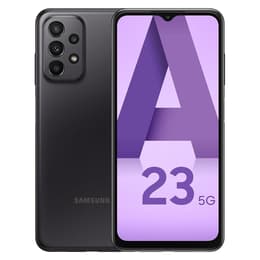
Galaxy A23 5G vs Galaxy A56
- 1-year warranty
- Free standard shipping
- Free 30-day returns
Differences at a glance
The Samsung Galaxy A23 5G (2022) and the Samsung Galaxy A56 (2025) represent different tiers within Samsung's popular smartphone lineup, offering practical technology suited for everyday mobile communication. While both devices support modern cellular networks and run on the Android operating system with Samsung's custom interface, they diverge significantly in processing capability, display technology, and overall build quality. This comparison explores how these differences impact daily tasks, helping you determine which model fits your specific needs.
Available Models
Colour
Storage
Scores
Durability
When examining software longevity and physical build, the Galaxy A56 benefits from a more recent release year, granting it a longer window of official security and system updates compared to the earlier Galaxy A23 5G.
- Software Support Timeline: The Galaxy A56 includes an extended multi-year update schedule, whereas the Galaxy A23 5G is further along in its support lifecycle.
- Repairability and Build: Both models feature standard repair paths, though the newer Galaxy A56 incorporates updated materials designed to handle regular daily wear effectively.
- Expected Lifespan: Users seeking extended software currency will find the Galaxy A56 better positioned for long-term daily use.
Release year
2022
2025
Operating system
Android
Android
Foldable
No
No
Performance
Daily performance and multitasking capabilities vary noticeably due to the generation gap between the internal hardware of each device.
- Multitasking and App Loading: The Galaxy A56 handles heavy applications, rapid switching between tools, and demanding games with noticeable smoothness, while the Galaxy A23 5G manages standard everyday messaging and web browsing reliably.
- Battery Behavior: Both devices are equipped with substantial battery capacities designed to last through a full day of standard use, though power consumption rates differ under heavy processing loads.
- Storage and System Options: Both models provide flexible storage configurations, often paired with expandable storage options via microSD cards to accommodate media and files.
Screen quality
Visual experiences differ substantially between the two handsets, primarily driven by the underlying panel technology and refresh rate capabilities.
- Display Technology: The Galaxy A56 features an advanced OLED panel providing deep contrast and vibrant colors, whereas the Galaxy A23 5G utilizes a standard LCD screen with clear text and acceptable color reproduction.
- Brightness and Outdoor Legibility: The Galaxy A56 offers higher peak brightness levels, making it easier to read content under direct sunlight compared to its counterpart.
- Smoothness: Both screens support elevated refresh rates for fluid scrolling through web pages and user interfaces, though the newer model pairs this with superior panel responsiveness.
Resolution
1080 x 2408
1080 x 2340
Audiovisual
Photography and media recording capabilities reflect the distinct hardware iterations of each smartphone.
- Main Camera Performance: The Galaxy A56 includes an improved primary sensor and enhanced image processing software for sharper low-light photos, while the Galaxy A23 5G captures reliable daylight images with its multi-lens setup.
- Video and Audio: Video stabilization is more refined on the Galaxy A56, reducing jitter during motion recording. Both devices feature built-in speakers adequate for casual media viewing and clear microphone pickup for routine voice calls.
- Secondary Lenses: Ultra-wide and macro sensors on both phones offer varied perspectives for landscape and close-up subjects, though detail retention is stronger on the newer release.
Miscellaneous
Practical everyday features such as connectivity, physical dimensions, and security sensors dictate how each phone integrates into daily routines.
- Connectivity and Ports: Both models feature 5G connectivity, modern Wi-Fi standards, Bluetooth pairing, and standard USB-C charging ports for universal accessory compatibility.
- Security and Biometrics: Both devices offer biometric unlocking methods, utilizing side-mounted fingerprint sensors or facial recognition for convenient device access.
- Physical Handling: Dimensions and weights are comparable, though material finishes provide distinct tactile experiences when holding each phone without a protective case.
Weight
197 oz
200 oz
Screen size (in)
6.6
6.7
Network
5G
4G
SIM card
Physical SIM
Physical SIM + eSIM
Carrier compatibility
Unlocked
Unlocked
What the community thinks
Users prioritizing advanced display quality, smoother multitasking performance, and extended software updates often gravitate toward the Galaxy A56. Conversely, users whose daily routines center around basic communication, web browsing, and media consumption find that the Galaxy A23 5G handles these core tasks reliably without demanding advanced hardware.
When considering your options, choosing a quality-assured refurbished option from Back Market provides a sustainable path to acquiring either device while reducing electronic waste. Evaluating your personal priorities regarding processing speed, screen technology, and long-term software support will guide you toward the most suitable smartphone for your daily lifestyle.