iPhone SE (2020) vs Motorola Edge 30 Fusion

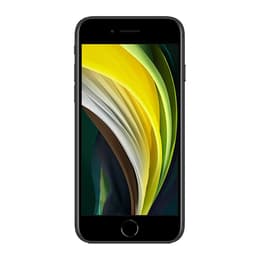
iPhone SE (2020)
iPhone SE (2020)
Starting at

Refurbished price:A$162.00

Versus A$529.00 new

See options
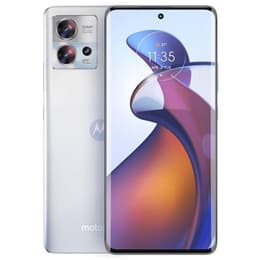
Motorola Edge 30 Fusion
Starting at

Refurbished price:A$257.46

Versus A$1,352.00 new

See options

The iPhone SE 2020 and the Motorola Edge 30 Fusion represent distinct approaches to smartphone design and functionality, catering to different user preferences. Released in April 2020, the iPhone SE 2020 offers a compact form factor and operates on Apple's iOS ecosystem. The Motorola Edge 30 Fusion, launched in September 2022, provides a larger display and runs on the Android operating system. Key differentiators include their operating systems, display technologies, and overall design philosophies.

Scores

Durability

When considering the long-term usability of these devices, their release timelines and software support are important factors.

  • Release Timeline: The iPhone SE 2020 was released in April 2020, while the Motorola Edge 30 Fusion followed in September 2022. This two-and-a-half-year difference means the Motorola device benefits from a more recent starting point for software updates and hardware advancements.
  • Software Longevity: Apple is known for providing extended software support for its devices, with the iPhone SE 2020 having received updates to current iOS versions. Motorola typically offers fewer major Android version updates compared to Apple's iOS support, though it promises two major Android updates and three years of security updates for the Edge 30 Fusion. This suggests the iPhone SE 2020 may receive software support for a longer overall duration from its release date.
  • Repairability and Durability: The iPhone SE 2020 has an IP67 rating for dust and water resistance, indicating it can withstand immersion in up to 1 meter of water for 30 minutes. Its repairability score from iFixit is 6 out of 10, with common repairs like screen and battery replacement being relatively straightforward, though the glass back is noted as difficult to replace. The Motorola Edge 30 Fusion features an IP52 rating, offering splash and dust resistance. Both devices utilize glass for their construction, with the Edge 30 Fusion featuring Corning Gorilla Glass 5 on both front and back for enhanced scratch resistance.

Performance

Performance is a critical aspect for daily smartphone use, influencing how smoothly applications run and how efficiently tasks are handled.

  • Processing Power: The iPhone SE 2020 is equipped with Apple's A13 Bionic chip, which was a leading processor at its release and continues to offer robust performance for a wide range of applications and multitasking. The Motorola Edge 30 Fusion is powered by a Qualcomm Snapdragon 888+ processor, a high-end chip from 2021 that still delivers strong performance for demanding tasks and gaming.
  • Multitasking and Responsiveness: The iPhone SE 2020 comes with 3GB of RAM, which, combined with iOS optimization, allows for smooth navigation and app switching. The Motorola Edge 30 Fusion offers more RAM options, typically 8GB or 12GB, providing ample capacity for extensive multitasking and keeping numerous applications open in the background without significant slowdowns.
  • Storage Options: Both devices offer various internal storage configurations. The iPhone SE 2020 is available with 64GB, 128GB, and 256GB of storage. The Motorola Edge 30 Fusion provides 128GB, 256GB, and 512GB options. Neither device supports expandable storage via a microSD card.
  • Battery Behavior: The iPhone SE 2020 has a 1821 mAh battery, which users often report as sufficient for light to moderate use but may require more frequent charging for heavy usage. The Motorola Edge 30 Fusion features a larger 4400 mAh battery and supports 68W fast charging, which can quickly replenish the battery. Its battery life is generally considered decent for a full day of moderate use.

Memory (GB)

3 GB

8 GB

Screen quality

The visual experience is largely defined by the display, and these two phones offer different screen technologies and sizes.

  • Display Technology and Size: The iPhone SE 2020 features a 4.7-inch Retina HD IPS LCD display. This is a traditional flat screen with a home button and bezels. The Motorola Edge 30 Fusion boasts a larger 6.55-inch P-OLED display with curved edges. P-OLED technology typically offers deeper blacks and higher contrast compared to LCD.
  • Resolution and Clarity: The iPhone SE 2020 has a resolution of 1334x750 pixels at 326 pixels per inch (ppi), providing clear visuals for its size. The Motorola Edge 30 Fusion offers a higher Full HD+ resolution of 1080x2400 pixels, resulting in a sharper image on its larger screen.
  • Brightness and Refresh Rate: The iPhone SE 2020 reaches a typical maximum brightness of 625 nits, which is adequate for most indoor and outdoor conditions. The Motorola Edge 30 Fusion can achieve a peak brightness of up to 1100 nits, making it more visible in bright sunlight. Additionally, the Edge 30 Fusion features a 144Hz refresh rate, providing a smoother scrolling and animation experience compared to the iPhone SE 2020's standard 60Hz refresh rate.

Audiovisual

For many users, camera capabilities are a primary consideration, and both devices offer distinct photographic experiences.

  • Rear Camera System: The iPhone SE 2020 features a single 12-megapixel wide camera with an f/1.8 aperture and optical image stabilization (OIS). It leverages the A13 Bionic chip for computational photography features like Portrait mode and Smart HDR. The Motorola Edge 30 Fusion comes with a triple-camera setup: a 50-megapixel main sensor with OIS and an f/1.8 aperture, a 13-megapixel ultrawide lens with an f/2.2 aperture, and a 2-megapixel depth sensor.
  • Photography Performance: The iPhone SE 2020's single camera is capable of taking impressive pictures in most scenarios, especially considering its hardware. The Motorola Edge 30 Fusion's main camera delivers detailed images with good color reproduction, and its low-light performance is noted as strong. The ultrawide camera provides a broader perspective, though with less detail than the main sensor.
  • Video Recording: Both phones are capable of recording high-quality video. The iPhone SE 2020 supports 4K video recording. The Motorola Edge 30 Fusion can record video at up to 8K resolution, and also offers 4K recording with its ultrawide camera.
  • Front Camera: The iPhone SE 2020 has a 7-megapixel front camera with an f/2.2 aperture. The Motorola Edge 30 Fusion features a higher-resolution 32-megapixel front camera, capable of capturing detailed selfies and 4K video.

Miscellaneous

Beyond the core features, several other elements contribute to the overall user experience and practical utility of a smartphone.

  • Connectivity: The iPhone SE 2020 supports Wi-Fi 6 and Bluetooth 5.0. The Motorola Edge 30 Fusion also supports Wi-Fi 6 and features Bluetooth 5.2, along with 5G network capabilities, which the iPhone SE 2020 lacks. Both devices include NFC for contactless payments.
  • Ports and Biometrics: The iPhone SE 2020 uses a Lightning port for charging and data transfer and relies on Touch ID (fingerprint sensor) integrated into the home button for secure authentication. It does not have a 3.5mm headphone jack. The Motorola Edge 30 Fusion uses a USB-C 3.1 port and features an in-display fingerprint sensor for unlocking. It also omits the 3.5mm headphone jack.
  • Design and Materials: The iPhone SE 2020 maintains the classic iPhone design with a glass front and back and an aluminum frame, weighing 148 grams. The Motorola Edge 30 Fusion features a more modern design with curved glass front and back panels, a metal frame, and a weight of 175 grams. Its slim profile and curved edges contribute to a comfortable in-hand feel.
  • Audio Experience: The Motorola Edge 30 Fusion includes stereo speakers with Dolby Atmos support, providing a rich audio experience for media consumption. The iPhone SE 2020 also offers stereo speakers.

Screen size (in)

4.7

6,55

Network

4G

5G

SIM card

Physical SIM + eSIM

Dual Physical SIM

Carrier compatibility

Unlocked

Unlocked

The iPhone SE 2020 and Motorola Edge 30 Fusion cater to different priorities, reflecting their respective ecosystems and design philosophies. Users often praise the iPhone SE 2020 for its powerful performance in a compact form factor, the familiarity and longevity of the iOS ecosystem, and its reliable camera for everyday photography. Criticisms frequently revolve around its relatively smaller battery capacity, which can lead to more frequent charging for heavy users, and its older design with larger bezels.

The Motorola Edge 30 Fusion is often lauded for its premium design, vibrant and smooth OLED display with a high refresh rate, and its capable performance for demanding applications and gaming. Its fast charging capabilities are also a significant advantage. Common concerns include its battery life, which, while decent, may not be exceptional for all users, and the absence of wireless charging. Some users also note that while its camera is good, it may not consistently match the top-tier performance of some competitors in all conditions.

Users prioritizing a compact device, the Apple iOS ecosystem, and long-term software support may find the iPhone SE 2020 well-suited to their needs. Conversely, those who value a larger, more immersive display, faster refresh rates, a modern design, and the flexibility of the Android operating system, along with rapid charging, might lean toward the Motorola Edge 30 Fusion. Both devices offer compelling features, and considering a quality-assured refurbished option for either model can be an eco-friendly alternative for making an informed choice.
See all articles

Our recent comparisons