Dell Latitude 5420 14" vs Dell Latitude 5520 15"

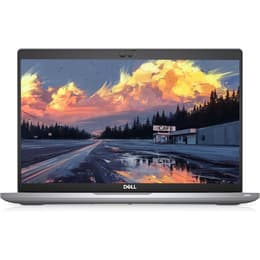
Dell Latitude 5420 14"
Starting at

Refurbished price:A$408.00

Versus A$1,199.00 new

See options
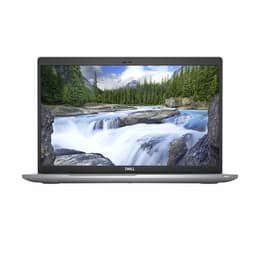
Dell Latitude 5520 15"
Starting at

Refurbished price:A$768.00

Versus A$1,200.00 new

See options

The Dell Latitude 5420 14-inch and the Dell Latitude 5520 15-inch are business-oriented laptops, both released in 2021. While they share a common foundation in terms of their internal components and the Windows operating system, their primary distinctions lie in their physical dimensions and display sizes. These differences cater to varying user preferences regarding portability versus screen real estate for productivity.

Scores

Durability

Both the Dell Latitude 5420 and 5520 were launched in 2021, placing them in the same generation for software support and expected longevity. As Windows-based business laptops, they are designed for sustained use and receive regular operating system updates from Microsoft, ensuring several years of continued software compatibility and security patches.

  • Software Longevity: Both models, being from 2021, are expected to receive Windows updates for a comparable duration, typically offering a practical software lifespan of at least 5-7 years from their release. This ensures continued access to new features and security enhancements.
  • Repairability and Upgradability: Both laptops are designed with business users in mind, featuring accessible internals for upgrades. They typically include two SODIMM slots for RAM expansion up to 64GB and two M.2 PCIe x4 slots for storage, allowing users to extend their functional life by upgrading components. Disassembly for maintenance or upgrades is generally straightforward, involving captive Phillips-head screws.
  • Build Quality: Both the 5420 and 5520 feature robust chassis designed to withstand the demands of daily professional use. The Latitude 5520 notably incorporates up to 21% bioplastics in its construction, highlighting a focus on sustainable materials without compromising durability.

Release year

2020

2021

Last Os Compatibility

Yes

Yes

Operating system

Windows 11

Windows 11

Performance

The performance capabilities of the Dell Latitude 5420 and 5520 are largely consistent across their configurations, as both models utilize the same generation of internal processing units and memory architecture. This ensures a similar experience for most daily computing tasks, from document creation to complex data analysis.

  • Processing Power: Both laptops are equipped with 11th Generation Intel Core processors, such as the i5-1135G7, i5-1145G7, or i7-1185G7. These processors provide ample power for demanding applications and smooth multitasking, allowing users to run multiple programs simultaneously without significant slowdowns.
  • Memory and Storage: Both models support up to 64GB of DDR4 RAM across two SODIMM slots, facilitating efficient handling of large datasets and numerous open applications. For storage, they offer two M.2 PCIe x4 slots, with one supporting the faster Gen 4 speeds, which translates to quick boot times and rapid file access.
  • Battery Performance: Both the Latitude 5420 and 5520 typically come with a 63Wh battery, though some configurations may have a smaller 42Wh unit. Users can expect reliable battery life that often lasts through a full workday, with some reports indicating up to 14-19 hours of web browsing or 10-11 hours of video playback on the larger battery configurations.

Memory (GB)

16 GB

16 GB

Processor

Core i5-1135G7

Core i5-1145G7

Graphic card

Intel Iris Xe Graphics

Integrated Graphics

Screen quality

The primary distinction in screen quality between the Dell Latitude 5420 and 5520 lies in their physical size, with both generally offering visual characteristics suitable for professional use. Both models typically feature Full HD (1920 x 1080) IPS anti-glare displays, providing clear visuals and good viewing angles.

  • Display Technology and Resolution: Both laptops commonly feature 14-inch (5420) or 15.6-inch (5520) Full HD (1920 x 1080) IPS anti-glare panels. These displays offer sharp images and consistent colors across various viewing angles. It is worth noting that some configurations of the 5520 might include a lower-resolution TN panel, which provides a less vibrant viewing experience.
  • Brightness and Clarity: Standard brightness levels for both models are generally around 250-280 nits, which is adequate for typical indoor office environments. Certain configurations of both the 5420 and 5520 can offer brighter panels, reaching up to 400 nits, which enhances visibility in varied lighting conditions, including brighter indoor settings.
  • Viewing Experience: The 14-inch display of the Latitude 5420 offers a balance between screen space and portability, making it suitable for users who frequently move between workspaces. The 15.6-inch display of the Latitude 5520 provides a larger viewing area, which can be beneficial for tasks requiring more screen real estate, such as working with extensive spreadsheets or multiple application windows simultaneously. Both displays generally do not use PWM for brightness adjustment, contributing to comfortable extended use.

Resolution

1920 x 1080

1920 x 1080

Screen type

LCD

LCD

Audiovisual

Both Dell Latitude models are equipped with similar audio and visual components designed to support professional communication and media consumption. They prioritize functionality for virtual meetings and clear sound reproduction.

  • Camera System: Both the Latitude 5420 and 5520 feature an HD webcam, which is suitable for video conferencing and online collaboration. These cameras often include a physical privacy shutter, offering an added layer of security and peace of mind. Optional infrared (IR) sensors are available for facial recognition, enabling secure and convenient login via Windows Hello.
  • Microphone Quality: Both laptops incorporate a microphone array, designed to capture clear audio during calls and recordings. This setup helps in reducing background noise, ensuring that the user's voice is transmitted effectively in various environments.
  • Speaker Output: The audio experience on both devices is delivered through dual 2W speakers. These speakers provide clear sound with a noticeable bass presence, making them suitable for video calls, presentations, and general media consumption. User feedback often describes the sound quality as comparable to a good quality external Bluetooth speaker, which is generally sufficient for a business laptop.

Miscellaneous

Beyond their core computing functions, the Dell Latitude 5420 and 5520 offer a comprehensive suite of practical features that enhance connectivity, security, and user interaction, though with some key differences in physical design.

  • Connectivity and Ports: Both laptops are well-equipped with modern connectivity options, including Wi-Fi 6 (AX201/AX210) for fast wireless internet, Bluetooth 5.1 or 5.2 for peripheral connections, and a Gigabit Ethernet (RJ-45) port for wired network access. They both feature two Thunderbolt 4 ports (USB-C with Power Delivery and DisplayPort Alt Mode), two USB 3.2 Gen 1 Type-A ports (one with PowerShare), an HDMI 2.0 port, a 3.5mm audio jack, and a microSD card reader. Optional LTE support is also available for mobile connectivity.
  • Security Features: Both models integrate business-grade security features. These include optional fingerprint readers, often embedded in the power button, and IR facial recognition for secure biometric authentication via Windows Hello. A Kensington lock slot is also present for physical security.
  • Physical Design and Ergonomics: The Latitude 5420, with its 14-inch display, is the more compact and lighter option, typically weighing between 1.37 kg and 1.4 kg. Its dimensions are approximately 321.35 x 212 x 20.9 mm. The Latitude 5520, featuring a 15.6-inch display, is larger and heavier, starting around 1.59 kg, with dimensions of approximately 357.8 x 233.3 x 19.9 mm. A notable difference is that the 5520 often includes a dedicated numeric keypad, which can be a significant advantage for users involved in data entry or financial tasks.

Weight

1370 oz

1590 oz

Screen size

14

15

The Dell Latitude 5420 14-inch and the Dell Latitude 5520 15-inch are robust business laptops that offer similar core performance and features, with their primary differences revolving around screen size and portability. Users generally praise both models for their solid build quality, comfortable keyboards, comprehensive connectivity options, and reliable battery life that can often last through a full workday.

However, some common criticisms include the average brightness of certain display configurations and the integrated graphics performance, which is not designed for demanding visual tasks or gaming. The 5420's clickpad has also been noted by some users as a departure from older models' dedicated mouse buttons.

Users prioritizing portability and a more compact form factor for frequent travel or varied workspaces may find the Dell Latitude 5420 better suited to their needs. Its lighter weight and smaller footprint make it easier to carry throughout the day. Conversely, users who value a larger screen for enhanced multitasking, extensive spreadsheet work, or multiple open windows will likely prefer the Dell Latitude 5520. The inclusion of a dedicated numeric keypad on the 5520 is also a significant advantage for those who frequently perform data entry. Both models represent a dependable choice for professional use, and considering a quality-assured refurbished option can be an eco-friendly alternative for acquiring these capable devices.

See all articles

Our recent comparisons