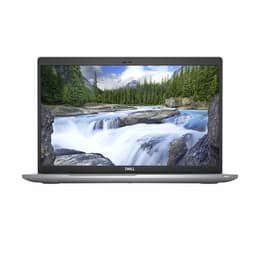
Dell Latitude 5310 13" vs Dell Latitude 5520 15"

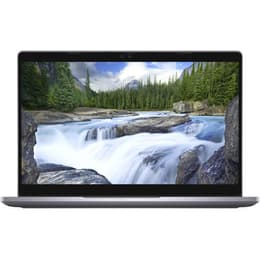
Dell Latitude 5310 13"
See options
Dell Latitude 5520 15"
Starting at

Refurbished price:A$766.00

Versus A$1,200.00 new

See options

The Dell Latitude 5310 13 and the Dell Latitude 5520 15 are business-oriented laptops designed for productivity and reliability. The Latitude 5310 13, released in 2020, offers a compact and portable experience, while the Latitude 5520 15, launched in early 2021, provides a larger display and updated internal components. Both devices run on the Windows operating system and are part of Dell's Latitude series, known for their focus on professional use.

Scores

Durability

When considering the long-term usability of these laptops, their release timelines and Dell's support for business-grade devices are key factors. The Dell Latitude 5310 13 was released in 2020, while the Dell Latitude 5520 15 followed in early 2021, giving the latter a slight advantage in terms of newer components and potentially longer official software support from Dell. Both models are designed to receive ongoing Windows operating system updates, ensuring continued compatibility with modern software and security patches.

  • Software Longevity: The Latitude 5520 15, being a year newer, is likely to receive official operating system updates for a slightly longer period than the Latitude 5310 13, extending its software lifespan.
  • Repairability: Both Latitude models are generally designed with business users in mind, often featuring accessible internal components for maintenance and upgrades. User reports and teardowns indicate that components like RAM and storage are typically user-serviceable, contributing to a practical lifespan.
  • Build Durability: The Latitude series is known for its robust construction. The Latitude 5310 13 features a magnesium case and rigid hinges, while the Latitude 5520 15 incorporates bioplastics in its lid, highlighting a focus on durable materials and sustainable design.

Release year

2020

2021

Last Os Compatibility

Yes

Yes

Operating system

Windows 11

Windows 11

Performance

The performance capabilities of the Dell Latitude 5310 13 and Latitude 5520 15 differ primarily due to their respective processor generations and potential for internal expansion. Both are equipped to handle typical business applications and multitasking, but the newer model offers a more refined experience.

  • Processing Power: The Latitude 5310 13 utilizes 10th Generation Intel Core processors, which provide solid performance for everyday tasks like document editing, web browsing, and video conferencing. The Latitude 5520 15 features 11th Generation Intel Core processors, which offer enhanced performance and power efficiency, resulting in snappier responsiveness for demanding applications and multitasking.
  • Storage Options: Both laptops offer NVMe Solid State Drives (SSDs) for fast boot times and application loading. The Latitude 5520 15 may support PCIe Gen 4 speeds in one of its M.2 slots, offering faster data transfer rates for compatible drives.
  • Battery Behavior: The Latitude 5310 13 typically comes with a 60Wh battery, providing up to 15 hours of web browsing and 12 hours of video playback. The Latitude 5520 15 offers both 42Wh and 63Wh battery options, with the larger 63Wh unit delivering around 14 hours and 43 minutes of web browsing and 10 hours and 38 minutes of video playback.
  • Memory Configuration: Both models support DDR4 RAM in dual-channel configurations. The Latitude 5310 13 can support up to 32GB of RAM, while the Latitude 5520 15 can be configured with up to 64GB of RAM, both featuring two SODIMM slots for upgrades.

Memory (GB)

16 GB

16 GB

Processor

Core i5 - Gen 10 (U)

Core i5-1145G7

Graphic card

Integrated Graphics

Integrated Graphics

Screen quality

The display is a key differentiator between these two models, primarily due to their physical size and available panel options.

  • Display Technology and Resolution: Both laptops commonly feature Full HD (1920x1080) IPS panels, which offer comfortable viewing angles and good clarity for typical use. The Latitude 5520 15 also had configurations with a lower-resolution TN panel, and an optional 4K UHD display for users requiring higher pixel density.
  • Brightness Levels: The Latitude 5310 13 typically offers brightness levels between 293 and 327 nits, suitable for indoor environments. The Latitude 5520 15 generally provides around 275 nits, though some configurations were available with up to 400 nits for better visibility in brighter conditions.
  • Refresh Rate and Smoothness: Both models typically feature a standard 60Hz refresh rate, which is adequate for general productivity tasks and media consumption.
  • Screen Size and Viewing Experience: The Latitude 5310 13 features a 13.3-inch display, making it more compact and portable. The Latitude 5520 15, with its 15.6-inch display, provides significantly more screen real estate, which can be beneficial for multitasking or working with larger documents and spreadsheets.

Resolution

1920 x 1080

1920 x 1080

Screen type

IPS

LCD

Camera

Audiovisual

For communication and multimedia, both Latitude models offer standard features suitable for business environments.

  • Camera System: Both laptops typically include an HD webcam, which is sufficient for video conferencing and online meetings. The Latitude 5520 15 often includes a privacy shutter for the webcam and may offer an optional IR camera for facial recognition, enhancing security and convenience.
  • Microphone Quality: The Latitude 5310 13 is noted to have dual array microphones, which can help in capturing clearer audio during calls by reducing background noise. The Latitude 5520 15 also features built-in microphones suitable for general use.
  • Speaker Output: The speakers on the Latitude 5310 13 have been noted for their clear and loud output, making them suitable for media consumption and online learning. The Latitude 5520 15 produces sound with decent quality, adequate for typical media consumption.
  • Video Recording: Both devices offer HD quality video recording capabilities, primarily for video conferencing purposes.

Miscellaneous

Beyond core performance and display, several practical elements contribute to the overall user experience of these laptops.

  • Connectivity Options: Both the Latitude 5310 13 and Latitude 5520 15 support modern wireless standards, including Wi-Fi 6 and Bluetooth, ensuring reliable network connections. The Latitude 5520 15 further offers optional Bluetooth 5.2 and LTE mobile broadband connectivity for enhanced flexibility in various work environments.
  • Port Selection: The Latitude 5310 13 includes USB-A (Gen 1, with PowerShare), USB-C (Gen 2, with DisplayPort functionality and optional Thunderbolt 3), HDMI 1.4, a microSD card reader, an audio jack, and an RJ-45 Ethernet port. The Latitude 5520 15 offers USB-A (Gen 1, with PowerShare), Thunderbolt 4 ports (with DisplayPort Alt Mode/USB4/Power Delivery for 11th Gen processors, or Thunderbolt 3 for 10th Gen), HDMI (2.0 for 11th Gen, 1.4 for 10th Gen), an RJ-45 Ethernet port, a microSD card reader, and an audio jack.
  • Security Features: Both models can be equipped with useful sensors such as optional fingerprint readers and IR cameras for Windows Hello facial recognition, providing convenient and secure login methods.
  • Physical Attributes: The Latitude 5310 13 is a more compact device, weighing approximately 1.22 kg. The Latitude 5520 15, being a larger laptop, starts at 1.59 kg. The 5310 features a magnesium case, contributing to its solid feel, while the 5520 incorporates bioplastics in its lid, reflecting a focus on sustainable design alongside durability.

Weight

7500 oz

1590 oz

Screen size

13

15

User feedback for the Dell Latitude 5310 13 often praises its portability, solid build quality, and long battery life, making it a reliable companion for mobile professionals. However, some users have noted that its display quality can be average and the fan might become audible under heavy workloads. The Dell Latitude 5520 15 is frequently commended for its larger screen, updated performance capabilities, and comprehensive connectivity options, including Thunderbolt 4. Criticisms sometimes point to the display quality in certain configurations and occasional fan noise during demanding tasks.

Users prioritizing a highly portable and compact device for everyday productivity and extended battery life on the go may find the Dell Latitude 5310 13 well-suited to their needs. Conversely, individuals who require more screen real estate for multitasking, enhanced processing power for more demanding applications, and a full-sized keyboard with a numerical pad might lean towards the Dell Latitude 5520 15. Both laptops offer robust features for business use, and choosing between them often comes down to the preference for screen size and the level of performance required for specific tasks. Exploring quality-assured refurbished options for either model can provide an eco-friendly alternative for acquiring these capable business laptops.

See all articles

Our recent comparisons