
Galaxy A35 vs Motorola Edge 30 Pro

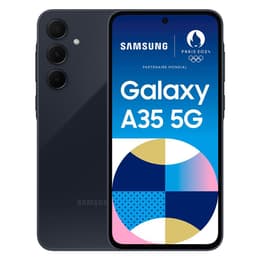
Galaxy A35
Galaxy A35
See options
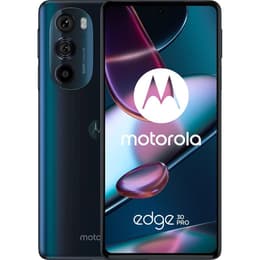
Motorola Edge 30 Pro
Starting at

Refurbished price:A$291.72

Versus A$2,709.00 new

See options

The Samsung Galaxy A35, released in March 2024, and the Motorola Edge 30 Pro, launched in March 2022, are Android smartphones designed for different user priorities. While the Galaxy A35 focuses on extended software support and a robust display, the Edge 30 Pro emphasizes raw processing power and a very high refresh rate screen. Both devices run on the Android operating system, but their update policies and hardware philosophies diverge significantly.

Scores

Durability

The longevity of a smartphone is influenced by its software support, physical durability, and ease of repair.

  • Software Updates: The Samsung Galaxy A35 offers a notable commitment to software longevity, promising four generations of Android OS upgrades and five years of security updates. This means the device is expected to receive updates up to Android 18 and security patches until 2029. In contrast, the Motorola Edge 30 Pro, having launched earlier, typically received two major OS updates and three years of security patches, and has already reached its end of life for official Android operating system updates.
  • Physical Durability: The Galaxy A35 features Gorilla Glass Victus Plus on its display and back, along with an IP67 rating for dust and water resistance, indicating protection against immersion in water. The Motorola Edge 30 Pro uses Gorilla Glass 5 for its back and has an IP52 rating, making it splash resistant but not designed for submersion.
  • Repairability: The Samsung Galaxy A35 has an official repairability score of 8.4 out of 10, with some sources giving it 8.5 out of 10, suggesting improved access to spare parts and easier disassembly for certain components. The Motorola Edge 30 Pro has a repairability score of 6.5 out of 10, indicating that while some components are accessible, disassembly can be more complex due to adhesive use and numerous internal screws.

Release year

2024

2022

Operating system

Android

Android

Foldable

No

No

Performance

Performance in daily use, from app responsiveness to multitasking, is shaped by a device's internal components and software optimization.

  • Processing Power: The Motorola Edge 30 Pro is equipped with a processor known for its high-end capabilities, delivering very fast and responsive performance for demanding applications and gaming. However, some users have reported that this powerful processor can lead to increased heat generation during intensive tasks. The Samsung Galaxy A35 features a capable mid-range processor that handles everyday tasks, app loading, and general multitasking smoothly, though it may not match the peak performance of the Edge 30 Pro in highly strenuous scenarios.
  • Memory and Storage: The Edge 30 Pro offers a wider range of RAM options, including configurations with up to 12GB, which can benefit extensive multitasking and keeping many applications open in the background. It also provides various storage capacities up to 512GB. The Galaxy A35 comes with 6GB or 8GB of RAM and 128GB or 256GB of internal storage, with the added flexibility of expandable storage via a microSD card, which the Edge 30 Pro lacks.
  • Battery Behavior: The Galaxy A35, with its 5000mAh battery, generally offers extended usage, often lasting a day and a half with moderate use. The Edge 30 Pro has a 4800mAh battery, providing solid battery life that typically gets heavy users through about four hours of screen time, potentially requiring an evening charge. The Edge 30 Pro supports wireless charging, a feature not present on the Galaxy A35.

Memory (GB)

6 GB

8 GB

Screen quality

The display is a primary interface, and its quality significantly impacts the user experience for media consumption, browsing, and daily interactions.

  • Display Technology and Size: Both devices feature vibrant OLED displays, known for deep blacks and rich colors. The Motorola Edge 30 Pro has a slightly larger 6.7-inch display, while the Samsung Galaxy A35 offers a 6.6-inch screen. Both provide a Full HD+ resolution, ensuring sharp visuals for typical viewing distances.
  • Refresh Rate and Smoothness: The Edge 30 Pro boasts a higher 144Hz refresh rate, which translates to exceptionally smooth scrolling and fluid animations, particularly noticeable in fast-paced content and gaming. The Galaxy A35 features a 120Hz refresh rate, also providing a very smooth visual experience for most users.
  • Brightness and Outdoor Visibility: The Galaxy A35 offers a peak brightness of 1000 nits, contributing to good visibility even in bright outdoor conditions. While the Edge 30 Pro's display is generally considered good, its maximum brightness of 658 nits might be less optimal under direct sunlight compared to the A35.

Resolution

1080x2340

1080 x 2400

Audiovisual

Camera capabilities are a key consideration for many users, influencing how they capture and share moments.

  • Rear Camera System: The Samsung Galaxy A35 features a triple rear camera setup with a 50MP main sensor that includes optical image stabilization (OIS), an 8MP ultrawide lens, and a 5MP macro lens. It is praised for capturing detailed daylight photos with natural color tones and improved HDR performance. The Motorola Edge 30 Pro also has a dual 50MP main and ultrawide camera system, alongside a 2MP depth sensor. Its main camera performs well in good lighting, but user feedback suggests it can struggle with low-light conditions and capturing moving subjects, often producing grainy or noisy images.
  • Video Recording and Features: Both devices are capable of recording 4K video at 30 frames per second (fps) with their main rear cameras. The Edge 30 Pro's front camera can record 4K video at 60fps. The Galaxy A35's ultrawide camera video quality is noted to be less impressive. The A35's main camera benefits from OIS for more stable video capture.
  • Front Camera: The Motorola Edge 30 Pro stands out with a high-resolution 60MP front-facing camera, though some users report issues with motion blur and grain in less ideal lighting. The Samsung Galaxy A35 has a 13MP front camera, which is generally considered good for selfies and video calls, capturing natural skin tones.

Miscellaneous

Beyond core features, several practical elements contribute to the overall user experience and daily convenience.

  • Connectivity and Ports: Both smartphones support 5G connectivity, ensuring access to faster mobile networks. The Motorola Edge 30 Pro includes Wi-Fi 6E for enhanced wireless speeds and Bluetooth 5.2. The Samsung Galaxy A35 also offers modern Wi-Fi and Bluetooth standards. Both devices utilize a USB-C port for charging and data transfer.
  • Biometric Security: The Galaxy A35 features an in-display fingerprint scanner, offering a seamless unlocking experience. The Edge 30 Pro integrates its fingerprint sensor into the power button, which is noted for its speed and accuracy. Both also offer face recognition capabilities.
  • Design and Handling: The Galaxy A35 has a glass back and a plastic frame, with an IP67 rating for dust and water resistance. It weighs 209 grams. The Edge 30 Pro features a glass front and back (Gorilla Glass 5 on the rear) with a plastic frame, weighing 196 grams. It has an IP52 splash-resistant rating. The Edge 30 Pro also includes stereo speakers with Dolby Atmos support, providing a rich audio experience.

Weight

209 oz

196 oz

Screen size (in)

6.6

6,7

Network

5G

5G

SIM card

Physical SIM + eSIM

Dual Physical SIM

Carrier compatibility

Unlocked

Unlocked

The Samsung Galaxy A35 and Motorola Edge 30 Pro cater to distinct user needs, reflecting their different release timelines and design philosophies. Users often praise the Galaxy A35 for its vibrant display, extended software support, and reliable battery life, with its main camera performing well in daylight conditions. Some common criticisms include its macro camera being less useful and occasional lag when launching heavier applications.

Conversely, the Motorola Edge 30 Pro is frequently lauded for its powerful processing capabilities, delivering a very fast and smooth user experience, especially for demanding tasks. Its 144Hz display and stereo speakers also receive positive mentions. However, user feedback often points to its camera performance, particularly in low light and with moving subjects, as an area that could be improved. The device's tendency to generate heat during intensive use and its shorter software update commitment are also noted concerns.

Users prioritizing long-term software support, a higher water resistance rating, and consistent daylight photography may find the Samsung Galaxy A35 well-suited to their needs. Its larger battery capacity also appeals to those seeking extended usage between charges. On the other hand, individuals who value raw processing power for gaming and heavy applications, a higher display refresh rate, and wireless charging capabilities might lean towards the Motorola Edge 30 Pro. For those considering either device, exploring quality-assured refurbished options can provide an eco-friendly alternative to extend the life cycle of these electronics.

See all articles

Our recent comparisons