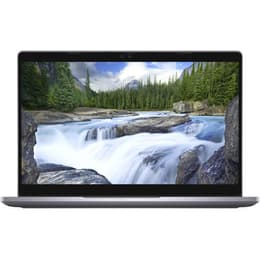
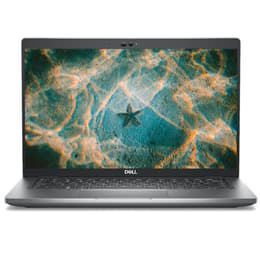
Dell Latitude 5310 13" vs Dell Latitude 5430 14"

Dell Latitude 5310 13"
See options
Dell Latitude 5430 14"
Starting at

Refurbished price:A$971.00

Versus A$1,500.00 new

See options

The Dell Latitude 5310 13, released in 2020, and the Dell Latitude 5430 14, launched in 2022, are business-oriented laptops designed for productivity and reliability. While both models operate on Windows and share a focus on professional use, the 5430 introduces more recent internal components and a slightly larger display, offering an evolution in performance and connectivity over its predecessor. These differences cater to varying user needs, from everyday tasks to more demanding workloads.

Scores

Durability

When considering the longevity of these devices, their release timelines and Dell's typical support cycles are key factors. The Dell Latitude 5310 13, released in 2020, benefits from a robust build and is designed for sustained use in professional environments. The Dell Latitude 5430 14, introduced in 2022, inherently offers a longer potential lifespan for software updates and component availability due to its more recent launch. Both models are generally repairable, with accessible internal components for upgrades and servicing.

  • Software Support: The Latitude 5430, being two years newer, is expected to receive operating system updates and security patches for a longer duration than the 5310, extending its functional life for users who prioritize the latest software features and security protocols. Both support Windows 11 and various Linux distributions.
  • Physical Durability: The Latitude 5310 features a chassis that incorporates carbon fiber, contributing to its durability. The Latitude 5430 also utilizes durable materials like plastic, polycarbonate, and carbon, with a semi-rugged variant available that meets MIL-STD 810H and IP-53 standards for enhanced protection against environmental factors.
  • Repairability: Both laptops are designed with business users in mind, often featuring components that can be accessed and replaced, such as RAM and storage, which contributes to their overall practical lifespan and ease of maintenance.

Release year

2020

2022

Operating system

Windows 11

Windows 11

Performance

The performance capabilities of these laptops are largely influenced by their respective processor generations and memory configurations. The Dell Latitude 5310 13 is equipped with 10th-generation processors, providing solid performance for common business applications and multitasking. The Dell Latitude 5430 14, featuring 11th or 12th-generation processors, offers a noticeable step up in processing power and efficiency.

  • Processing Power: The Latitude 5430's newer generation processors deliver improved responsiveness for demanding applications, faster data processing, and more efficient handling of complex tasks compared to the 5310. This translates to smoother operation for users who frequently engage in data analysis, content creation, or extensive multitasking.
  • Memory and Storage: The Latitude 5310 supports up to 32GB of DDR4 RAM, suitable for most professional workloads. The Latitude 5430 can be configured with up to 64GB of DDR4 RAM, providing greater headroom for intensive multitasking and future-proofing for evolving software requirements. Both models utilize fast NVMe SSDs for quick boot times and application loading.
  • Battery Behavior: The Latitude 5310, with its 60Wh battery option, can offer up to 15 hours of web browsing or 12 hours of video playback, with real-world usage often around 11 hours, making it suitable for extended periods away from a power outlet. The Latitude 5430, with battery options up to 58Wh (or 53.5Wh for the rugged variant), also provides strong battery performance, with some configurations reporting up to 14 hours of use, catering to mobile professionals.

Memory (GB)

16 GB

16 GB

Processor

Core i5 - Gen 10 (U)

Core i7-1265U

Graphic card

Integrated Graphics

Integrated Graphics

Screen quality

The visual experience on these laptops is defined by their display technology, resolution, and brightness levels, catering to different preferences for clarity and outdoor visibility. Both models offer Full HD resolution, providing clear visuals for productivity tasks.

  • Display Technology and Resolution: Both the Latitude 5310 and 5430 typically feature 13.3-inch and 14-inch Full HD (1920x1080) IPS or WVA panels, respectively, ensuring comfortable viewing angles and good color reproduction. Some configurations of both models also offered lower-resolution TN panels, which generally provide a less vibrant viewing experience.
  • Brightness and Refresh Rate: The Latitude 5310's display typically offers brightness levels between 220 and 300 nits, which is adequate for indoor use and some outdoor conditions. The Latitude 5430 can reach up to 400 nits in certain configurations, enhancing visibility in brighter environments. Both laptops generally feature a standard 60Hz refresh rate, suitable for business applications and general media consumption.
  • Touchscreen Options: Both models offer optional touchscreen functionality, providing an alternative input method for interactive tasks and presentations.

Resolution

1920 x 1080

1920 x 1080

Screen type

IPS

LCD

Audiovisual

For communication and media consumption, the camera systems, microphone quality, and speaker output are important considerations. Both the Latitude 5310 and 5430 are equipped to handle video conferencing and provide a satisfactory audio experience for their class.

  • Camera System: Both laptops typically include a 720p HD webcam, which is standard for business laptops and sufficient for most video calls and online meetings. The image quality is generally clear for professional communication.
  • Audio Experience: Both models feature stereo speakers and dual array microphones, designed to provide clear audio for calls and media playback. The audio output is suitable for individual use in a quiet office environment or for participating in virtual meetings.
  • Video Recording: The 720p webcams on both devices are capable of recording video at standard quality, which is adequate for internal communications or basic content creation, though not intended for high-fidelity video production.

Miscellaneous

Beyond core performance and display, several practical elements contribute to the overall user experience, including connectivity, port selection, security features, and physical design. These aspects can significantly influence how a laptop integrates into a user's daily workflow.

  • Connectivity and Ports: The Latitude 5310 offers Wi-Fi 6 and Bluetooth 5.1, along with a Thunderbolt 3 port for versatile connectivity. The Latitude 5430 steps up with Wi-Fi 6 or 6E, Bluetooth 5.2, and Thunderbolt 4 ports, providing faster wireless speeds and more advanced peripheral support. Both include essential ports like USB-A, HDMI, Ethernet, and a MicroSD card reader.
  • Security Features: Both laptops prioritize security, offering optional features such as fingerprint readers and IR cameras for facial recognition, enhancing secure login and data protection. The Latitude 5430 also includes a privacy shutter for the webcam and optional Smart Card readers.
  • Portability and Build: The Latitude 5310 is a compact 13.3-inch device weighing around 1.22 kg, making it highly portable. The Latitude 5430 is a 14-inch laptop with a starting weight of approximately 1.36 kg, offering a slightly larger screen without a significant increase in weight for its standard configurations. The semi-rugged variant of the 5430 is heavier, designed for more demanding physical environments.

Weight

7500 oz

1360 oz

Screen size

13

14

The Dell Latitude 5310 13 and Dell Latitude 5430 14 both serve as reliable business laptops, each with distinct advantages. Users often praise the Latitude 5310 for its solid build quality and dependable performance for everyday tasks, with many appreciating its long battery life for mobile work. Some users, however, note that its 10th-generation processors, while capable, may not offer the same future-proof performance as newer models.

The Latitude 5430 generally receives positive feedback for its enhanced performance due to newer processors and improved connectivity options like Thunderbolt 4 and Wi-Fi 6E. Its slightly larger screen and optional rugged features are also frequently highlighted as benefits. A common concern for some users of the 5430 has been occasional battery drain issues during sleep mode, though this can often be addressed through software updates or configuration adjustments.

For users prioritizing a compact form factor and strong battery life for standard office applications, the Dell Latitude 5310 13 remains a capable choice. Its established reliability makes it a suitable option for those seeking a proven workhorse. Conversely, individuals who require more processing power for intensive applications, desire the latest connectivity standards, or benefit from a slightly larger display and enhanced durability options, will find the Dell Latitude 5430 14 to be a more aligned fit. Both models are available as quality-assured refurbished options, providing a sustainable choice for budget-conscious professionals.

See all articles

Our recent comparisons