


Asus Zenfone 9 vs Google Pixel 7a

Asus Zenfone 9
Asus Zenfone 9
See options
Google Pixel 7a
Google Pixel 7a
Starting at

Refurbished price:A$337.00

Versus A$749.00 new

See options

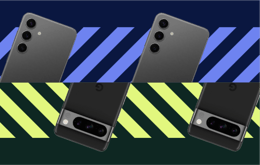
The Asus Zenfone 9, released in September 2022, and the Google Pixel 7A, launched in May 2023, are both Android smartphones that offer distinct approaches to user experience. While the Zenfone 9 emphasizes a compact form factor with powerful internal components, the Pixel 7A focuses on an optimized software experience and advanced camera capabilities. Both devices run on the Android operating system, providing access to a wide ecosystem of applications and services.

Scores

Durability

The longevity of a smartphone is influenced by its release timeline, software support, and ease of repair.

  • Release Timeline: The Asus Zenfone 9 was released in September 2022, making it an older model compared to the Google Pixel 7A, which launched in May 2023. This difference in release dates impacts their respective software support cycles.
  • OS Support Duration: The Google Pixel 7A is expected to receive five years of OS and security updates, with OS updates extending until at least May 2026 and security updates until May 2028. In contrast, the Asus Zenfone 9 typically receives two years of major Android software updates and a total of three to four years of security updates, with some users reporting updates ending sooner. This means the Pixel 7A offers a longer period of guaranteed software support.
  • Repairability: The Google Pixel 7A initially received a repairability score of 4/10 from iFixit, which was later uprated to 5/10 after Google provided comprehensive service manuals. The Asus Zenfone 9 received a repairability score of 4.5 out of 10, indicating that while some components are accessible, screen replacement can be challenging. Both devices present some challenges for self-repair, though the Pixel 7A benefits from better documentation.

Release year

2022

2022

Compatible with latest Update

Yes

Yes

Operating system

Android

Android

Foldable

No

No

Performance

Both smartphones are equipped with capable processors designed to handle daily tasks and more demanding applications, though they differ in their underlying architecture and real-world performance characteristics.

  • Storage Options: The Asus Zenfone 9 offers multiple configurations, including 128GB and 256GB of internal storage, paired with 8GB, 12GB, or 16GB of RAM. The Google Pixel 7A comes with a single storage option of 128GB and 8GB of RAM. Users requiring more storage or RAM flexibility might find the Zenfone 9 more accommodating.
  • Battery Behavior: The Asus Zenfone 9, with its 4300 mAh battery, is often praised for its impressive battery life, capable of lasting through a full day of heavy use, which is notable for its compact size. The Google Pixel 7A features a 4385 mAh battery, and while it can last a full day with moderate use, heavy usage may necessitate a midday charge, with some users reporting inconsistent battery performance.
  • Overall System Responsiveness: The Zenfone 9, powered by a high-end processor from its release year, delivers very fast and snappy performance, making it suitable for demanding apps and gaming. The Pixel 7A, utilizing Google's custom-designed processor, provides a smooth and efficient experience for everyday tasks and general usage, though some benchmarks indicate slightly slower video export times compared to other devices.

Memory (GB)

6 GB

8 GB

Screen quality

The visual experience on both devices is delivered through high-quality displays, each with specific characteristics that cater to different preferences.

  • Display Technology and Clarity: Both the Asus Zenfone 9 and the Google Pixel 7A feature OLED displays, known for their deep blacks and vibrant colors. The Zenfone 9 has a 5.9-inch Super AMOLED display, while the Pixel 7A offers a slightly larger 6.1-inch OLED panel. Both provide a Full HD+ resolution (1080x2400 pixels), resulting in sharp and clear visuals for typical viewing.
  • Brightness Levels: The Asus Zenfone 9's display can reach a peak brightness of 1100 nits, offering good visibility even in bright outdoor conditions. The Pixel 7A's display also provides good brightness, though some users have noted that it might require higher brightness settings in daylight, potentially impacting battery consumption.
  • Refresh Rate and Smoothness: The Asus Zenfone 9 features a 120Hz refresh rate, contributing to very smooth scrolling and fluid animations. The Google Pixel 7A has a 90Hz refresh rate, which also provides a noticeably smoother experience compared to standard 60Hz displays, enhancing the overall responsiveness of the interface.

Resolution

1080 x 2400

1080 x 2400

Screen type

Super AMOLED

OLED

Audiovisual

Both smartphones offer capable camera systems, but they approach photography with different strengths and features.

  • Camera System Capabilities: The Asus Zenfone 9 features a dual-camera setup with a 50 MP main sensor that includes a 6-axis gimbal stabilization system, and a 12 MP ultrawide lens. The Google Pixel 7A also has a dual-camera system, comprising a 64 MP main sensor with optical image stabilization (OIS) and a 13 MP ultrawide lens.
  • Photography Performance: The Zenfone 9's gimbal stabilization is particularly effective for video recording and can assist in long-exposure still shots, though its image processing in auto mode can sometimes be inconsistent. The Pixel 7A is widely praised for its exceptional camera quality, consistently producing detailed images with accurate colors across various lighting conditions, often comparable to more premium devices.
  • Video Recording Quality: The Asus Zenfone 9 supports video recording up to 8K at 24fps and 4K at 30/60/120fps, with its gimbal stabilization providing smooth footage. The Google Pixel 7A records video at up to 4K at 30/60fps, offering good stabilization and sharp results.
  • Audio Experience: The Zenfone 9 includes a 3.5mm headphone jack and offers good stereo sound with Dirac tuning. The Pixel 7A features stereo speakers but lacks a headphone jack. Some users have noted that the Pixel 7A's speakers can be weak.

Main camera

50 megapixels

64 megapixels

Front camera

12 megapixels

13 megapixels

Miscellaneous

Beyond core features, several practical elements differentiate these two devices, impacting daily usability and convenience.

  • Connectivity Options: Both devices support 5G connectivity, Wi-Fi 6E, and NFC for mobile payments. The Google Pixel 7A features Bluetooth 5.3, a slightly newer standard than the Asus Zenfone 9's Bluetooth 5.2.
  • Port Types: The Asus Zenfone 9 includes a USB-C 3.0 port and notably retains a 3.5mm headphone jack, which is a practical feature for many users. The Google Pixel 7A uses a USB-C 3.2 port but omits the traditional headphone jack.
  • Useful Sensors and Biometrics: The Zenfone 9 features a side-mounted fingerprint scanner integrated into the power button, which also supports gesture controls. The Pixel 7A offers an under-display fingerprint sensor and includes face recognition for unlocking the device.
  • Weight and Dimensions: The Asus Zenfone 9 is designed as a compact device, measuring 146.5 x 68.1 x 9.1 mm and weighing 169g, making it easy for one-handed use. The Google Pixel 7A is slightly larger and heavier at 152 mm x 72.9 mm x 9 mm and 193.5g.
  • Build Materials and Durability: The Zenfone 9 features an IP68 rating for dust and water protection and its display is protected by Corning Gorilla Glass Victus. The Pixel 7A has an IP67 rating and uses Corning Gorilla Glass 3 for screen protection.

Weight

169 oz

212 oz

Screen size (in)

5.9

6.1

Network

5G

5G

SIM card

Dual Physical SIM

Physical SIM + eSIM

Carrier compatibility

Unlocked

Unlocked

Connector

USB-C + Jack 3.5mm

USB-C

User feedback for the Asus Zenfone 9 frequently highlights its appeal as a compact, high-performance Android device, with many appreciating its powerful processor and excellent battery life for its size. The inclusion of a 3.5mm headphone jack and the gimbal-stabilized main camera are also common praise points. However, criticisms often revolve around its shorter software update policy compared to competitors and occasional inconsistencies in camera processing.

The Google Pixel 7A consistently receives acclaim for its exceptional camera quality, often considered a standout feature, and its smooth, optimized software experience. Users also value its longer software support timeline and the convenience of wireless charging. Common concerns include potentially inconsistent battery life for heavy users and the absence of a headphone jack.

Users prioritizing a compact form factor, top-tier performance in a small package, and the presence of a headphone jack may find the Asus Zenfone 9 well-suited to their needs. Conversely, those who prioritize an outstanding camera experience, a longer software support commitment, and a clean Android interface will likely lean towards the Google Pixel 7A. Both devices offer compelling features, and considering a quality-assured refurbished option for either model can be a sustainable choice for consumers.

See all articles

Our recent comparisons