
Asus Zenfone 9 vs Google Pixel 6a

Asus Zenfone 9
Asus Zenfone 9
See options
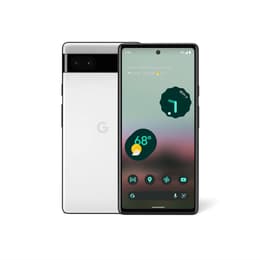
Google Pixel 6a
Google Pixel 6a
Starting at

Refurbished price:A$237.00

Versus A$569.00 new

See options

The Asus Zenfone 9, released in late 2022, and the Google Pixel 6A, launched in mid-2022, are both compact Android smartphones designed to offer a capable experience in a smaller form factor. While both devices run on the Android operating system, they present distinct approaches to hardware and software integration. The Zenfone 9 emphasizes raw performance and advanced camera stabilization, whereas the Pixel 6A focuses on Google's integrated software experience and computational photography.

Scores

Durability

When considering the long-term usability of these devices, their release timelines and software support policies are key factors.

  • Release Timeline: Both the Asus Zenfone 9 and the Google Pixel 6A were released in 2022, making them similar in age. The Zenfone 9 was announced in July and released in September 2022, while the Pixel 6A was released in July 2022. [1, 6, 8, 13, 24, 33, 35]
  • Software Longevity: Google typically provides a strong commitment to software updates for its Pixel line, with the Pixel 6A receiving five years of security updates and several major Android version upgrades. [18, 24] Asus generally offers a shorter update cycle for its Zenfone series, though the Zenfone 9 launched with Android 12 and is upgradable to Android 14. [6, 16]
  • Durability Features: The Zenfone 9 features Gorilla Glass Victus for display protection and an IP68 rating for dust and water resistance. [5, 8, 26] The Pixel 6A comes with Gorilla Glass 3 and an IP67 rating, offering good protection against dust and water immersion. [1, 2, 33, 36]

Release year

2022

2022

Compatible with latest Update

Yes

Yes

Foldable

No

No

Performance

The performance of a smartphone is crucial for daily tasks, from app usage to demanding games and multitasking.

  • Processing Power: The Asus Zenfone 9 is equipped with a high-performance processor, allowing it to handle demanding applications and intensive multitasking with ease, providing a very responsive user experience. [3, 17, 30] The Google Pixel 6A features Google's own integrated processor, which is optimized for the device's software, ensuring smooth navigation and efficient handling of everyday tasks and Google's AI features. [1, 14, 18, 38]
  • Memory and Storage: The Zenfone 9 offers configurations with 8GB or 16GB of RAM, paired with 128GB or 256GB of internal storage. [3, 6, 7, 10, 17, 30] The Pixel 6A comes with 6GB of RAM and 128GB of internal storage. [1, 2, 4, 9, 14, 18, 23, 28, 29, 31, 36, 38] Neither device offers expandable storage via a microSD card. [3, 14]
  • Battery Behavior: The Zenfone 9 houses a 4300 mAh battery, which generally provides extended usage times, often lasting through a full day for many users. [3, 5, 6, 17, 30] The Pixel 6A has a 4410 mAh battery, and while it can last a full day with moderate use, some reports indicate it may require more frequent charging for heavy users compared to its predecessor. [4, 9, 19, 22, 28, 34, 37]

Memory (GB)

6 GB

6 GB

Screen quality

The display is a primary interface for any smartphone, influencing everything from media consumption to daily interactions.

  • Display Technology and Size: The Asus Zenfone 9 features a 5.9-inch Super AMOLED display, known for its vibrant colors and deep blacks. [5, 6, 10, 17, 26, 30] The Google Pixel 6A has a slightly larger 6.1-inch OLED display, also offering rich colors and good contrast. [1, 2, 4, 9, 14, 18, 23, 24, 29, 31, 33, 38]
  • Refresh Rate and Smoothness: The Zenfone 9 boasts a 120Hz adaptive refresh rate, providing a smoother scrolling experience and more fluid animations. [3, 5, 6, 10, 17, 26, 35] The Pixel 6A features a standard 60Hz refresh rate, which is adequate for most tasks but may not feel as fluid as higher refresh rate displays. [2, 4, 14, 33]
  • Brightness and Clarity: Both phones offer FHD+ resolution (2400 x 1080 pixels), resulting in sharp and clear visuals. [1, 2, 3, 5, 6, 9, 14, 17, 24, 26, 30, 31, 38] The Zenfone 9 can reach a peak brightness of 1100 nits, making it highly visible in bright outdoor conditions. [5, 6, 17, 21, 26] The Pixel 6A's display is also bright and offers good outdoor visibility. [4, 19, 31]

Resolution

1080 x 2400

1080 x 2400

Screen type

Super AMOLED

OLED

Audiovisual

Camera capabilities are a significant consideration for many users, and both devices offer distinct photographic strengths.

  • Rear Camera Systems: The Asus Zenfone 9 features a dual-camera setup with a 50MP main sensor that includes a 6-axis gimbal stabilization system, enhancing stability for both photos and videos, especially in challenging conditions. It also has a 12MP ultrawide lens. [3, 5, 6, 16, 20, 26, 27, 30, 32] The Google Pixel 6A also has a dual-camera system, comprising a 12.2MP main sensor with optical image stabilization (OIS) and a 12MP ultrawide lens. The Pixel's strength lies in its computational photography, delivering consistent and high-quality images across various scenarios. [2, 4, 9, 14, 18, 23, 29, 31, 38]
  • Low-Light Performance and Video: The Zenfone 9's gimbal stabilization aids in capturing sharper low-light photos and very stable video, supporting up to 8K resolution at 24fps and 4K at 120fps. [3, 6, 20, 27, 30, 32] The Pixel 6A excels in low-light photography through its software processing, and it records video at up to 4K 60fps. [23, 31]
  • Front Camera: For selfies and video calls, the Zenfone 9 includes a 12MP front camera with autofocus. [3, 6, 20, 21, 27, 30] The Pixel 6A is equipped with an 8MP front camera. [4, 14, 18, 23, 29, 38]

Main camera

50 megapixels

12.2 megapixels

Front camera

12 megapixels

8 megapixels

Miscellaneous

Beyond core specifications, several practical features contribute to the overall user experience and device utility.

  • Connectivity and Ports: Both devices support 5G connectivity and modern Wi-Fi standards (Wi-Fi 6E for Zenfone 9, Wi-Fi 6E for Pixel 6A). [1, 6, 18, 21] The Zenfone 9 retains a 3.5mm headphone jack, a feature absent on the Pixel 6A. [5, 14, 16, 23, 30] Both utilize a USB-C port for charging and data transfer. [1, 2, 21, 29]
  • Biometrics and Design: The Zenfone 9 features a side-mounted fingerprint sensor integrated into the power button, which also supports gesture controls. [5, 8] The Pixel 6A uses an in-display optical fingerprint sensor. [24, 33] The Zenfone 9 has a polymer back and an aluminum frame, weighing 169 grams. [5, 6, 7, 17, 26, 32] The Pixel 6A has a glass front (Gorilla Glass 3), an aluminum frame, and a plastic back, weighing 178 grams. [2, 4, 11, 18, 28, 31, 33, 36]
  • Audio Experience: Both smartphones are equipped with stereo speakers, providing a more immersive audio experience for media consumption. [1, 6, 24, 30]

Weight

169 oz

250 oz

Screen size (in)

5.9

6.1

SIM card

Dual Physical SIM

Physical SIM + eSIM

Carrier compatibility

Unlocked

Unlocked

The Asus Zenfone 9 and Google Pixel 6A cater to slightly different user priorities within the compact smartphone segment. Users often praise the Zenfone 9 for its powerful performance, smooth 120Hz display, and the unique gimbal stabilization system that enhances camera capabilities, particularly for video. [3, 20, 27, 30, 32] Some common criticisms include its shorter software update commitment compared to Pixel devices and the absence of wireless charging. [17, 32]

The Google Pixel 6A is frequently lauded for its exceptional computational photography, delivering impressive photo quality even with its hardware, and its clean Android experience with prompt software updates. [4, 19, 23, 24, 34] User feedback sometimes points to its 60Hz display and slower charging speeds as areas where it could improve. [2, 4, 19, 31, 37]

Users prioritizing a highly responsive interface, top-tier processing power for demanding applications, and advanced video stabilization in a compact form factor may find the Asus Zenfone 9 well-suited to their needs. Conversely, individuals who value consistent, high-quality still photography, a pure Android experience with long-term software support, and Google's integrated AI features will likely lean towards the Google Pixel 6A. Both devices offer a quality-assured refurbished option, providing an eco-friendly alternative for consumers.


See all articles

Our recent comparisons