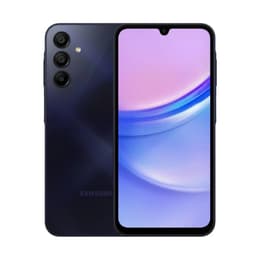

Galaxy A15 5G vs Google Pixel 9

Galaxy A15 5G
Galaxy A15 5G
Starting at

Refurbished price:A$257.00

Versus A$329.00 new

See options
Google Pixel 9
Google Pixel 9
Starting at

Refurbished price:A$717.00

Versus A$1,349.00 new

See options

Ratings

The Samsung Galaxy A15 5G, released in late 2023 and early 2024, and the Google Pixel 9, launched in August 2024, represent distinct offerings in the smartphone market. While both operate on the Android platform, the Pixel 9 introduces advanced computational capabilities and a premium user experience, contrasting with the Galaxy A15 5G's focus on delivering essential smartphone features. This comparison will explore their core differences to help users identify which device aligns best with their needs, considering quality-assured refurbished options as a sustainable choice.

Scores

Durability

The expected practical lifespan of a smartphone is significantly influenced by its software support and physical durability.

  • Software Longevity: The Google Pixel 9 offers an extended software support period, with Google committing to seven years of OS updates and security patches. This means the Pixel 9 is expected to receive updates until Android 22, providing long-term relevance. In contrast, the Samsung Galaxy A15 5G typically receives four major Android OS upgrades and five years of security updates, extending its software support until approximately Android 18 and security patches until late 2028 or early 2029.
  • Physical Durability: The Pixel 9 features Corning Gorilla Glass Victus 2 on its display and an IP68 rating for dust and water resistance, indicating a robust build designed to withstand daily wear and tear. The Galaxy A15 5G, while offering AGC Dragontrail Protection for its screen, does not carry an official IP rating for water and dust resistance, suggesting a more standard level of protection.
  • Repairability: While specific repairability scores can vary, both devices are designed with modern smartphone construction, where professional repair is often recommended for complex issues. The Pixel 9's premium build materials may lead to higher repair costs for certain components compared to the more accessible components often found in mid-range devices like the Galaxy A15 5G.

Release year

2023

2024

Operating system

Android

Android

Foldable

No

No

Performance

Performance is a key differentiator, impacting how smoothly applications run and how efficiently the device handles demanding tasks.

  • Processing Power: The Google Pixel 9 is equipped with the Google Tensor G4 processor, a chip designed for high-end performance and advanced on-device artificial intelligence capabilities. This allows for very smooth operation, rapid app loading, and efficient handling of intensive applications and multitasking. The Samsung Galaxy A15 5G uses a MediaTek Dimensity 6100+ processor, which provides reliable performance for everyday tasks such as browsing, social media, and light gaming. However, users engaging in heavy multitasking or graphically demanding games may notice slower response times compared to the Pixel 9.
  • Multitasking and Storage: The Pixel 9 typically comes with 12GB of RAM and UFS 3.1 storage, contributing to its ability to keep many applications open simultaneously without slowdowns and offering faster data access. The Galaxy A15 5G offers various configurations, including 4GB, 6GB, or 8GB of RAM and UFS 2.2 storage, which is suitable for typical smartphone usage but may show limitations when switching between numerous demanding applications. The Galaxy A15 5G does offer expandable storage via microSD, a feature not present on the Pixel 9.
  • Battery Behavior: Both devices feature substantial battery capacities, with the Galaxy A15 5G housing a 5000 mAh battery and the Pixel 9 a 4700 mAh battery. Users generally report that both phones can last through a full day of moderate use. The Pixel 9's more efficient processor and software optimizations contribute to its reliable battery performance, even with a slightly smaller capacity. The Galaxy A15 5G's processor is also noted for being well-optimized for battery preservation.

Memory (GB)

8 GB

12 GB

Screen quality

The display is the primary interface for interaction, and differences in screen technology and specifications can significantly affect the viewing experience.

  • Display Technology and Clarity: The Google Pixel 9 features a 6.3-inch OLED display with a resolution of 1080 x 2424 pixels, offering deep blacks, vibrant colors, and excellent contrast. The Samsung Galaxy A15 5G comes with a 6.5-inch Super AMOLED display with a 1080 x 2340 pixel resolution, also providing rich colors and good clarity, characteristic of AMOLED technology.
  • Brightness and Smoothness: The Pixel 9's display can reach a peak brightness of 2700 nits and a high brightness mode (HBM) of 1800 nits, making it highly visible even in bright outdoor conditions. It also supports an adaptive refresh rate from 60Hz to 120Hz for smooth scrolling and responsive visuals. The Galaxy A15 5G offers a maximum brightness of 800 nits in HBM and a 90Hz refresh rate, which provides a fluid experience for its class, though it may be less bright outdoors compared to the Pixel 9.
  • Viewing Experience: The Pixel 9's slightly smaller screen size and higher pixel density result in a very sharp image, while the Galaxy A15 5G offers a larger viewing area. Both displays are well-suited for media consumption, but the Pixel 9's higher brightness and adaptive refresh rate provide a more premium and versatile viewing experience, especially for dynamic content and outdoor use.

Resolution

1080x2340

1080 x 2424

Audiovisual

Camera capabilities are often a deciding factor for many users, and both devices offer distinct photographic strengths.

  • Rear Camera Systems: The Google Pixel 9 features a dual-camera setup on the rear, including a 50MP main camera with optical image stabilization (OIS) and a 48MP ultrawide camera. Pixel phones are renowned for their computational photography, which enhances image quality, particularly in challenging lighting conditions, and offers advanced AI-powered features. The Samsung Galaxy A15 5G has a triple-camera system with a 50MP main sensor, a 5MP ultrawide, and a 2MP macro lens. It performs well in good lighting, capturing clear and detailed images, but its low-light performance and overall versatility are more aligned with its mid-range positioning.
  • Video Recording and Front Camera: The Pixel 9 supports 4K video recording at up to 60 frames per second and features a 10.5MP front camera capable of 4K video. Its AI features also extend to video, offering enhancements like Super Res Zoom Video. The Galaxy A15 5G records video at 1080p at 30 frames per second and has a 13MP front camera, suitable for video calls and casual selfies.
  • Audio Quality: The Pixel 9 offers dual stereo speakers for a more immersive audio experience during media consumption. The Galaxy A15 5G typically features a single loudspeaker. For calls, both devices provide clear audio, but the Pixel's software enhancements often contribute to superior call clarity.

Miscellaneous

Beyond core features, several practical elements contribute to the overall user experience and device utility.

  • Connectivity and Ports: Both devices support 5G connectivity, ensuring access to faster mobile networks. The Pixel 9 includes Wi-Fi 6 and Bluetooth 5.3, along with advanced features like satellite connectivity for emergency services. It uses a USB-C port for charging and data transfer but lacks a 3.5mm headphone jack. The Galaxy A15 5G supports Wi-Fi 802.11 a/b/g/n/ac and Bluetooth 5.3, also featuring a USB-C 2.0 port and retaining the 3.5mm headphone jack, which is convenient for users with wired headphones.
  • Biometric Security and AI Features: The Pixel 9 incorporates an in-display fingerprint sensor and advanced facial recognition for secure unlocking. It heavily integrates Google's AI capabilities, including Gemini, Pixel Studio for AI image generation, Call Notes, and enhanced weather reports, which streamline various tasks. The Galaxy A15 5G features a side-mounted fingerprint sensor for biometric security. While it runs Android, its AI features are less prominent and primarily rely on standard Android functionalities.
  • Design and Handling: The Pixel 9 has a more compact design with dimensions of 152.8 x 72 x 8.5 mm and a weight of 198g, offering a premium feel with its glass and metal construction. The Galaxy A15 5G is slightly larger at 160.1 x 76.8 x 8.4 mm and weighs 200g, featuring a plastic build that contributes to its durability and comfortable handling.

Weight

200 oz

198 oz

Screen size (in)

6.5

6.3

Network

5G

5G

SIM card

Physical SIM

Physical SIM + eSIM

Carrier compatibility

Unlocked

Unlocked

User feedback for the Google Pixel 9 frequently praises its exceptional camera performance, particularly its computational photography and AI-driven enhancements that simplify complex tasks and improve daily interactions. Users also appreciate its long-term software support and premium build quality. Some criticisms occasionally point to the Tensor G4 processor not always matching the raw benchmark scores of some competitors, though real-world performance is consistently smooth.

The Samsung Galaxy A15 5G is often commended for its vibrant Super AMOLED display and reliable battery life, offering a solid experience for its segment. Common concerns sometimes highlight that its processor can feel less responsive during heavy multitasking or when launching demanding applications, and its camera performance in low light is not as strong as higher-end devices.

Users prioritizing cutting-edge camera technology, advanced AI features, and extended software longevity will find the Google Pixel 9 well-suited to their needs. Its robust build and bright, high-refresh-rate display also cater to those seeking a premium smartphone experience. Conversely, users who prioritize a larger display, expandable storage, and a 3.5mm headphone jack, while still desiring reliable everyday performance and good battery life, may lean toward the Samsung Galaxy A15 5G. Both devices are available as quality-assured refurbished options, providing an eco-friendly alternative for consumers.


See all articles

Our recent comparisons