
Asus Zenfone 9 vs Galaxy S23

Asus Zenfone 9
Asus Zenfone 9
See options
Galaxy S23
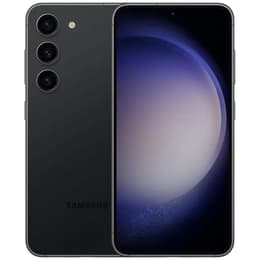
Galaxy S23
Starting at

Refurbished price:A$504.00

Versus A$1,458.00 new

See options

The Asus Zenfone 9, released in September 2022, and the Samsung Galaxy S23, launched in February 2023, are both compact Android smartphones designed to offer a premium experience in a smaller form factor. While both devices run on the Android operating system, they present distinct approaches to hardware and software integration. The Zenfone 9 emphasizes a unique gimbal camera system and a traditional headphone jack, whereas the Galaxy S23 focuses on a refined camera array with optical zoom and a longer software support commitment.

Scores

Durability

When considering the long-term usability of these devices, their release timelines and software support policies are key factors.

  • Release Timeline and Software Support: The Asus Zenfone 9 was released in September 2022, typically receiving two major Android operating system updates, with Android 14 being a potential final major update. In contrast, the Samsung Galaxy S23, released in February 2023, benefits from Samsung's policy of providing four generations of OS upgrades, meaning it is expected to receive updates up to Android 17, along with five years of security updates until 2028. This gives the Galaxy S23 a notably longer period of official software support.
  • Repairability: The Asus Zenfone 9 received a repairability score of 4.5 out of 10, with the screen being noted as a particularly challenging component to replace. The Samsung Galaxy S23 series generally received a score of 4 out of 10 from iFixit, though a French environmental index rated it at 8.2, indicating some improvements in design for easier disassembly compared to previous models.
  • Expected Practical Lifespan: Users prioritizing extended software longevity and the latest Android features will find the Galaxy S23's update policy more advantageous. Both devices are built with durable materials, including Gorilla Glass Victus (Zenfone 9) and Gorilla Glass Victus 2 (Galaxy S23), contributing to their physical resilience over time.

Release year

2022

2023

Compatible with latest Update

Yes

Yes

Operating system

Android

Android

Foldable

No

No

Performance

Both smartphones are equipped with powerful internal components, delivering smooth performance for daily tasks and demanding applications, though they feature different generations of processing technology.

  • Processor Capabilities: The Asus Zenfone 9 is powered by a processor from the Snapdragon 8+ Gen 1 family, which provides robust performance for multitasking, gaming, and heavy app usage. The Samsung Galaxy S23 features a custom-tuned processor from the Snapdragon 8 Gen 2 for Galaxy series, offering enhanced speed and efficiency, particularly noticeable in demanding scenarios and gaming.
  • System Responsiveness and Multitasking: Both devices offer a highly responsive user experience. The Zenfone 9 comes with RAM options up to 16GB, while the Galaxy S23 typically offers 8GB of RAM. For most users, 8GB of RAM is sufficient for smooth multitasking, but higher RAM in the Zenfone 9 could offer a slight edge in managing a very large number of open applications simultaneously.
  • Storage Options and Speed: Both phones are available with 128GB or 256GB of internal storage. It is worth noting that 128GB versions of the Galaxy S23 may use a slightly older storage format (UFS 3.1), while 256GB and higher capacities utilize a newer, faster standard (UFS 4.0).

Memory (GB)

6 GB

8 GB

Screen quality

The visual experience on both the Zenfone 9 and Galaxy S23 is characterized by vibrant displays, though with some differences in brightness and overall size.

  • Display Technology and Clarity: Both devices feature AMOLED display technology, providing deep blacks and vivid colors. The Asus Zenfone 9 has a 5.9-inch Super AMOLED display with a 2400x1080 pixel resolution, resulting in a sharp visual experience. The Samsung Galaxy S23 offers a slightly larger 6.1-inch Dynamic AMOLED 2X display with a 2340x1080 pixel resolution, also delivering excellent clarity.
  • Brightness and Outdoor Visibility: The Galaxy S23 boasts a higher peak brightness of 1750 nits, which significantly enhances visibility in bright outdoor conditions. The Zenfone 9's display reaches a peak brightness of 1100 nits, which is still good for most environments but may be less legible under direct sunlight compared to the S23.
  • Refresh Rate and Smoothness: Both smartphones feature a 120Hz refresh rate, contributing to smooth scrolling, fluid animations, and a more responsive feel during interactions and gaming. The Galaxy S23's display is adaptive, adjusting its refresh rate to conserve battery life.

Resolution

1080 x 2400

1080 x 2340

Screen type

Super AMOLED

Dynamic AMOLED 2X

Audiovisual

The camera systems on the Asus Zenfone 9 and Samsung Galaxy S23 offer distinct strengths, catering to different photography and videography preferences.

  • Rear Camera Systems: The Zenfone 9 features a dual-camera setup with a 50MP main sensor that includes a unique 6-axis gimbal optical image stabilization (OIS) system, alongside a 12MP ultrawide lens capable of macro photography. The Galaxy S23 offers a versatile triple-camera system, comprising a 50MP main sensor with OIS, a 12MP ultrawide lens, and a 10MP telephoto lens that provides 3x optical zoom.
  • Photography Performance: The Zenfone 9's gimbal stabilization is particularly effective for steady photos and videos, especially in challenging conditions. User feedback suggests its image processing can sometimes be inconsistent, though low-light performance is generally strong. The Galaxy S23 is praised for its overall camera quality, including good detail, vibrant colors, and strong low-light performance, with its dedicated telephoto lens offering superior zoom capabilities.
  • Video Recording and Front Camera: Both devices are capable of recording 8K video, with the Zenfone 9 at 24fps and the Galaxy S23 at 30fps. The Zenfone 9's gimbal system provides excellent video stabilization. For selfies, both have a 12MP front camera, with the Galaxy S23's offering Super HDR and 4K@60fps video recording.

Main camera

50 megapixels

50 megapixels

Front camera

12 megapixels

12 megapixels

Miscellaneous

Beyond core performance, several practical elements differentiate the user experience of the Asus Zenfone 9 and the Samsung Galaxy S23.

  • Connectivity and Ports: Both smartphones support 5G connectivity and Wi-Fi 6E for fast wireless internet. The Galaxy S23 features Bluetooth 5.3, a slightly newer standard than the Zenfone 9's Bluetooth 5.2. A notable difference is the inclusion of a 3.5mm headphone jack on the Zenfone 9, a feature absent from the Galaxy S23. Both utilize a USB-C port for charging and data transfer.
  • Biometric Security and Design: The Zenfone 9 incorporates a side-mounted fingerprint sensor integrated into the power button, which also supports gesture controls. The Galaxy S23 features an in-display ultrasonic fingerprint sensor. In terms of physical design, the Zenfone 9 is slightly thicker and narrower, weighing 169g, while the Galaxy S23 is marginally wider and thinner at 168g, contributing to its sleek feel. Both devices carry an IP68 rating for dust and water resistance.
  • Audio Experience: Both phones offer stereo speakers, providing an immersive audio experience for media consumption. The Zenfone 9 is noted for its good stereo sound with Dirac tuning.

Weight

169 oz

168 oz

Screen size (in)

5.9

6.1

Network

5G

5G

SIM card

Dual Physical SIM

Physical SIM + eSIM

Carrier compatibility

Unlocked

Unlocked

The Asus Zenfone 9 and Samsung Galaxy S23 cater to users seeking a compact yet powerful smartphone, each with its own set of advantages. Users often praise the Zenfone 9 for its truly compact size, impressive battery life for its dimensions, and the unique, highly effective gimbal stabilization system for its main camera. Its inclusion of a 3.5mm headphone jack is also a significant draw for those who prefer wired audio. Some common criticisms include the absence of a telephoto lens and wireless charging, and occasional inconsistencies in image processing.

The Samsung Galaxy S23 is frequently lauded for its strong overall performance, vibrant and bright display, and a more versatile camera system that includes a dedicated telephoto lens. Its extended software update policy is a major benefit for long-term users. User feedback sometimes points to the selfie camera's tendency for skin lightening and slower charging speeds compared to its larger siblings.

Users prioritizing a highly compact device with exceptional video stabilization and a headphone jack may find the Asus Zenfone 9 well-suited to their needs. Conversely, those who value a more comprehensive camera system with optical zoom, a brighter display, and a longer commitment to software updates will likely lean towards the Samsung Galaxy S23. Both devices represent excellent choices in the compact smartphone segment, and considering a quality-assured refurbished option for either model can be an eco-friendly alternative.


See all articles

Our recent comparisons