
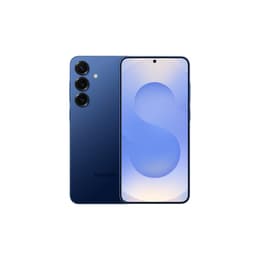

Asus Zenfone 9 vs Galaxy S25+

Asus Zenfone 9
Asus Zenfone 9
See options
Galaxy S25+
Galaxy S25+
Starting at

Refurbished price:A$919.00

Versus A$1,699.00 new

See options

The Asus Zenfone 9, released in July 2022, and the Samsung Galaxy S25 Plus, launched in February 2025, represent distinct approaches to the modern smartphone. The Zenfone 9 is known for its compact design and focus on one-handed usability, while the Galaxy S25 Plus offers a larger display and a more comprehensive feature set typical of a flagship device. Both operate on the Android platform, but their release timelines lead to differences in software longevity and hardware capabilities.

Scores

Durability

The lifespan of a smartphone is influenced by its physical durability and the duration of software support it receives.

  • Release Timeline: The Asus Zenfone 9 was released in July 2022, making it a device from a previous generation. The Samsung Galaxy S25 Plus, launched in February 2025, benefits from a more recent release, offering a longer period of relevance in terms of technology and software.
  • Software Longevity: The Zenfone 9 typically receives around two years of major Android operating system updates from its release date. In contrast, the Galaxy S25 Plus is expected to receive up to seven years of software updates, including security patches and OS upgrades, providing a significantly extended period of support and access to new features. [37]
  • Physical Durability: Both devices feature an IP68 rating for dust and water resistance, indicating protection against immersion. [5, 9, 17, 23, 4, 26, 33] The Zenfone 9 uses Gorilla Glass Victus for screen protection, while the Galaxy S25 Plus incorporates Gorilla Glass Victus 2 on both its display and back, alongside an aluminum frame, offering robust build quality. [5, 9, 17, 23, 4, 26, 33]

Release year

2022

2025

Operating system

Android

Android

Foldable

No

No

Performance

Performance in daily use is a key consideration, encompassing how smoothly applications run, the device's responsiveness, and its ability to handle demanding tasks.

  • Processing Power: The Zenfone 9, equipped with a powerful processor from its release year, handles demanding applications and multitasking smoothly, providing a responsive experience for most users. [17, 24] The Galaxy S25 Plus, featuring a newer generation processor designed for its 2025 release, offers enhanced speed and efficiency, resulting in even smoother animations, faster app loading, and superior performance in graphically intensive games or complex computational tasks. [1, 3, 4, 16, 27, 37]
  • Multitasking and Storage: The Zenfone 9 is available with up to 16GB of RAM and up to 256GB of internal storage, which is ample for extensive multitasking and storing a large volume of data. [5, 8, 9, 10, 13] The Galaxy S25 Plus typically comes with 12GB of RAM and storage options up to 512GB, ensuring excellent multitasking capabilities and generous space for applications and media. [4, 26, 36]
  • Battery Behavior: The Zenfone 9 features a 4300mAh battery, which generally provides a full day of use for many users, with some reporting it lasting into a second day with lighter usage. [2, 15, 17, 22, 24, 29, 31] The Galaxy S25 Plus includes a larger 4900mAh battery, often delivering excellent battery life that can extend to 1.5 to 2 days under normal usage conditions. [1, 3, 16, 27, 37, 38, 41, 42, 43] Charging speeds differ, with the Zenfone 9 supporting 30W wired charging, while the Galaxy S25 Plus supports faster 45W wired charging. [2, 22, 29, 1, 3, 41, 42]

Memory (GB)

6 GB

12 GB

Screen quality

The display is a primary interface for interaction, and differences in technology, size, and clarity significantly impact the user experience.

  • Display Technology and Size: The Asus Zenfone 9 features a compact 5.9-inch AMOLED display, offering vibrant colors and deep blacks. [5, 8, 9, 10, 13, 15, 23, 28] The Samsung Galaxy S25 Plus boasts a larger 6.7-inch Dynamic AMOLED 2X display, providing an expansive viewing area. [1, 3, 4, 7, 26, 33]
  • Resolution and Clarity: The Zenfone 9's FHD+ resolution (1080x2400 pixels) on its smaller screen results in excellent pixel density and clear visuals. [5, 8, 9, 10, 13, 15, 23, 28] The Galaxy S25 Plus offers a QHD+ resolution (3120x1440 pixels), delivering even sharper details and greater clarity across its larger panel. [1, 3, 4, 7, 26, 33]
  • Brightness and Smoothness: Both devices feature a 120Hz refresh rate for smooth scrolling and responsive interactions. [5, 8, 9, 10, 13, 23, 28, 1, 3, 4, 7, 26, 33] The Zenfone 9 has a peak brightness of 1100 nits, which is suitable for outdoor visibility. [5, 28] The Galaxy S25 Plus offers a higher peak brightness of 2600 nits, ensuring exceptional visibility even in bright sunlight. [1, 3, 4, 37]

Resolution

1080 x 2400

1440x3120

Audiovisual

Camera capabilities are a significant factor for many users, with both devices offering distinct strengths in photography and videography.

  • Rear Camera Systems: The Asus Zenfone 9 features a dual-camera setup with a 50MP main sensor that includes a unique 6-axis gimbal stabilization system, and a 12MP ultrawide lens that can also function for macro shots. [2, 5, 11, 17] The Samsung Galaxy S25 Plus offers a more versatile triple-camera system, comprising a 50MP main sensor with optical image stabilization (OIS), a 12MP ultrawide lens, and a 10MP telephoto lens with 3x optical zoom and OIS. [1, 4, 14, 16, 32, 33, 35]
  • Photography Performance: The Zenfone 9's main camera captures detailed images with accurate colors in good lighting and performs well in low-light conditions, with its gimbal stabilization aiding in sharper shots. [11, 17] However, some users note that the ultrawide camera's low-light performance can be less consistent, and the overall image processing can sometimes lead to over-sharpening. [19, 20, 21, 39] The Galaxy S25 Plus delivers good details and a wide dynamic range in daylight, with its main camera also performing well in low light. [1, 32, 35] Its telephoto lens provides clear zoomed-in images. Some user feedback suggests the camera can sometimes produce softer images, particularly in challenging low-light indoor scenarios. [16, 37, 43]
  • Video Recording and Front Camera: Both devices offer strong video capabilities. The Zenfone 9 can record up to 8K video, with its gimbal stabilization providing exceptionally steady footage. [11, 17] Its 12MP front camera includes autofocus, which is beneficial for clear selfies and video calls. [2, 5, 11, 17] The Galaxy S25 Plus also supports up to 8K video recording from its main camera and 4K from its other lenses, with excellent video stabilization across all cameras. [32, 35] Its 12MP front camera also features autofocus, ensuring sharp and detailed self-portraits. [1, 4, 32, 35]

Miscellaneous

Beyond core performance and display, several practical features contribute to the overall user experience and device utility.

  • Connectivity and Ports: Both smartphones support 5G connectivity for fast mobile data. The Zenfone 9 includes Wi-Fi 6E and Bluetooth 5.2, along with a 3.5mm headphone jack and a USB-C port. [8, 10, 23] The Galaxy S25 Plus features more recent connectivity standards, likely Wi-Fi 7 and Bluetooth 5.4, and exclusively uses a USB-C port. [1, 4]
  • Biometrics and Handling: The Zenfone 9 incorporates a side-mounted fingerprint scanner integrated into the power button, which also supports gesture controls for navigation. [5, 17, 24] Its compact dimensions (146.58 x 68.17 x 9.10 mm) and lighter weight (169g) make it particularly suitable for one-handed use. [8, 10, 18] The Galaxy S25 Plus features an ultrasonic in-screen fingerprint sensor for secure unlocking. [26] Its larger size (158.4 x 75.8 x 7.3 mm) and weight (190g) provide a more expansive screen experience, though it is less compact for single-handed operation. [26, 33]
  • Build Materials and Additional Features: The Zenfone 9 features a plastic back with a textured finish, which users often praise for its grip and reduced fragility compared to glass. [20, 31] The Galaxy S25 Plus utilizes glass on both its front and back, paired with an aluminum frame, contributing to a premium feel. [4, 26, 33] The Zenfone 9 is noted for its clean, near-stock Android interface with useful customisations, while the Galaxy S25 Plus integrates advanced AI features into its software experience. [24, 27, 37]

Weight

169 oz

190 oz

Screen size (in)

5.9

6.7

Network

5G

5G

SIM card

Dual Physical SIM

Physical SIM + eSIM

Carrier compatibility

Unlocked

Unlocked

The Asus Zenfone 9 and Samsung Galaxy S25 Plus cater to different user preferences, each excelling in distinct areas. Users frequently praise the Zenfone 9 for its remarkably compact size, making it ideal for one-handed use and easy pocketability. Its strong battery life for its form factor and the inclusion of a 3.5mm headphone jack are also commonly highlighted as significant advantages. [20, 24, 31, 34] However, some users have expressed concerns regarding the stock camera's performance, particularly in challenging lighting conditions, and occasional inconsistencies with the automatic refresh rate. [20, 39]

Conversely, the Samsung Galaxy S25 Plus receives consistent acclaim for its expansive and vibrant display, powerful performance that handles any task with ease, and its industry-leading software support policy, promising extended updates. [27, 37, 38, 40, 43] Its battery life is also frequently cited as a strong point, often lasting well over a day. [1, 3, 16, 27, 37, 38, 41, 42, 43] Criticisms sometimes revolve around the camera's consistency, with some users finding images can be softer than expected in certain situations, and the integration of AI features has been described by some as feeling somewhat forced. [27, 37, 43]

Users prioritizing a compact form factor, a physical headphone jack, and a device that is easy to manage with one hand may find the Asus Zenfone 9 well-suited to their needs. Those who value a large, high-resolution display, cutting-edge performance, a versatile camera system with optical zoom, and extensive long-term software support will likely lean towards the Samsung Galaxy S25 Plus. Both devices offer compelling experiences, and considering a quality-assured refurbished option for either model can be an eco-friendly alternative for making an informed choice.


See all articles

Our recent comparisons