
Asus Zenfone 9 vs Galaxy A23

Asus Zenfone 9
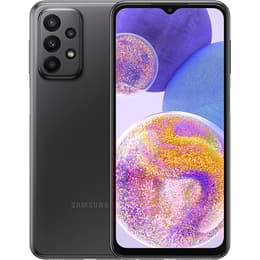
Asus Zenfone 9
See options
Galaxy A23
Galaxy A23
See options

The Asus Zenfone 9 (released in 2022) and the Samsung Galaxy A23 (released in 2022) are Android smartphones that cater to different user preferences. While the Zenfone 9 focuses on delivering high-end performance in a compact form factor, the Galaxy A23 prioritizes a larger display and extended battery life for everyday use. Both devices run on the Android operating system, offering a familiar user experience with their respective manufacturer's custom interfaces.

Scores

Durability

The practical lifespan of a smartphone is influenced by its release timeline, software support, and physical durability.

  • Release Timeline: The Asus Zenfone 9 was released in September 2022, while the Samsung Galaxy A23 was launched earlier in March 2022, with its 5G variant following in August 2022 [1, 6, 12, 30]. This means the Zenfone 9 has a slightly newer starting point for its software lifecycle.
  • Software Longevity: The Zenfone 9 is expected to receive approximately two years of major Android software updates, with a possibility of extended security patches [36]. The Galaxy A23, on the other hand, is slated to receive two major OS upgrades and four years of security updates, offering a longer period of official support [1, 22, 37].
  • Physical Durability: The Zenfone 9 features an IP68 rating for dust and water resistance and a Gorilla Glass Victus display, providing robust protection against environmental elements and drops [4, 32, 39]. The Galaxy A23 comes with Gorilla Glass 5 protection for its display and a plastic back, offering a good level of everyday durability [1, 14].

Release year

2022

2022

Compatible with latest Update

Yes

Yes

Operating system

Android

Android

Foldable

No

No

Performance

Performance is a key differentiator, with each device offering a distinct experience based on its internal components.

  • Processing Power: The Asus Zenfone 9 is equipped with a high-performance processor, enabling it to handle demanding applications, intensive multitasking, and graphic-heavy games with smooth responsiveness [34, 35, 36, 39]. The Galaxy A23 utilizes a mid-range processor, which provides capable performance for daily tasks, web browsing, and casual gaming, though it may show limitations with more intensive workloads [1, 13, 24].
  • System Responsiveness: Users of the Zenfone 9 generally report a very fast and snappy experience, with quick app loading times and seamless transitions [29, 39]. The Galaxy A23 offers a generally smooth user interface for typical usage, but some users might notice occasional delays when switching between many applications or running complex processes [23, 38].
  • Battery Behavior: Despite its smaller size, the Zenfone 9 features a 4300 mAh battery that delivers impressive endurance, often lasting a full day and a half or even two days with moderate use [3, 10, 29, 39]. The Galaxy A23 boasts a larger 5000 mAh battery, consistently providing excellent battery life, with many users reporting up to two days of usage on a single charge, even for heavy users [9, 19, 23, 24].

Memory (GB)

6 GB

4 GB

Screen quality

The visual experience on both devices is shaped by their display technology and specifications.

  • Display Technology and Clarity: The Asus Zenfone 9 features a 5.9-inch Super AMOLED display, known for its deep blacks, vibrant colors, and high contrast [4, 29, 39]. The Galaxy A23 comes with a 6.6-inch PLS TFT LCD screen, which offers good color reproduction and viewing angles, though it does not match the contrast levels of an AMOLED panel [1, 2, 8, 13]. Both devices provide a Full HD+ resolution, ensuring sharp text and clear images [1, 2, 4, 8, 13, 29].
  • Refresh Rate and Brightness: The Zenfone 9 offers an adaptive 120Hz refresh rate, contributing to smoother scrolling and a more fluid visual experience, with a peak brightness of 1100 nits for good outdoor visibility [4, 29, 39]. The Galaxy A23's 4G variant has a 90Hz refresh rate, while the 5G variant features a 120Hz refresh rate, both providing a smoother experience than standard 60Hz displays [1, 2, 8].
  • Screen Size and Viewing Experience: The Zenfone 9's compact 5.9-inch display makes it ideal for one-handed use and easy pocketability [3, 29, 36]. The Galaxy A23's larger 6.6-inch screen provides more expansive screen real estate, which can enhance media consumption and multitasking for users who prefer a bigger display [1, 2, 8].

Resolution

1080 x 2400

1080 x 2408

Screen type

Super AMOLED

PLS LCD

Audiovisual

Both smartphones offer capable camera systems, but with different strengths and features.

  • Rear Camera System: The Asus Zenfone 9 features a dual-camera setup with a 50MP main sensor that includes a unique 6-axis gimbal stabilization system for enhanced video and low-light photography, alongside a 12MP ultrawide lens with autofocus and macro capabilities [3, 4, 20, 30, 39]. The Samsung Galaxy A23 sports a versatile quad-camera array, highlighted by a 50MP main sensor with Optical Image Stabilization (OIS), a 5MP ultrawide, a 2MP macro, and a 2MP depth sensor [1, 2, 8, 24, 26].
  • Photography Performance: The Zenfone 9's main camera generally captures detailed images with accurate colors, and its gimbal stabilization aids in producing stable photos and videos, particularly in challenging conditions [3, 20, 39]. The Galaxy A23's main camera also delivers decent image quality, with OIS helping to reduce blur in photos and videos [23, 24]. The Zenfone 9's ultrawide camera is noted for good results with minimal distortion, while the Galaxy A23's ultrawide offers a wider field of view [20, 31].
  • Video Recording and Front Camera: The Zenfone 9 supports video recording up to 8K resolution at 24fps and 4K at up to 120fps, with the gimbal system providing excellent video stability [20, 29, 30]. Its 12MP front camera includes autofocus, which is beneficial for clear selfies and video calls [4, 20, 31]. The Galaxy A23 5G records video at FHD 30fps, while the LTE variant supports 4K 30fps, and features an 8MP front camera [2, 8].

Main camera

50 megapixels

50 megapixels

Front camera

12 megapixels

8 megapixels

Miscellaneous

Beyond core features, several practical elements contribute to the overall user experience of these devices.

  • Connectivity and Ports: The Asus Zenfone 9 supports 5G (sub-6), Wi-Fi 6/6E, and Bluetooth 5.2, offering modern wireless connectivity options [16, 30, 35]. It also retains a 3.5mm headphone jack and features a USB-C 2.0 port [4, 16, 35, 39]. The Samsung Galaxy A23 is available in both 4G and 5G variants, supporting Wi-Fi 802.11 a/b/g/n/ac and Bluetooth 5.0 or 5.1 [1, 2, 8, 17, 25]. It also includes a 3.5mm audio jack and a USB-C 2.0 port [1, 2, 8, 17].
  • Biometrics and Build: The Zenfone 9 incorporates a side-mounted fingerprint sensor integrated into the power button, which also supports gesture controls for navigation [4, 35, 39]. Its build features a polymer back and an aluminum frame, contributing to its lightweight and durable feel [4]. The Galaxy A23 also has a side-mounted fingerprint sensor for secure unlocking [24]. Its construction primarily uses plastic for the back and sides [1, 14].
  • Dimensions and Handling: With dimensions of 146.5 x 68.1 x 9.1 mm and a weight of 169g, the Zenfone 9 is designed for comfortable one-handed use and easy portability [7, 11, 29, 35]. The Galaxy A23 is a larger device, measuring 165.4 x 76.9 x 8.4 mm and weighing 195g (or 197g for the 5G model), providing a more substantial feel in hand [1, 2, 8, 13].

Weight

169 oz

195 oz

Screen size (in)

5.9

6.6

Network

5G

4G

SIM card

Dual Physical SIM

Dual Physical SIM

Carrier compatibility

Unlocked

Unlocked

User feedback for the Asus Zenfone 9 frequently praises its compact size, making it easy to handle with one hand, and its powerful performance for a device of its stature [29, 34, 36, 39]. Many appreciate its impressive battery life, which often exceeds expectations for a smaller phone, and the inclusion of a 3.5mm headphone jack [10, 16, 29, 39]. Criticisms sometimes point to inconsistent camera performance in certain situations and the absence of wireless charging [5, 20, 31, 36].

The Samsung Galaxy A23 is often lauded for its exceptional battery life, with users reporting it can comfortably last up to two days on a single charge [9, 19, 23, 24]. Its main camera with OIS is also a frequent highlight, offering good results for its segment [23, 24]. Common concerns include its design, which some find a bit dated, and the use of an LCD panel instead of an AMOLED display [23, 24, 38].

Users prioritizing a highly portable device with top-tier performance and a premium feel will likely find the Asus Zenfone 9 well-suited to their needs. Its compact design and powerful internals make it ideal for those who want a small phone without compromising on speed or responsiveness. Conversely, users who value a larger display, extended battery endurance, and a reliable camera system for everyday photography may lean towards the Samsung Galaxy A23. It offers a balanced experience for general use, particularly for those who consume a lot of media or need a phone that lasts a long time between charges.

For those considering either of these devices, exploring a quality-assured refurbished option can be a sustainable choice, offering an eco-friendly alternative to purchasing new.


See all articles

Our recent comparisons