Motorola Moto G14 vs Motorola Razr 40 Ultra

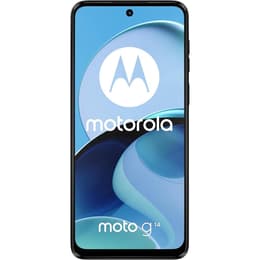
Motorola Moto G14
Motorola Moto G14
Starting at

Refurbished price:A$182.00

Versus A$271.00 new

See options
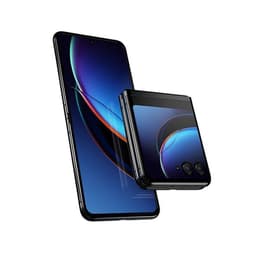
Motorola Razr 40 Ultra
See options

The Motorola Moto G14, released in August 2023, and the Motorola Razr 40 Ultra, launched in June 2023, represent distinct approaches within the smartphone market. While both operate on the Android platform, they cater to different user preferences through their fundamental design and performance capabilities. The Moto G14 offers a traditional slab form factor, focusing on core smartphone functionalities, whereas the Razr 40 Ultra stands out with its innovative foldable design and advanced features.

Scores

Durability

The longevity of a smartphone is influenced by its build, software support, and repairability. These two Motorola devices offer different expectations in these areas.

  • Release Timeline and Software Support: The Moto G14, released in August 2023, typically receives one major Android OS update and three years of bi-monthly security updates. The Razr 40 Ultra, launched slightly earlier in June 2023, benefits from a more extended support policy, with three major Android OS upgrades and four years of bi-monthly security updates.
  • Physical Durability: The Moto G14 features an IP52 rating, indicating resistance to dust and light splashes, and is constructed with an Acrylic Glass (PMMA) back and a unibody polycarbonate design. The Razr 40 Ultra also carries an IP52 water-repellent rating and incorporates more premium materials like Gorilla Glass Victus for its cover display and a robust aluminum frame, with options for a vegan leather or Gorilla Glass Victus rear. Its foldable nature introduces a hinge mechanism, which is a key design element influencing its long-term physical integrity.
  • Practical Lifespan: Users can expect the Moto G14 to remain functional for everyday tasks for several years, though its software support window is shorter. The Razr 40 Ultra, with its more extensive software update commitment and advanced build, is designed for a longer period of optimal performance, assuming the foldable mechanism maintains its integrity over time.

Release year

2023

2023

Compatible with latest Update

Yes

Yes

Operating system

Android

Android

Foldable

No

Yes

Performance

The internal components of a smartphone dictate its responsiveness and ability to handle various applications and tasks.

  • Processing Power: The Moto G14 is equipped with a processor that capably handles daily activities such as web browsing, social media, and light applications. However, users engaging in more demanding tasks or graphically intensive games may experience slower loading times and occasional stutters. In contrast, the Razr 40 Ultra features a high-end processor designed to deliver smooth performance across a wide range of applications, including intensive multitasking and modern mobile gaming, with minimal lag.
  • Memory and Storage: The Moto G14 typically comes with 4GB of RAM, which is suitable for basic multitasking, and 128GB of internal storage, expandable via a microSD card. The Razr 40 Ultra offers more robust configurations, usually with 8GB or 12GB of RAM, facilitating more seamless app switching and background processes, alongside 256GB or 512GB of non-expandable internal storage.
  • Battery Endurance: The Moto G14 houses a 5000mAh battery, which, combined with its less power-intensive components, often provides extended usage, frequently lasting through a full day of moderate to heavy use and potentially into a second day for lighter users. The Razr 40 Ultra has a 3800mAh battery. Despite its smaller capacity, its efficient processor and LTPO display technology contribute to a respectable battery life for a foldable device, often managing to last a full day for many users.

Memory (GB)

4 GB

8 GB

Screen quality

The display is a primary interface for smartphone interaction, and these devices offer distinct visual experiences.

  • Display Technology and Clarity: The Moto G14 features a 6.5-inch IPS LCD display with Full HD+ resolution (1080x2400 pixels), providing clear visuals and decent color reproduction for everyday viewing. The Razr 40 Ultra boasts a 6.9-inch pOLED main display with a 2640x1080 Full HD+ resolution, offering deep blacks, vibrant colors, and excellent contrast. It also includes a highly functional 3.6-inch pOLED cover display with a 1066x1056 resolution.
  • Smoothness and Brightness: The Moto G14's display operates at a standard 60Hz refresh rate, which is adequate for general use. Its brightness levels are sufficient for indoor viewing and acceptable in outdoor conditions. The Razr 40 Ultra's main display features a high 165Hz refresh rate, providing exceptionally smooth scrolling and responsiveness, while its cover display offers a 144Hz refresh rate. The main display can reach a peak brightness of 1400 nits, ensuring excellent visibility even in bright sunlight.
  • Viewing Experience: The Moto G14 offers a traditional, expansive viewing area. The Razr 40 Ultra's foldable design provides a large main screen when unfolded, ideal for media consumption and productivity, while its sizable and interactive cover display allows for quick interactions and notifications without needing to open the device.

Resolution

1080 x 2400

1080 x 2640

Screen type

IPS LCD

Foldable LTPO AMOLED

Audiovisual

Camera capabilities are a significant factor for many users, and both phones offer different photographic experiences.

  • Rear Camera Systems: The Moto G14 is equipped with a dual-camera setup on the rear, featuring a 50MP main sensor and a 2MP macro lens. It performs well in good lighting conditions, capturing detailed daylight shots, though low-light performance can be challenging without the dedicated Night mode. The Razr 40 Ultra features a dual rear camera system with a 12MP main sensor that includes optical image stabilization (OIS) and a wider aperture for improved low-light performance, alongside a 13MP ultrawide lens that also functions for macro photography with autofocus.
  • Front Camera and Video: For selfies and video calls, the Moto G14 has an 8MP front camera. It supports video recording up to 1080p at 30 frames per second. The Razr 40 Ultra includes a 32MP internal selfie camera and can leverage its main rear cameras for high-quality selfies and video calls using the cover display. It offers more advanced video recording capabilities, including 4K resolution at 30 or 60 frames per second.
  • Audio Output: Both devices feature stereo speakers. The Moto G14 supports Dolby Atmos, providing a decent audio experience for media consumption, though some users note the sound can lack definition at maximum volume. The Razr 40 Ultra also delivers a good audio output, enhancing the media consumption experience.

Main camera

50 megapixels

12 megapixels

Front camera

8 megapixels

32 megapixels

Miscellaneous

Beyond core features, several practical elements contribute to the overall user experience of these smartphones.

  • Connectivity and Ports: The Moto G14 supports 4G LTE networks, Wi-Fi 5 (802.11ac), and Bluetooth 5.0, with NFC available in some regions. It includes a USB-C port for charging and data transfer, along with a traditional 3.5mm headphone jack. The Razr 40 Ultra offers more advanced connectivity, including 5G capabilities, Wi-Fi 6E, and Bluetooth 5.2, along with NFC. It features a USB-C port but omits the 3.5mm headphone jack.
  • Biometric Security: Both smartphones incorporate a side-mounted fingerprint sensor for secure unlocking. The Razr 40 Ultra also offers face recognition as an additional biometric option.
  • Design and Handling: The Moto G14 has a weight of 177g and dimensions of 161.46 x 73.82 x 7.99 mm, presenting a comfortable and familiar slab design. Its unibody polycarbonate construction with an Acrylic Glass back offers a pleasant grip. The Razr 40 Ultra, weighing 188.5g, has distinct dimensions when open (170.83 x 73.95 x 6.99 mm) and closed (88.42 x 73.95 x 15.1 mm). Its foldable form factor allows it to be compact when closed, fitting easily into smaller pockets, while unfolding to a large display. The build includes Gorilla Glass Victus and an aluminum frame, contributing to a premium feel.

Weight

177 oz

1 oz

Screen size (in)

6.5

6.9

Network

4G

5G

SIM card

Dual Physical SIM

Dual Physical SIM

Carrier compatibility

Unlocked

Unlocked

User feedback for the Motorola Moto G14 often highlights its strong battery life, which reliably lasts through a full day of use, and its decent display quality for its category. Many appreciate the inclusion of stereo speakers and a clean software experience. However, common criticisms point to its camera performance in low-light conditions, the standard 60Hz refresh rate of its display, and its limitation to 4G connectivity.

The Motorola Razr 40 Ultra receives praise for its striking foldable design and the highly functional, large external display, which allows for many interactions without opening the phone. Users generally find its performance smooth for demanding tasks and its battery life commendable for a flip phone. Conversely, some users express concerns about the camera quality when compared to other flagship devices, potential thermal management during intensive use, and the timeliness of software updates. There are also occasional discussions regarding the long-term durability of the foldable screen and hinge.

For users prioritizing extended battery life, a traditional smartphone form factor, and a more accessible entry point into the Android ecosystem, the Moto G14 is a suitable option. It serves well for everyday communication, media consumption, and light productivity. Conversely, individuals seeking a premium, compact device with a unique foldable design, a highly responsive display, and robust performance for demanding applications will find the Razr 40 Ultra aligns better with their needs. It is particularly well-suited for those who value innovative form factors and a versatile user experience. Both devices, whether new or as quality-assured refurbished options, offer distinct advantages depending on individual priorities.

See all articles

Our recent comparisons