
Compare models
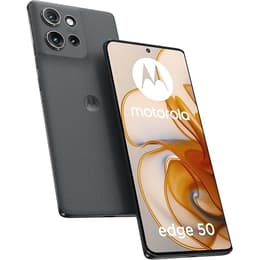
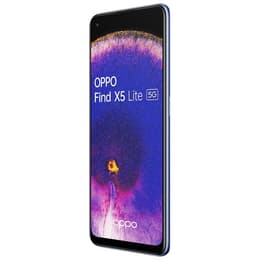
Motorola Edge 50 vs Oppo Find X5 Lite
- 1-year warranty
- Free standard shipping
- Free 30-day returns
Differences at a glance
The Motorola Edge 50 (2024) and the Oppo Find X5 Lite (2022) are mid-range smartphones designed to deliver reliable everyday performance and practical features. While both devices cater to users seeking a balanced mobile experience, they stem from different release years and offer distinct hardware approaches. The Motorola Edge 50 runs on newer software foundations, whereas the Oppo Find X5 Lite relies on an established operating system version. These differences influence everything from software longevity to daily usability.
Available Models
Colour
Storage (GB)
Scores
Durability
When evaluating hardware longevity and software support, the two models reflect their respective generation timelines and expected update cycles.
- Release timeline and software support: The Motorola Edge 50 benefits from a newer release year, securing extended operating system updates and current security patches. The Oppo Find X5 Lite sits further back in its product lifecycle, meaning it operates on an older software iteration with a shorter remaining window for major platform upgrades.
- Repairability and physical endurance: Both handsets feature sturdy frame construction, though the Motorola model integrates updated durability standards and glass protection suited for prolonged daily handling. Users aiming for a long-term daily driver will find the newer software lifespan of the Motorola option advantageous.
Release year
2024
2022
Compatible with latest Update
Yes
No
Operating system
Android
Android
Foldable
No
No
Performance
Daily responsiveness and multitasking capabilities vary across both devices, driven by their respective internal components and memory management.
- Processor capabilities and multitasking: The Motorola Edge 50 handles everyday tasks, demanding applications, and switching between multiple open programs smoothly thanks to its modern processor architecture. The Oppo Find X5 Lite manages standard messaging, web browsing, and media streaming reliably, though heavier gaming or intensive workloads may test its limits more noticeably.
- Battery behavior and storage: Both phones arrive with ample internal storage capacity for apps and media files. The Motorola model features a slightly larger battery capacity paired with efficient power management, while the Oppo alternative relies on rapid charging technology to minimize downtime during busy days.
Screen quality
Viewing experiences differ notably due to panel dimensions, refresh rates, and overall display technology choices.
- Display technology and fluidity: The Motorola Edge 50 utilizes an OLED panel with a smooth 120 Hz refresh rate, ensuring fluid scrolling and responsive touch interactions. The Oppo Find X5 Lite features an AMOLED screen with a 90 Hz refresh rate, which provides clear colors and good contrast for everyday viewing, though with slightly less motion smoothness.
- Brightness and outdoor visibility: Both displays offer sufficient peak brightness levels for outdoor readability under direct daylight, while their slim bezels maximize the usable viewing area for videos and reading.
Resolution
1220x2712
1080 x 2400
Audiovisual
Photography and media output capabilities are tailored to capture everyday moments with distinct hardware configurations.
- Camera system versatility: The Motorola Edge 50 includes a triple-lens setup featuring a high-resolution main sensor with optical image stabilization and a dedicated telephoto option for zoomed clarity. The Oppo Find X5 Lite equips a reliable main sensor alongside an ultra-wide lens and a macro option, performing well in standard daylight conditions.
- Video and audio output: Both models record stable high-definition video suitable for casual sharing, and include dependable microphones for voice calls. Speaker setups deliver clear audio for podcasts and video calls, though media consumption is best experienced with headphones.
Front camera
32 megapixels
32 megapixels
Miscellaneous
Practical daily features, connectivity standards, and physical dimensions shape how each device fits into routine use.
- Connectivity and ports: Both smartphones support modern 5G networks, fast Wi-Fi standards, and Bluetooth for accessory pairing. The Oppo Find X5 Lite retains a traditional headphone jack for wired audio convenience, while the Motorola Edge 50 relies entirely on wireless audio or USB-C connections.
- Physical handling: Both devices maintain slim profiles and lightweight builds that sit comfortably in the hand or pocket, making them easy to operate during travel or daily commutes. Opting for a quality-assured refurbished option provides an eco-friendly alternative that extends device life cycles without compromising on functionality.
Weight
180 oz
173 oz
Screen size (in)
6.7
6,43
Network
5G
5G
SIM card
Physical SIM
Physical SIM
Carrier compatibility
Unlocked
Unlocked
What the community thinks
User feedback and community discussions highlight distinct preferences for each device based on everyday requirements. Owners of the Motorola Edge 50 frequently praise its fluid display performance, modern software foundation, and versatile camera array containing a dedicated telephoto lens. On the other hand, users of the Oppo Find X5 Lite often appreciate its lightweight chassis, reliable daily battery replenishment speeds, and the inclusion of a physical headphone jack. Common criticisms for the Motorola model involve occasional demands for heavier power management under maximum loads, whereas the Oppo device receives remarks regarding its older software version and limited heavy-gaming headroom.
When deciding between the two, user priorities serve as the main guide. Users prioritizing smoother screen transitions, extended software support timelines, and flexible photo zoom capabilities may prefer the Motorola Edge 50. Conversely, users prioritizing a traditional headphone connection, quick battery replenishment, and a compact daily carrier may lean toward the Oppo Find X5 Lite. Choosing a sustainable, quality-assured refurbished option from Back Market allows consumers to make an environmentally conscious choice while fulfilling their specific device requirements.