Motorola Edge 50 vs Nokia X30

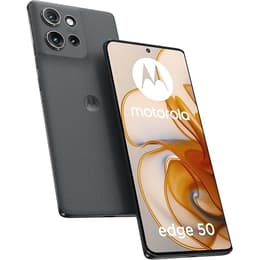
Motorola Edge 50
Motorola Edge 50
See options
Nokia X30
Nokia X30
Starting at

Refurbished price:A$299.00

Versus A$965.00 new

See options

The Motorola Edge 50, released in August 2024, and the Nokia X30, launched in September 2022, are both smartphones designed to offer a balanced user experience. While the Motorola Edge 50 presents a more recent iteration with updated features, the Nokia X30 emphasizes sustainability and a commitment to software longevity. Both devices operate on the Android platform, but they differ in their approach to hardware capabilities and design philosophy.

Scores

Durability

When considering the long-term usability of these devices, their release timelines and software support policies are key differentiators.

  • Release and Software Support: The Motorola Edge 50, being a 2024 release, benefits from a more current Android version (Android 14 at launch) and is promised two major OS upgrades and three years of security updates. In contrast, the Nokia X30, released in 2022 with Android 12, offers three OS upgrades and three years of monthly or quarterly security updates, indicating a strong commitment to software longevity from Nokia.
  • Durability Features: The Motorola Edge 50 boasts an IP68 rating for dust and water resistance and is MIL-STD-810H military-grade certified, suggesting a robust build capable of withstanding various environmental conditions and accidental drops. The Nokia X30 also offers good protection with an IP67 rating for dust and water resistance and Corning Gorilla Glass Victus on the front.
  • Material Composition: The Nokia X30 stands out with its use of 100% recycled aluminum for its frame and 65% recycled plastic for its back, aligning with an eco-conscious design. The Motorola Edge 50 features a vegan leather back and an aluminum frame.

Release year

2024

2022

Compatible with latest Update

Yes

No

Operating system

Android

Android

Foldable

No

No

Performance

The performance of both smartphones is tailored for everyday tasks, with differences emerging in handling more demanding applications.

  • Processing Power: The Motorola Edge 50 is equipped with a more recent generation processor, which translates to smoother operation for demanding applications, quicker app loading times, and more fluid multitasking. The Nokia X30, while capable for general use, provides reliable performance for daily activities and moderate multitasking.
  • Memory and Storage: Both devices offer configurations with ample RAM and internal storage, typically ranging from 8GB of RAM and 256GB of storage for the Motorola Edge 50, and options up to 8GB of RAM and 256GB of storage for the Nokia X30. This allows for comfortable storage of media and applications.
  • Battery Endurance: The Motorola Edge 50 features a larger 5000mAh battery with 68W wired fast charging and 15W wireless charging, providing extended usage and quick power-ups. The Nokia X30 has a 4200 mAh battery with 33W fast charging, which is designed to offer up to two days of battery life under typical usage.

Memory (GB)

12 GB

8 GB

Screen quality

Both devices offer vibrant displays, but they differ in size, resolution, and refresh rate, impacting the visual experience.

  • Display Technology and Size: The Motorola Edge 50 features a larger 6.7-inch P-OLED display, offering deep blacks and vibrant colors, suitable for immersive media consumption. The Nokia X30 comes with a 6.43-inch AMOLED display, also providing rich colors and good contrast in a slightly more compact form factor.
  • Resolution and Brightness: The Motorola Edge 50 offers a 1.5K resolution (1220x2712 pixels) and a peak brightness of 1600 nits, ensuring sharp visuals and good visibility even in bright outdoor conditions. The Nokia X30 has an FHD+ resolution (1080x2400 pixels) and a peak brightness of 700 nits, providing clear images and adequate brightness for most environments.
  • Refresh Rate: The Motorola Edge 50 features a 120Hz adaptive refresh rate, contributing to smoother scrolling and a more responsive feel during interactions. The Nokia X30 offers a 90Hz refresh rate, which still provides a noticeably smoother experience compared to standard 60Hz displays.

Resolution

1220x2712

1080 x 2400

Audiovisual

The camera systems on both phones are designed to capture quality images and videos, with distinct features and capabilities.

  • Rear Camera Setup: The Motorola Edge 50 features a versatile triple-camera system, including a 50MP main sensor with optical image stabilization (OIS), a 13MP ultrawide lens with autofocus, and a 10MP telephoto lens with 3x optical zoom and OIS. This setup allows for a range of photographic options, from wide landscapes to zoomed-in shots. The Nokia X30 comes with a dual-camera setup, featuring a 50MP main sensor with OIS and a 13MP ultrawide lens, which performs well in various lighting conditions.
  • Photography and Video Features: The Motorola Edge 50 supports 4K video recording at 30 frames per second across all its cameras, including the front-facing camera, and includes features like AI enhancements. The Nokia X30 records video at 1080p at 30 or 60 frames per second for the rear cameras and 1080p at 30 frames per second for the front camera, and includes features like Night Mode 2.0 and OZO Spatial Audio capture for improved sound recording.
  • Front Camera: For selfies and video calls, the Motorola Edge 50 is equipped with a 32MP front camera with autofocus, capable of 4K video recording. The Nokia X30 has a 16MP front camera, suitable for clear self-portraits and video calls.

Front camera

32 megapixels

16 megapixels

Miscellaneous

Beyond core specifications, several practical elements contribute to the overall user experience of these smartphones.

  • Connectivity and Ports: Both devices support 5G connectivity for fast mobile data speeds. The Motorola Edge 50 features Bluetooth 5.2, while the Nokia X30 uses Bluetooth 5.1, both offering reliable wireless connections. Both utilize a USB Type-C port for charging and data transfer, with the Nokia X30 specifying USB 2.0.
  • Biometrics and Audio: Both smartphones incorporate an in-display fingerprint sensor for secure unlocking. The Motorola Edge 50 offers stereo speakers with Dolby Atmos for an enhanced audio experience. The Nokia X30 features a mono speaker but includes OZO Spatial Audio capture for improved microphone quality during recording.
  • Design and Handling: The Motorola Edge 50 is noted for its thin and light design, with dimensions of 160.8 x 72.4 x 7.8 mm and a weight of 180g, making it comfortable to handle. The Nokia X30 has similar dimensions at 158.9 x 73.9 x 8 mm and a weight of 185g, also offering a balanced feel in hand.

Weight

180 oz

185 oz

Screen size (in)

6.7

6.43

Network

5G

5G

SIM card

Physical SIM

Dual Physical SIM

Carrier compatibility

Unlocked

Unlocked

User feedback for the Motorola Edge 50 often highlights its appealing design, robust build quality with IP68 and military-grade certification, and a dependable camera system. Users appreciate its vibrant display and the inclusion of wireless charging. Some criticisms point to the processor's performance not being as cutting-edge as some competitors and occasional reports of a less-than-perfect camera app experience. The Nokia X30 is frequently praised for its commitment to software updates, sustainable materials, and a camera that performs well for its category, particularly in everyday scenarios. Its display and overall build are also generally well-received.

Users prioritizing a more recent device with a slightly larger, brighter display, faster charging, and a telephoto camera will find the Motorola Edge 50 well-suited to their needs. Its enhanced durability features also make it a strong contender for those seeking a resilient smartphone. Conversely, users who value extended software support, a focus on sustainable manufacturing, and a reliable, compact device for general use may lean toward the Nokia X30. Both models offer quality-assured refurbished options, providing an eco-friendly alternative for consumers looking to make informed and sustainable choices.


See all articles

Our recent comparisons