Motorola Edge 50 vs Motorola Moto E32

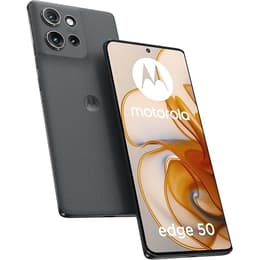
Motorola Edge 50
Motorola Edge 50
See options
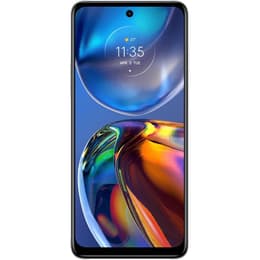
Motorola Moto E32
Motorola Moto E32
See options

The Motorola Edge 50, released in August 2024, and the Motorola Moto E32, launched in May 2022, represent distinct offerings within Motorola's smartphone lineup. While both operate on the Android platform, the Edge 50 introduces a more advanced display, enhanced camera capabilities, and a significantly more powerful processor compared to the Moto E32, which focuses on essential smartphone functions.

Scores

Durability

When considering the long-term usability of these devices, their release timelines and software support policies are key differentiators.

  • Release Timeline and OS Support: The Motorola Edge 50, being a more recent device from August 2024, launched with Android 14 and is expected to receive a longer period of software updates, with some sources indicating up to five years of OS upgrades for the Edge series, aligning with Motorola's improved update policy. In contrast, the Motorola Moto E32, released in May 2022, launched with Android 11 (some variants with Android 12) and has a more limited update cycle, with security updates ceasing around June 2024 and remaining on Android 12.
  • Repairability and Practical Lifespan: Both devices are designed for practical use, but the Edge 50 features an IP68 rating for dust and water resistance, along with MIL-STD 810H certification, suggesting a higher degree of durability against environmental factors and accidental damage. The Moto E32 offers an IP52 water-repellent design, providing basic protection against splashes. Users prioritizing extended software longevity and robust physical durability may find the Edge 50 a more suitable choice for a longer practical lifespan.

Release year

2024

2022

Compatible with latest Update

Yes

No

Operating system

Android

Android

Foldable

No

No

Performance

The performance capabilities of the Motorola Edge 50 and Moto E32 cater to different user demands, primarily due to their internal components.

  • Processor Capabilities and Responsiveness: The Motorola Edge 50 is equipped with a current-generation processor that allows for smooth handling of demanding applications, efficient multitasking, and responsive navigation. Users report that the device performs well, even with video and photo editing software, and can handle competitive games at good frame rates. The Moto E32, on the other hand, features an entry-level processor that is suitable for everyday tasks such as web browsing, social media, and casual gaming, though it may experience some slowdowns with more intensive applications.
  • Storage and Multitasking: The Edge 50 offers generous internal storage options, typically starting from 256GB and going up to 512GB, paired with 8GB or 12GB of RAM, providing ample space for applications and media, and supporting fluid multitasking without expandable storage. The Moto E32 comes with 64GB of internal storage and 4GB of RAM, which is sufficient for basic use, and includes a microSDXC card slot for storage expansion up to 1TB.
  • Battery Behavior: Both devices feature a substantial 5000 mAh battery capacity. The Edge 50 supports fast wired charging at 68W and 15W wireless charging, allowing for quick power replenishment. User experiences with the Edge 50's battery life vary, with some finding it good enough for daily use, while others note it might not be the most reliable for heavy usage. The Moto E32's battery is consistently praised for its longevity, often lasting through a full day of heavy use and potentially multiple days with lighter usage, though it charges at a slower 18W (with a 10W charger included).

Memory (GB)

12 GB

4 GB

Screen quality

The visual experience on these two Motorola smartphones differs significantly, primarily due to their display technologies and specifications.

  • Display Technology and Clarity: The Motorola Edge 50 features a 6.7-inch pOLED display with a high resolution of 1220 x 2712 pixels, offering deep blacks, vibrant colors, and sharp image clarity. This technology provides an immersive viewing experience for multimedia content. The Motorola Moto E32, on the other hand, uses a 6.5-inch IPS LCD screen with a resolution of 720 x 1600 pixels, which delivers clear visuals suitable for everyday use but does not offer the same level of contrast or color richness as an OLED panel.
  • Brightness and Refresh Rate: The Edge 50 boasts a peak brightness of 1600 nits and a refresh rate of up to 144Hz, ensuring excellent visibility even in bright outdoor conditions and providing exceptionally smooth scrolling and animations. The Moto E32 has a 90Hz refresh rate, which offers a smoother experience than standard 60Hz displays, but its brightness levels are more modest, making it less ideal for direct sunlight.
  • Screen Protection: The Edge 50 includes Corning Gorilla Glass 5 for enhanced screen protection against scratches and drops. The Moto E32 does not specify a particular glass protection, suggesting a more standard level of durability for its display.

Resolution

1220x2712

720 x 1600

Audiovisual

The camera systems on the Motorola Edge 50 and Moto E32 are designed for different photographic expectations and offer varying levels of versatility.

  • Rear Camera System: The Motorola Edge 50 features a versatile triple-camera setup, including a 50MP main sensor with optical image stabilization (OIS), a 13MP ultrawide lens with autofocus, and a 10MP telephoto lens with 3x optical zoom and OIS. This configuration allows for detailed photos, good color reproduction, and flexibility across various shooting scenarios, including telephoto and macro shots. The Moto E32 comes with a triple-camera system consisting of a 16MP main sensor, a 2MP macro lens, and a 2MP depth sensor. This setup is capable of capturing decent photos in good lighting conditions and offers basic macro and portrait capabilities.
  • Low-Light and Video Performance: The Edge 50's main camera performs well in low-light conditions, producing clean and sharp images with good dynamic range, and it can record videos in 4K at 30 frames per second (fps) across all cameras, including the selfie camera. Some users have noted occasional focusing issues with the telephoto lens in low light and some camera stabilization concerns. The Moto E32 can record videos up to 1080p at 30fps, and its low-light performance is more limited, as expected from its sensor capabilities.
  • Front Camera and Audio: For selfies, the Edge 50 has a 32MP front camera that captures detailed and sharp images with good dynamic range. The Moto E32 features an 8MP front camera that is suitable for video calls and casual selfies. The Edge 50 also includes stereo speakers with Dolby Atmos, providing a rich audio experience for media consumption. The Moto E32 has a loudspeaker and a 3.5mm headphone jack, offering standard audio output.

Front camera

32 megapixels

8 megapixels

Miscellaneous

Beyond core performance and display, several practical features and design elements distinguish these two Motorola smartphones.

  • Connectivity and Ports: The Motorola Edge 50 supports 5G connectivity, offering faster mobile data speeds, and includes Wi-Fi 6E and Bluetooth 5.2 for advanced wireless connections. It features a USB Type-C 2.0 port for charging and data transfer. The Motorola Moto E32 supports 4G LTE networks and comes with Wi-Fi 802.11 b/g/n and Bluetooth 5.0. It also has a USB Type-C 2.0 port and retains a 3.5mm headphone jack, which is convenient for wired audio accessories.
  • Security and Build: The Edge 50 incorporates an optical in-display fingerprint sensor for secure and convenient unlocking. It boasts an IP68 rating for dust and water resistance and is MIL-STD 810H certified, indicating a high level of durability. The device often features a vegan leather back, contributing to a premium feel. The Moto E32 includes a side-mounted fingerprint sensor and face unlock for security. It has an IP52 water-repellent design, offering protection against splashes.
  • Dimensions and Handling: The Edge 50 measures 160.8 x 72.4 x 7.8 mm and weighs 180 grams, presenting a sleek and relatively lightweight profile. The Moto E32 is slightly larger and heavier at 164 x 75 x 8.5 mm and 184 grams.

Weight

180 oz

184 oz

Screen size (in)

6.7

6,5

Network

5G

4G

SIM card

Physical SIM

Dual Physical SIM

Carrier compatibility

Unlocked

Unlocked

Connector

USB-C

USB-C + Jack 3.5mm

The Motorola Edge 50 and Motorola Moto E32 cater to different user needs and expectations, reflecting their respective positions in the smartphone market.

The Motorola Edge 50 is often praised for its premium design, vibrant pOLED display, and capable camera system that includes a telephoto lens. Users appreciate its smooth performance for daily tasks and even some demanding applications, along with its fast charging capabilities and improved software support policy. However, some users have noted concerns regarding its battery life not always being the most reliable for heavy use, and occasional camera stabilization or focusing issues in specific conditions.

Conversely, the Motorola Moto E32 is frequently lauded for its impressive battery life, which can comfortably last a full day or more for many users. Its 90Hz display provides a smoother visual experience than many devices in its category, and its overall performance is considered good for everyday tasks, web browsing, and casual gaming. Criticisms often point to its more modest camera performance in challenging lighting and its limited software update longevity compared to more premium devices.

Users prioritizing a premium build, a high-resolution and high-refresh-rate display, advanced camera features including optical zoom, and a longer software support window will find the Motorola Edge 50 well-suited to their needs. It is designed for those who engage with more demanding applications and multimedia content. On the other hand, users who prioritize exceptional battery life, a smooth display for general use, and reliable performance for essential smartphone functions will likely lean toward the Motorola Moto E32. It is a practical choice for those seeking a dependable device for daily communication and media consumption without needing the most advanced features.

For those considering either device, exploring quality-assured refurbished options can provide an eco-friendly alternative to owning a capable smartphone.
See all articles

Our recent comparisons