
Motorola Edge 30 Pro vs Motorola Edge 50 Fusion

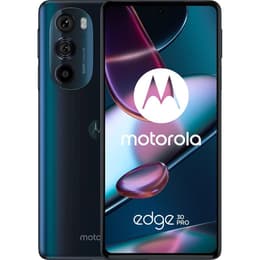
Motorola Edge 30 Pro
Starting at

Refurbished price:A$291.72

Versus A$2,709.00 new

See options
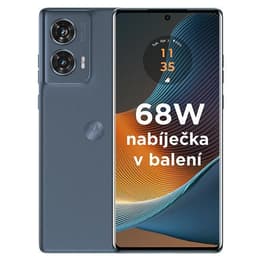
Motorola Edge 50 Fusion
See options

The Motorola Edge 30 Pro, released in March 2022, and the Motorola Edge 50 Fusion, launched in May 2024, are smartphones from Motorola's Edge series. While both devices offer a similar display experience and run on the Android operating system, the Edge 50 Fusion benefits from a more recent release, bringing with it enhanced durability and a longer software support commitment, whereas the Edge 30 Pro features a more powerful processor for demanding tasks.

Scores

Durability

When considering the practical lifespan of these devices, several factors come into play, including their release timelines, software support, and physical resilience.

  • Release Timeline: The Motorola Edge 30 Pro was introduced in March 2022, making it an older model compared to the Motorola Edge 50 Fusion, which debuted in May 2024. This two-year difference directly impacts their expected software longevity. [1, 7]
  • OS Support Duration: The Edge 30 Pro was promised two major Android OS updates and three years of security updates from its release, meaning it would likely receive up to Android 14. [26, 31, 32] In contrast, the newer Edge 50 Fusion is slated to receive three major Android OS updates and four years of security updates, extending its support further into the future, potentially up to Android 17. [1, 37, 38]
  • Physical Durability: The Edge 50 Fusion offers a higher level of protection with an IP68 rating for dust and water resistance, meaning it can withstand immersion in water. [1, 17] The Edge 30 Pro, on the other hand, has an IP52 rating, indicating splash resistance. [7, 16] The Edge 50 Fusion also features Corning Gorilla Glass 5 for screen protection, while the Edge 30 Pro uses Gorilla Glass 3 on the front. [7, 17, 42]

Release year

2022

2024

Compatible with latest Update

Yes

Yes

Operating system

Android

Android

Foldable

No

No

Performance

The performance of a smartphone is largely determined by its internal components, influencing how smoothly applications run and how efficiently it handles various tasks.

  • Processing Power: The Motorola Edge 30 Pro is equipped with a processor designed for high-end performance, allowing it to handle demanding applications and intensive gaming with considerable ease. [19, 25] The Motorola Edge 50 Fusion features a more mid-range processor, which provides smooth performance for everyday tasks, general multitasking, and less graphically intensive games. [1, 17]
  • System Responsiveness: Users of the Edge 30 Pro often report a very fast and responsive experience, with applications loading quickly and seamless transitions between tasks. [19, 24] The Edge 50 Fusion also offers a responsive user experience for daily usage, though it might exhibit slight delays when switching between many heavy applications or during prolonged, graphically intensive gaming sessions. [17]
  • Memory and Storage: Both devices offer various configurations of RAM, with the Edge 30 Pro available with up to 12GB and the Edge 50 Fusion also offering up to 12GB. [1, 6, 7] The Edge 30 Pro provides storage options up to 512GB, and the Edge 50 Fusion also comes with similar storage capacities, though the Edge 50 Fusion does not support expandable storage via microSD. [1, 3, 6, 7, 17, 38]

Memory (GB)

8 GB

12 GB

Screen quality

Both the Motorola Edge 30 Pro and Edge 50 Fusion prioritize a vibrant visual experience, though there are subtle differences in their display technologies and capabilities.

  • Display Technology and Clarity: Both smartphones feature a 6.7-inch pOLED display with a Full HD+ resolution (1080x2400 pixels), resulting in a pixel density of approximately 393 PPI. [3, 7, 15] This ensures sharp images and clear text for typical viewing distances. The pOLED technology on both devices delivers deep blacks and high contrast. [7, 15]
  • Refresh Rate and Smoothness: Both models boast a high refresh rate of 144Hz, which contributes to a fluid visual experience, particularly noticeable during scrolling, animations, and gaming. [1, 7] They also feature a 360Hz touch sampling rate, enhancing responsiveness to touch inputs. [15, 25]
  • Brightness Levels: The Edge 50 Fusion offers a higher peak brightness of 1600 nits, making it potentially more legible in bright outdoor conditions compared to the Edge 30 Pro's typical brightness of 700 nits. [7, 15] Both support HDR10+ for enhanced dynamic range in compatible content. [7, 25]

Resolution

1080 x 2400

1080 x 2400

Screen type

OLED

P-OLED

Audiovisual

The camera systems on both devices are designed to capture a range of moments, each with its own strengths in different scenarios.

  • Rear Camera System: The Edge 30 Pro features a triple rear camera setup with a 50MP main sensor with optical image stabilization (OIS), a 50MP ultrawide sensor, and a 2MP depth sensor. [7, 16] The Edge 50 Fusion comes with a dual rear camera system, including a 50MP main sensor (Sony LYT-700C) with OIS and a 13MP ultrawide lens that also functions for macro photography. [1, 5, 9, 17]
  • Photography Performance: The Edge 30 Pro's main camera is capable of capturing detailed images, though some user feedback suggests its low-light performance and overall camera optimization can be inconsistent. [19, 24] The Edge 50 Fusion's main camera is noted for producing good photos in various conditions, with its ultrawide camera also performing admirably. [8, 9, 17]
  • Front Camera and Video: The Edge 30 Pro has a high-resolution 60MP front camera, while the Edge 50 Fusion features a 32MP front camera. [7, 17] For video recording, the Edge 30 Pro supports up to 8K resolution at 30 frames per second (fps) and 4K at 30fps, while the Edge 50 Fusion records up to 4K at 30fps. [5, 14]

Main camera

50 megapixels

50 megapixels

Front camera

60 megapixels

32 megapixels

Miscellaneous

Beyond the core specifications, several practical features and design elements differentiate these two Motorola smartphones.

  • Connectivity and Ports: Both devices support 5G connectivity for fast mobile data. [1, 25] The Edge 30 Pro supports Wi-Fi 6E and Bluetooth 5.2, while the Edge 50 Fusion also includes modern Wi-Fi and Bluetooth standards. [1, 25] Both utilize a USB-C port for charging and data transfer. [27]
  • Biometric Security: Both phones incorporate an in-display fingerprint sensor for secure unlocking. [1, 7] The Edge 30 Pro also features face recognition. [7]
  • Design and Handling: The Edge 50 Fusion is notably lighter at 175g compared to the Edge 30 Pro's 196g, making it potentially more comfortable for extended use. [1, 7, 12] The Edge 50 Fusion also has a slimmer profile. [3] The Edge 30 Pro features wireless charging and reverse wireless charging capabilities, which are absent in the Edge 50 Fusion. [23]

Weight

196 oz

175 oz

Screen size (in)

6,7

6.7

Network

5G

5G

SIM card

Dual Physical SIM

Dual Physical SIM

Carrier compatibility

Unlocked

Unlocked

The Motorola Edge 30 Pro and Motorola Edge 50 Fusion cater to slightly different user priorities, reflecting their respective release timelines and design philosophies.

Users often praise the Edge 30 Pro for its powerful processing capabilities, which deliver a consistently fast and smooth experience for demanding applications and gaming. [19, 24] However, some common criticisms include its camera performance, particularly in low light, and its battery life for heavy users. [19, 24] The Edge 50 Fusion, being a newer model, is frequently lauded for its enhanced durability with an IP68 rating, a larger battery capacity, and a more extended software update commitment. [8, 9, 17] User feedback also highlights its capable camera system and vibrant display. Some users have noted that while its processor is efficient for daily tasks, it may not match the raw power of higher-end chipsets for the most intensive use cases. [17]

Users prioritizing raw processing power for high-performance tasks and who value features like wireless charging may find the Motorola Edge 30 Pro well-suited to their needs. Conversely, users who prioritize a longer software support lifespan, superior water and dust resistance, a lighter design, and a slightly larger battery for extended use will likely lean toward the Motorola Edge 50 Fusion. Both devices offer a quality-assured refurbished option, providing an eco-friendly alternative for consumers seeking reliable technology. Ultimately, the choice depends on whether a user values peak performance and wireless charging from an earlier flagship or enhanced durability and extended software support from a more recent, balanced offering.


See all articles

Our recent comparisons