
iPhone 13 mini vs Motorola Edge 30 Pro

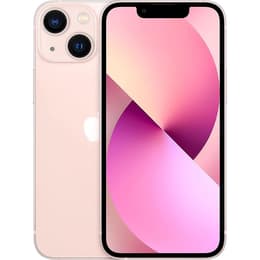
iPhone 13 mini
iPhone 13 mini
Starting at

Refurbished price:A$368.00

Versus A$1,049.00 new

See options
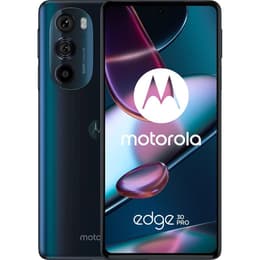
Motorola Edge 30 Pro
Starting at

Refurbished price:A$289.72

Versus A$2,709.00 new

See options

The iPhone 13 Mini, released in September 2021, and the Motorola Edge 30 Pro, launched in February 2022, represent distinct approaches to smartphone design and functionality. While the iPhone 13 Mini offers a compact form factor running on Apple's iOS, the Motorola Edge 30 Pro provides a larger display and a near-stock Android experience. These devices cater to different user preferences, with key differentiators in their operating systems, physical size, and display technologies.

Scores

Durability

When considering the long-term usability of these devices, their release timelines and software support policies are important factors.

  • Release Timeline: The iPhone 13 Mini was released in September 2021, making it an older model compared to the Motorola Edge 30 Pro, which launched in February 2022. This difference in release date impacts the remaining period of official software support.
  • Software Longevity: Apple typically provides iOS updates for its devices for approximately 5-6 years from their release. The iPhone 13 Mini, originally shipped with iOS 15, is compatible with current iOS versions, extending its software lifespan. In contrast, Motorola generally offers 2 major Android updates and 3 years of security updates for its devices, meaning the Edge 30 Pro will receive fewer major OS upgrades over its lifetime compared to the iPhone 13 Mini.
  • Repairability: The iPhone 13 Mini initially received a repairability score of 5/10, which later improved to 6/10 with an iOS 15.2 update that addressed certain repair limitations. The Motorola Edge 30 Pro features a plastic frame and Gorilla Glass 3 protection, and while specific repairability scores can vary, its IP52 splash resistance is less robust than the iPhone's IP68 rating.

Release year

2021

2022

Compatible with latest Update

Yes

Yes

Operating system

iOS

Android

Foldable

No

No

Performance

Both devices offer capable performance, but their underlying hardware and software optimizations lead to different real-world experiences.

  • Processing Power: The iPhone 13 Mini is equipped with a powerful processor that handles demanding applications and multitasking smoothly, ensuring a responsive user experience. The Motorola Edge 30 Pro also delivers excellent performance, capable of running intensive games and applications without significant slowdowns, thanks to its high-end processor.
  • Storage Options: The iPhone 13 Mini is available with 128GB, 256GB, or 512GB of internal storage, providing ample space for apps, photos, and videos. The Motorola Edge 30 Pro offers similar storage configurations, including 128GB, 256GB, and 512GB, but it does not support expandable storage via a memory card.
  • Battery Behavior: The iPhone 13 Mini, with its smaller physical size, has a more compact battery, which for heavy users may require more frequent charging, though it offers up to 17 hours of video playback. The Motorola Edge 30 Pro features a larger battery capacity, and users generally report it can last a full day even with intensive use, with moderate usage potentially extending to two days.

Memory (GB)

4 GB

8 GB

Screen quality

The visual experience on these smartphones is shaped by their display technology, size, and refresh rates.

  • Display Technology and Size: The iPhone 13 Mini features a 5.4-inch Super Retina XDR OLED display, known for its deep blacks and vibrant colors, making it a compact option for users who prefer smaller devices. The Motorola Edge 30 Pro offers a significantly larger 6.7-inch pOLED display, providing a more expansive viewing area for media consumption and productivity.
  • Resolution and Brightness: Both devices offer high-resolution displays. The iPhone 13 Mini has a 2340x1080 pixel resolution with a pixel density of 476 ppi, and a peak brightness of 1200 nits for HDR content. The Motorola Edge 30 Pro has a 1080x2400 pixel resolution, resulting in a slightly lower pixel density due to its larger screen, and a typical brightness of around 500 nits.
  • Refresh Rate: A key difference is the refresh rate. The iPhone 13 Mini has a standard 60Hz refresh rate. The Motorola Edge 30 Pro boasts a higher 144Hz refresh rate, which contributes to smoother scrolling and a more fluid visual experience, particularly noticeable in compatible games and interface navigation.

Resolution

1080 x 2340

1080 x 2400

Screen type

Super Retina XDR OLED

OLED

Audiovisual

The camera systems on both phones are designed to capture quality images and videos, though they excel in different areas.

  • Rear Camera System: The iPhone 13 Mini features a dual 12MP camera system with a wide and an ultrawide lens, including sensor-shift optical image stabilization on the main sensor for improved low-light performance and stability. The Motorola Edge 30 Pro comes with a triple rear camera setup, including a 50MP main sensor with optical image stabilization, a 50MP ultrawide lens that also functions for macro photography, and a 2MP depth sensor.
  • Photography Performance: The iPhone 13 Mini is praised for its strong daytime photos with accurate colors and good low-light capabilities, along with features like Night mode and Photographic Styles. The Motorola Edge 30 Pro produces accurate photos in terms of color and contrast in normal daytime conditions, but its low-light performance is generally considered average compared to top-tier phones.
  • Video Recording and Audio: The iPhone 13 Mini supports 4K video recording up to 60 frames per second and includes Cinematic mode for a shallow depth of field effect. The Motorola Edge 30 Pro can record video in up to 8K resolution and features Dolby Atmos for an enhanced audio experience.

Main camera

12 megapixels

50 megapixels

Front camera

12 megapixels

60 megapixels

Miscellaneous

Beyond core features, several practical elements contribute to the overall user experience of these smartphones.

  • Connectivity and Ports: Both devices support 5G connectivity for fast mobile data speeds. The iPhone 13 Mini uses Apple's proprietary Lightning port for charging and data transfer. The Motorola Edge 30 Pro utilizes a USB-C 3.1 port, offering broad compatibility with various accessories. Both support modern Wi-Fi standards, with the Edge 30 Pro supporting Wi-Fi 6E.
  • Biometric Security: The iPhone 13 Mini relies on Face ID for secure facial recognition. The Motorola Edge 30 Pro incorporates a side-mounted fingerprint sensor for biometric authentication.
  • Physical Design and Handling: The iPhone 13 Mini is notably compact and lightweight, measuring 131.5 x 64.2 x 7.65 mm and weighing 140-141g, making it suitable for one-handed use. The Motorola Edge 30 Pro is a larger device at 163.1 x 75.95 x 8.8 mm and weighs 196g, offering a more substantial feel. The iPhone features a Ceramic Shield front cover for durability, while the Edge 30 Pro uses Corning Gorilla Glass 3 on its display and has a plastic frame.

Weight

140 oz

196 oz

Screen size (in)

5,4

6,7

Network

5G

5G

SIM card

Physical SIM + eSIM

Dual Physical SIM

Carrier compatibility

Unlocked

Unlocked

The iPhone 13 Mini and Motorola Edge 30 Pro cater to different user priorities, each with its own set of strengths and considerations.

Users often praise the iPhone 13 Mini for its exceptionally compact size, making it comfortable for one-handed use and easy to carry. Its camera system is generally well-regarded for producing high-quality photos and videos, particularly in various lighting conditions, and its long-term software support from Apple is a significant advantage. However, some users note that its smaller battery capacity can lead to more frequent charging for heavy usage.

The Motorola Edge 30 Pro receives commendation for its powerful performance, capable of handling demanding tasks and gaming smoothly. Its large, high-refresh-rate display offers a very fluid visual experience, and its fast charging capabilities are a notable convenience. Common criticisms include its camera performance, which, while capable, may not consistently match the output of some competitors, especially in challenging low-light scenarios. Its software update policy is also less extensive compared to Apple's.

Therefore, users prioritizing a highly portable device with a strong camera for everyday photography and long-term software updates may find the iPhone 13 Mini well-suited to their needs. Conversely, those who value a larger, high-refresh-rate display, robust performance for gaming and demanding applications, and rapid charging might lean towards the Motorola Edge 30 Pro. Both devices are available as quality-assured refurbished options, providing an eco-friendly alternative for consumers.
See all articles

Our recent comparisons