
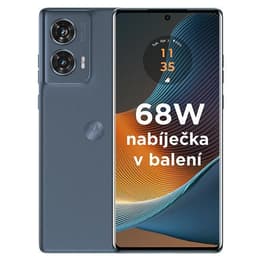

Motorola Edge 30 Neo vs Motorola Edge 50 Fusion

Motorola Edge 30 Neo
Starting at

Refurbished price:A$306.00

Versus A$414.00 new

See options
Motorola Edge 50 Fusion
See options

The Motorola Edge 30 Neo, released in September 2022, and the Motorola Edge 50 Fusion, launched in May 2024, are both smartphones from Motorola's Edge series. While the Edge 30 Neo offers a compact design and a focus on everyday usability, the newer Edge 50 Fusion steps up with a larger display, enhanced durability, and a more advanced camera system. Both devices run on the Android operating system, providing a user-friendly experience with Motorola's custom interface.

Scores

Durability

When considering the long-term usability of a smartphone, factors like release timeline, software support, and physical durability are important. The Motorola Edge 30 Neo and Edge 50 Fusion present different profiles in these areas.

  • Release Timeline and Software Support: The Edge 30 Neo, launched in September 2022, originally shipped with Android 12 and received updates up to Android 14, which is its final major OS update. It was promised three years of security patches. In contrast, the Edge 50 Fusion, released in May 2024, launched with Android 14 and is promised three major Android OS upgrades, extending its support up to Android 17, along with four years of security updates. This means the Edge 50 Fusion offers a significantly longer period of software longevity.
  • Physical Durability: The Edge 30 Neo features an IP52 rating, indicating resistance to dust and splashes. Its frame is constructed from plastic. The Edge 50 Fusion, however, boasts an IP68 rating, providing more robust protection against dust and water immersion (up to 1.5 meters for 30 minutes). It also incorporates Corning Gorilla Glass 5 for screen protection.
  • Expected Practical Lifespan: Users prioritizing extended software updates and higher water and dust resistance for a longer practical lifespan may find the Edge 50 Fusion more suitable. The Edge 30 Neo, while still functional, will no longer receive major Android version updates, which could impact compatibility with newer applications over time.

Release year

2022

2024

Compatible with latest Update

Yes

Yes

Operating system

Android

Android

Foldable

No

No

Performance

The performance of a smartphone is crucial for daily tasks, app usage, and multitasking. Both the Motorola Edge 30 Neo and Edge 50 Fusion are designed to handle common smartphone activities, but they differ in their underlying capabilities.

  • Processor Capabilities: The Edge 30 Neo is equipped with a processor that provides snappy performance for everyday tasks and web browsing, and it handles gaming decently. The Edge 50 Fusion features a more recent generation processor, which allows it to run applications smoothly and manage multitasking effectively. While it handles demanding apps well, it may encounter limitations with graphically intensive games.
  • Storage and Multitasking: The Edge 30 Neo is available with 6GB or 8GB of RAM and 128GB or 256GB of internal storage. The Edge 50 Fusion offers more generous configurations, with 8GB or 12GB of RAM and storage options up to 512GB. The increased RAM in the Edge 50 Fusion can contribute to a more fluid experience when switching between multiple applications. The Edge 50 Fusion does not support microSD card expansion, unlike some other Motorola devices.
  • Battery Behavior: The Edge 30 Neo includes a 4020mAh battery, which typically lasts a full day for most users with moderate usage. It supports 68W wired fast charging and 5W wireless charging. The Edge 50 Fusion is equipped with a larger 5000mAh battery, offering excellent longevity that can extend to two days for some users, and reliably lasts a full day even for heavy users. It also supports 68W TurboPower fast charging.

Memory (GB)

8 GB

12 GB

Screen quality

The display is a primary interface for smartphone interaction, and both Motorola models offer vibrant viewing experiences with distinct characteristics.

  • Display Technology and Clarity: Both devices feature pOLED displays, known for deep blacks and vibrant colors. The Edge 30 Neo has a 6.28-inch screen with a 1080x2400 pixel resolution, resulting in a pixel density of 419 pixels per inch (PPI). The Edge 50 Fusion sports a larger 6.7-inch display with a 2400x1080 pixel resolution, yielding a PPI of 395. While the Edge 30 Neo has a slightly higher pixel density due to its smaller size, both offer clear and sharp visuals for typical viewing distances.
  • Brightness and Refresh Rate: The Edge 30 Neo's display offers a 120Hz refresh rate for smooth scrolling and animations, with a peak brightness of 1000 nits in auto mode and around 491 nits manually. The Edge 50 Fusion elevates this with a 144Hz refresh rate, providing even smoother motion, and a higher peak brightness of 1600 nits, which enhances visibility in bright outdoor conditions. The Edge 50 Fusion also supports 10-bit color and DCI-P3 wide color gamut for richer color reproduction.
  • Screen Size and Design: The Edge 30 Neo's 6.28-inch flat display contributes to its compact and lightweight design, making it comfortable for one-handed use. The Edge 50 Fusion features a larger 6.7-inch curved display, which offers a more expansive viewing area and a modern aesthetic.

Resolution

1080 x 2400

1080 x 2400

Screen type

P-OLED

P-OLED

Audiovisual

The camera systems on both the Motorola Edge 30 Neo and Edge 50 Fusion are designed to capture everyday moments, though they offer different capabilities and performance levels.

  • Rear Camera Systems: The Edge 30 Neo features a dual rear camera setup, including a 64MP main sensor with optical image stabilization (OIS) and a 13MP ultrawide lens that also functions for macro shots. It performs well in bright lighting conditions, producing sharp images with good color balance. However, its low-light performance is considered below average, and its Night Vision mode yields mixed results. The Edge 50 Fusion also has a dual rear camera system, comprising a 50MP main sensor (Sony LYT-700C) with OIS and a 13MP ultrawide lens with macro capabilities. This system generally performs well across various lighting conditions, offering good HDR and capable image capture.
  • Front Camera and Video Recording: For selfies, the Edge 30 Neo has a 32MP front camera that takes decent photos. Its video recording is limited to 1080p at 30 or 60 frames per second (fps) for the main camera, and 1080p at 30fps for the ultrawide, with dynamic range not being its strongest point. The Edge 50 Fusion also features a 32MP front camera, which delivers good clarity and color in selfies. A notable advantage of the Edge 50 Fusion is its ability to record 4K video at 30fps with both its front and rear cameras.
  • Audio Experience: The Edge 30 Neo offers clear voice quality during calls. The Edge 50 Fusion enhances the audio experience with stereo speakers and Dolby Atmos support, providing an immersive sound for media consumption and gaming.

Main camera

64 megapixels

50 megapixels

Front camera

32 megapixels

32 megapixels

Miscellaneous

Beyond core performance and display, several practical elements contribute to the overall user experience of a smartphone. The Motorola Edge 30 Neo and Edge 50 Fusion offer different features in these areas.

  • Connectivity and Ports: Both devices support 5G connectivity, Wi-Fi, and NFC for contactless payments. The Edge 30 Neo uses Bluetooth 5.1, while the Edge 50 Fusion features the slightly newer Bluetooth 5.2. Both utilize a USB-C port for charging and data transfer. The Edge 30 Neo notably lacks a 3.5mm headphone jack.
  • Biometric Security and Sensors: Both smartphones incorporate an in-display fingerprint sensor for secure unlocking. They also include standard sensors such as an accelerometer, ambient light sensor, and gyroscope.
  • Design and Handling: The Edge 30 Neo is characterized by its compact dimensions (152.9 x 71.2 x 7.75-7.8 mm) and light weight (155g), making it easy to handle and comfortable for one-handed use. It features a plastic back. The Edge 50 Fusion is a larger device (161.9 x 73.1 x 7.8-7.9 mm) and slightly heavier (175g), but is still considered slim and light for its size. Its design often includes vegan leather finishes and a curved display, contributing to a premium feel.

Weight

155 oz

175 oz

Screen size (in)

6.28

6.7

Network

5G

5G

SIM card

Dual Physical SIM

Dual Physical SIM

Carrier compatibility

Unlocked

Unlocked

The Motorola Edge 30 Neo and Edge 50 Fusion cater to different user priorities, reflecting their respective release timelines and feature sets. The Edge 30 Neo is often praised for its compact form factor, vibrant OLED display, and fast charging capabilities, making it a comfortable and responsive device for everyday use. Users appreciate its stock Android experience and overall build quality. However, common criticisms include its less impressive camera performance, particularly in low light and for video recording, and a shorter software update policy.

The newer Edge 50 Fusion receives acclaim for its stylish design, excellent battery life that can extend beyond a single day, and a capable camera system that performs well in various conditions. Its higher IP68 durability rating and brighter, higher refresh rate display are also significant advantages. Some users note that its processing power, while sufficient for most tasks, might not be ideal for the most demanding games, and its software support, while better than the Neo, is still a point of discussion compared to some competitors. There have also been isolated reports of motherboard issues after extended use.

Users prioritizing a compact, lightweight device for general use and who do not require the latest software updates or advanced camera features may find the Motorola Edge 30 Neo suitable. Conversely, users who value a larger, more immersive display, superior battery longevity, enhanced durability, and a more capable camera system, along with a longer software support window, will likely lean towards the Motorola Edge 50 Fusion. Both models offer a quality-assured refurbished option, providing an eco-friendly alternative for consumers seeking reliable performance.


See all articles

Our recent comparisons