Nokia G22 vs Nokia X30

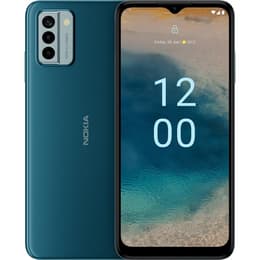
Nokia G22
Nokia G22
See options
Nokia X30
Nokia X30
Starting at

Refurbished price:A$299.00

Versus A$965.00 new

See options

The Nokia G22, released in February 2023, and the Nokia X30, launched in September 2022, are smartphones from HMD Global that offer distinct experiences. While both devices run on the Android operating system, the Nokia X30 positions itself with a focus on enhanced display technology and camera capabilities, whereas the Nokia G22 emphasizes user repairability and extended battery life.

Scores

Durability

The longevity of a smartphone is influenced by its physical durability, software support, and ease of repair. These Nokia models present different approaches to extending their practical lifespan.

  • Release Timeline and Software Support: The Nokia G22 was released in February 2023, while the Nokia X30 launched earlier in September 2022. The G22 shipped with Android 12 and has received updates up to Android 14, with security updates expected through April 2026. The X30 also launched with Android 12 and has been updated to Android 14, with security updates through January 2025. There has been user discussion regarding the X30 not receiving Android 15 despite initial promises of three OS upgrades.
  • Physical Durability and Repairability: The Nokia G22 features an IP52 rating for splash and dust resistance and uses Corning Gorilla Glass 3 for screen protection. It is notably designed for user repairability, with HMD Global partnering with iFixit to provide parts and guides for common repairs like battery, screen, and charging port replacements. The Nokia X30 offers a higher IP67 rating, indicating better dust and water resistance, allowing submersion up to 1 meter for 30 minutes. Its display is protected by the more advanced Corning Gorilla Glass Victus.
  • Expected Practical Lifespan: The G22's repair-friendly design aims to extend its physical usability, though its software update policy is more limited compared to some competitors. The X30's higher build quality and initial software promises suggested a longer lifespan, but the recent uncertainty around future OS updates may impact its perceived software longevity.

Release year

2023

2022

Compatible with latest Update

No

No

Operating system

Android

Android

Foldable

No

No

Performance

The performance of these devices caters to different user expectations, primarily driven by their internal components and optimization.

  • Processor Capabilities: The Nokia G22 is powered by a Unisoc T606 processor, which provides adequate performance for basic daily tasks such as web browsing, social media, and light applications. Users have noted that it can be slow when opening heavier applications or running demanding processes. The Nokia X30 features a Qualcomm Snapdragon 695 5G processor, offering a more responsive experience for multitasking and handling moderately demanding applications and games. While it delivers a smooth everyday experience, some users find its performance to be mid-range rather than high-end.
  • RAM and Storage: The G22 typically comes with 4GB of RAM and offers 64GB or 128GB of internal storage, expandable via a microSD card slot. The X30 provides more generous options with 6GB or 8GB of RAM and 128GB or 256GB of internal storage, but it lacks a microSD card slot for expansion.
  • Battery Behavior: The Nokia G22 is equipped with a larger 5050 mAh battery, which users report delivers excellent battery life, often lasting up to two days with moderate use and potentially three days with lighter usage. It supports 20W fast charging. The Nokia X30 has a 4200 mAh battery and supports faster 33W charging. Its battery life is generally considered good, typically lasting a full day of moderate use.

Memory (GB)

4 GB

8 GB

Screen quality

The visual experience on these smartphones differs significantly due to their display technologies and specifications.

  • Display Technology and Resolution: The Nokia G22 features a 6.5-inch IPS LCD with a resolution of 720 x 1600 pixels (HD+), resulting in a pixel density of 270 PPI. The Nokia X30 boasts a 6.43-inch AMOLED display with a higher resolution of 1080 x 2400 pixels (FHD+), providing a sharper image with 409 PPI.
  • Brightness and Refresh Rate: Both devices offer a 90Hz refresh rate for smoother scrolling and animations. The G22 has a typical brightness of 400-500 nits. The X30's AMOLED panel can reach a peak brightness of 700 nits, which contributes to better visibility in bright outdoor conditions.
  • Viewing Experience: The X30's AMOLED display provides more vibrant colors, deeper blacks, and better contrast compared to the G22's IPS LCD. This makes the X30 generally more suitable for media consumption and users who prioritize visual fidelity. The G22's screen is considered adequate for everyday use but not exceptional.

Resolution

720 x 1600

1080 x 2400

Screen type

IPS LCD

AMOLED

Audiovisual

The camera systems on the Nokia G22 and Nokia X30 are designed with different priorities, impacting their photographic and videographic capabilities.

  • Rear Camera System: The Nokia G22 features a triple rear camera setup with a 50 MP main sensor, accompanied by 2 MP macro and 2 MP depth sensors. User reviews indicate that its camera performance is generally mediocre, struggling in low-light conditions and being slow to capture images. The Nokia X30 has a dual rear camera system, comprising a 50 MP main sensor with Optical Image Stabilization (OIS) and a 13 MP ultrawide sensor with a 123-degree field of view. The X30's main camera is praised for its performance in both daylight and low-light scenarios, with features like Night Mode 2.0 and Dark Vision contributing to improved results.
  • Front Camera and Video Recording: The G22 includes an 8 MP front-facing camera, while the X30 features a 16 MP front camera. Both devices can record video at 1080p resolution at 30 frames per second. However, the X30 does not support 4K video recording, which some users might expect from a device in its category.
  • Overall Photography Experience: Users prioritizing advanced photography, especially in challenging lighting, will find the Nokia X30's camera system more capable due to its OIS and enhanced low-light processing. The G22's camera is more suited for casual photography in good lighting.

Main camera

50 megapixels

50 megapixels

Front camera

8 megapixels

16 megapixels

Miscellaneous

Beyond core specifications, several practical elements differentiate the Nokia G22 and Nokia X30, influencing daily usability and connectivity.

  • Connectivity and Ports: The Nokia G22 supports 4G LTE connectivity, Wi-Fi 5 (802.11ac), and Bluetooth 5.0. It retains a 3.5mm headphone jack and uses a USB-C 2.0 port for charging and data transfer. The Nokia X30 offers more advanced connectivity with 5G support, Wi-Fi 6 (802.11ax), and Bluetooth 5.1. It features a USB-C 2.0 port but omits the 3.5mm headphone jack.
  • Biometric Security and Sensors: The G22 incorporates a side-mounted fingerprint sensor and supports face unlock. The X30 utilizes an in-display optical fingerprint sensor for unlocking and also supports face recognition. Both devices include standard sensors like accelerometers and proximity sensors.
  • Build Materials and Dimensions: The Nokia G22 has a plastic back and frame, contributing to its lighter feel and repairability. Its dimensions are 165 x 76.2 x 8.5 mm and it weighs 196.2g. The Nokia X30 features an aluminum frame and a plastic back, with some recycled materials used in its construction. It measures 158.9 x 73.9 x 8 mm and weighs 185g, making it slightly more compact and lighter.

Weight

196 oz

185 oz

Screen size (in)

6.5

6.43

Network

4G

5G

SIM card

Dual Physical SIM

Dual Physical SIM

Carrier compatibility

Unlocked

Unlocked

User feedback for the Nokia G22 frequently praises its exceptional battery life, often extending to two or three days on a single charge, and its innovative focus on user repairability, supported by iFixit partnerships. However, common criticisms point to its slower performance, particularly with demanding applications, and its generally uninspiring camera quality. The G22's software update policy, offering two OS upgrades and three years of security updates, is also a point of consideration for users seeking longer-term software support.

The Nokia X30 receives commendation for its vibrant AMOLED display, robust build quality with an IP67 rating, and its capable camera system, especially for low-light photography. Its use of recycled materials is also a positive aspect for environmentally conscious users. On the other hand, the X30 has faced criticism regarding its processor performance, which some users feel does not align with its market positioning, and the absence of 4K video recording. A significant concern among users has been the discrepancy between promised and delivered OS updates, with reports indicating that Android 15 may not be released despite earlier assurances of three OS upgrades.

Users prioritizing extended battery life and the ability to perform basic repairs themselves may find the Nokia G22 a suitable choice. Its focus on practical longevity through repairability makes it an appealing option for those who value sustainability and hands-on maintenance. Conversely, individuals who prioritize a superior visual experience, better camera performance (especially in varied lighting conditions), and a more premium build will likely lean towards the Nokia X30. While the X30 offers a more refined user experience in many aspects, potential buyers should consider the recent discussions around its software update longevity. Both devices offer pathways to more sustainable technology consumption, with quality-assured refurbished options providing an eco-friendly alternative for either model.

See all articles

Our recent comparisons