

Galaxy S25+ vs Google Pixel 7

Galaxy S25+
Galaxy S25+
Starting at

Refurbished price:A$919.00

Versus A$1,699.00 new

See options
Google Pixel 7
Google Pixel 7
Starting at

Refurbished price:A$348.00

Versus A$879.00 new

See options

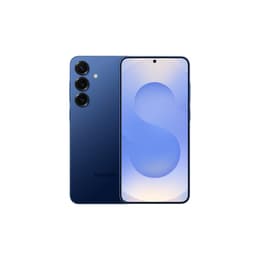
The Samsung Galaxy S25 Plus, released in February 2025, and the Google Pixel 7, launched in October 2022, represent different generations in the smartphone landscape. While both devices operate on the Android platform, the Galaxy S25 Plus introduces more recent hardware advancements, an expanded camera system, and a longer software support commitment, setting it apart from the Pixel 7's established feature set.

Scores

Durability

When considering the practical lifespan of these smartphones, their release timelines and software support policies are key factors.

  • Release Timeline: The Galaxy S25 Plus is a significantly newer device, having been released in February 2025. The Google Pixel 7, by contrast, was released in October 2022. This difference in age directly impacts their remaining support windows.
  • OS Support Duration: Samsung has committed to providing 7 years of OS and security updates for the Galaxy S25 Plus, extending its software longevity until approximately 2032. The Google Pixel 7, while offering a respectable 5 years of updates from its release, is expected to receive its last major OS update around late 2027.
  • Repairability: Both devices feature robust builds with glass fronts and backs, and an IP68 rating for dust and water resistance. The Galaxy S25 Plus uses Gorilla Glass Victus 2, while the Pixel 7 uses Gorilla Glass Victus, indicating a slight edge in material durability for the newer Samsung model. The Galaxy S25 Plus has shown improved repairability with a score of 9 out of 10 in some assessments, featuring easier battery removal and standard screws. The Pixel 7 has received repairability scores ranging from 5.5 to 6.5 out of 10, with some challenges noted for battery replacement.

Release year

2025

2022

Foldable

No

No

Performance

Performance is a critical aspect for daily smartphone use, influencing everything from app responsiveness to demanding tasks.

  • Processor Capabilities: The Galaxy S25 Plus is equipped with a current-generation processor, a 3nm chip designed for enhanced efficiency and power. This translates to smoother operation, faster app loading, and more capable handling of intensive applications and multitasking. The Pixel 7 features a previous-generation processor, which provides a fluid experience for everyday tasks but may show limitations with the most demanding applications or prolonged heavy use.
  • Multitasking and Storage: The Galaxy S25 Plus typically comes with 12GB of RAM and offers storage options starting at 256GB, utilizing faster UFS 4.0 storage technology. The Pixel 7 includes 8GB of RAM and storage options starting at 128GB, using UFS 3.1 technology. This difference means the S25 Plus can manage more applications simultaneously and access data more quickly.
  • Battery Behavior: The Galaxy S25 Plus houses a 4900 mAh battery, supporting 45W wired fast charging, 15W wireless charging, and reverse wireless charging. Users generally report it can last a full day with typical use. The Pixel 7 has a 4355 mAh battery with 20W wired fast charging, wireless charging, and reverse wireless charging. Its battery life is generally considered sufficient for a full day of moderate use, though heavy users might need to recharge sooner.

Memory (GB)

12 GB

8 GB

Screen quality

The display is the primary interface for smartphone interaction, and both devices offer distinct viewing experiences.

  • Display Technology and Resolution: The Galaxy S25 Plus features a 6.7-inch Dynamic LTPO AMOLED 2X display with a QHD+ resolution (3120x1440 pixels), resulting in a high pixel density. This technology delivers deep blacks, vibrant colors, and sharp details. The Pixel 7 has a 6.3-inch FHD+ OLED display with a resolution of 1080x2400 pixels, offering clear visuals and good color reproduction, characteristic of OLED panels.
  • Brightness and Refresh Rate: The Galaxy S25 Plus boasts an adaptive refresh rate ranging from 1Hz to 120Hz, providing smooth scrolling and responsiveness while optimizing power consumption. It can reach a peak brightness of up to 2600 nits, ensuring excellent visibility even in bright outdoor conditions. The Pixel 7 features a 90Hz refresh rate for a smooth experience and a peak brightness of around 1400 nits, which is adequate for most environments but less bright than the S25 Plus.
  • Screen Size and Protection: The S25 Plus offers a larger 6.7-inch screen, providing more screen real estate for media consumption and multitasking. The Pixel 7's 6.3-inch display offers a more compact form factor. Both displays are protected by Gorilla Glass, with the S25 Plus featuring the newer Gorilla Glass Victus 2 for enhanced durability compared to the Pixel 7's Gorilla Glass Victus.

Resolution

1440x3120

1080 x 2400

Audiovisual

Both smartphones offer capable camera systems, though with different approaches to photography.

  • Rear Camera Systems: The Galaxy S25 Plus features a versatile triple-camera setup on the rear, including a 50MP main wide-angle lens, a 12MP ultrawide lens with a 120-degree field of view, and a 10MP telephoto lens offering 3x optical zoom. This allows for greater flexibility in capturing subjects at various distances. The Pixel 7 employs a dual-camera system with a 50MP wide lens and a 12MP ultrawide lens with a 114-degree field of view.
  • Photography Performance: The Galaxy S25 Plus benefits from newer sensor technology and Samsung's ProVisual Engine, enhancing image processing, low-light performance, and color accuracy, often delivering sharp and vibrant photos with a tendency for punchy colors. The Pixel 7 is renowned for its computational photography, which excels in producing natural-looking images, strong dynamic range, and impressive low-light shots through features like Night Sight and Real Tone.
  • Video and Front Camera: Both phones offer capable front-facing cameras for selfies and video calls, with the S25 Plus having a 12MP sensor and the Pixel 7 a 10.8MP sensor. The Galaxy S25 Plus supports 8K video recording at 30fps, while both devices are capable of 4K video recording at 30 or 60fps. The S25 Plus also features very decent internal microphones for video recording.

Miscellaneous

Beyond core specifications, several practical elements contribute to the overall user experience of these devices.

  • Connectivity: The Galaxy S25 Plus supports newer wireless standards, including Wi-Fi 7 and Bluetooth 5.4, offering potentially faster and more stable connections compared to the Pixel 7's Wi-Fi 6e and Bluetooth 5.2. Both devices offer 5G connectivity.
  • Biometrics and Ports: The Galaxy S25 Plus features an ultrasonic in-screen fingerprint sensor, while the Pixel 7 uses an optical in-screen fingerprint sensor. Both provide secure unlocking methods. Both devices utilize a USB-C port for charging and data transfer, and neither includes a traditional headphone jack.
  • Design and Handling: The Galaxy S25 Plus measures 158.4 x 75.7 x 7.3 mm and weighs 190 grams, offering a larger yet relatively slim profile. The Pixel 7 is more compact at 155.6 x 73.2 x 8.7 mm and weighs 197 grams. The S25 Plus features an aluminum frame and Gorilla Glass Victus 2 on both front and back, while the Pixel 7 uses an aluminum frame and Gorilla Glass Victus.

Weight

190 oz

212 oz

Screen size (in)

6.7

6.3

SIM card

Physical SIM + eSIM

Physical SIM + eSIM

Carrier compatibility

Unlocked

Unlocked

The Samsung Galaxy S25 Plus and Google Pixel 7 cater to different user priorities, largely due to their generational gap. The Galaxy S25 Plus, being a more recent release, generally receives praise for its cutting-edge display, powerful performance, and extended software support. Users appreciate its versatile camera system, including a dedicated telephoto lens, and its improved battery life and charging speeds. Some users might note that while the S25 Plus offers significant upgrades, its design evolution from previous Samsung flagships is incremental.

The Google Pixel 7, while older, is frequently lauded for its exceptional computational photography, delivering natural-looking images and strong low-light performance. Its software experience, with timely Android updates and unique Pixel features, is also a common point of praise. Criticisms sometimes point to its 90Hz display, which is less fluid than newer 120Hz panels, and its battery life, which some heavy users find requires mid-day top-ups. The Pixel 7's repairability has also been a point of discussion, with some components being more challenging to replace.

Users prioritizing the latest technology, a superior display for media, robust gaming performance, and a longer software support window may find the Galaxy S25 Plus well-suited to their needs. Conversely, users who value a more compact device, a strong focus on computational photography, and a clean Android experience with consistent updates, even if for a shorter period, might lean toward the Pixel 7. Both devices offer a quality-assured refurbished option, providing an eco-friendly alternative for consumers seeking reliable technology.

See all articles

Our recent comparisons