iPhone 16e vs Motorola Moto E32

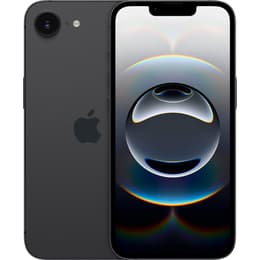
iPhone 16e
iPhone 16e
Starting at

Refurbished price:A$838.00

Versus A$999.00 new

See options
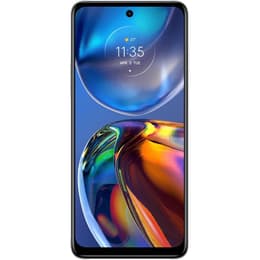
Motorola Moto E32
Motorola Moto E32
See options

The iPhone 16e, released in February 2025, represents Apple's entry-level offering within its eighteenth-generation smartphone lineup. In contrast, the Motorola Moto E32, launched in May 2022, is positioned as a device for users seeking essential smartphone functionalities. These two devices operate on different ecosystems, with the iPhone 16e running on Apple's iOS and the Moto E32 utilizing Google's Android platform. The primary differentiators lie in their core processing power, camera capabilities, and display technologies, reflecting their distinct design philosophies and target user bases.

Scores

Durability

The expected practical lifespan of a smartphone is influenced by its build quality, software support, and the longevity of its internal components. These two devices offer different outlooks in this regard.

  • Release Timeline and Software Support: The iPhone 16e, being a more recent device from February 2025, benefits from Apple's extended software support, typically receiving major iOS updates for five to seven years from its release date. It launched with iOS 18.3 and supports iOS 26. The Motorola Moto E32, released in May 2022, launched with Android 11 and may have received an update to Android 12, but typically receives fewer major OS updates compared to Apple devices.
  • Physical Durability: The iPhone 16e features a Ceramic Shield front and an aluminum frame, contributing to its IP68 dust and water resistance, allowing submersion up to 6 meters for 30 minutes. The Moto E32 has a polycarbonate back and an IP52 water-repellent design, offering protection against splashes and limited dust ingress.
  • Repairability and Longevity: While specific repairability scores vary, Apple generally designs its devices with a focus on integrated components, whereas the Moto E32, as a more accessible device, might offer simpler component replacement for some repairs. The longer software support for the iPhone 16e suggests a longer period of optimal functionality and security updates.

Release year

2025

2022

Operating system

iOS

Android

Foldable

No

No

Performance

Performance is a key area where these two smartphones cater to different user expectations, primarily driven by their internal hardware and software optimization.

  • Processing Power and Responsiveness: The iPhone 16e is equipped with Apple's A18 chip, which is optimized for generative artificial intelligence and features a Neural Engine designed for demanding tasks. This allows for smooth operation, efficient multitasking, and capable handling of graphically intensive applications and games. The Motorola Moto E32 utilizes a Unisoc T606 processor, which is suitable for everyday tasks such as web browsing, social media, and light applications. Users engaging in heavy multitasking or graphically demanding games may experience slower performance.
  • Memory and Storage: The iPhone 16e comes with 8GB of LPDDR5X RAM and offers storage options up to 512GB, providing ample space and efficient data handling for complex applications. The Moto E32 typically includes 4GB of RAM and 64GB of internal storage, which can be expanded via a microSD card, making it suitable for users with more modest storage needs.
  • Battery Life: The iPhone 16e features a 4005 mAh battery, designed to provide extended usage throughout the day. The Motorola Moto E32 is known for its substantial 5000 mAh battery, which often allows for more than a full day of use on a single charge, particularly with its less demanding hardware.

Memory (GB)

8 GB

4 GB

Screen quality

The visual experience offered by these devices differs significantly due to their display technologies and specifications.

  • Display Technology and Clarity: The iPhone 16e features a 6.1-inch Super Retina XDR OLED display, providing deep blacks, vibrant colors, and excellent contrast. Its resolution of 2532 x 1170 pixels results in a sharp image with 460 pixels per inch. The Motorola Moto E32 has a larger 6.5-inch IPS LCD display with a resolution of 1600 x 720 pixels (HD+), offering a clear viewing experience for general content, though with less pixel density at 268 ppi.
  • Brightness and Refresh Rate: The iPhone 16e's OLED panel can reach up to 800 nits typical maximum brightness and 1200 nits peak brightness for HDR content, ensuring good visibility in various lighting conditions. It operates at a standard 60 Hz refresh rate. The Moto E32's LCD screen offers a 90 Hz refresh rate, which provides smoother scrolling and a more fluid visual experience compared to a standard 60 Hz display, though its peak brightness levels are generally lower.
  • Viewing Experience: The iPhone 16e's OLED display excels in color accuracy and contrast, making it well-suited for media consumption and detailed visual tasks. The Moto E32's larger screen size can be advantageous for users who prefer more screen real estate for browsing and casual media viewing, with the 90 Hz refresh rate enhancing the perception of smoothness.

Resolution

2532x1170

720 x 1600

Audiovisual

The camera systems on both devices are designed to meet different photographic needs, with varying levels of detail and feature sets.

  • Rear Camera Capabilities: The iPhone 16e is equipped with a 48MP Fusion main camera, capable of capturing high-resolution photos and offering advanced computational photography features for improved image quality in various conditions. The Motorola Moto E32 typically features a triple-camera setup with a 16MP main sensor, accompanied by 2MP macro and 2MP depth sensors. This configuration is designed for basic photography, performing adequately in good lighting but showing limitations in challenging conditions like low light.
  • Front Camera and Video Recording: For selfies and video calls, the iPhone 16e includes a 12MP front camera with advanced features. Both devices support 1080p video recording at 30 frames per second, with the iPhone 16e likely offering more advanced video stabilization and processing. The Moto E32 has an 8MP front camera.
  • Photography Performance: The iPhone 16e's camera system is geared towards delivering consistent, high-quality images with strong detail and dynamic range, benefiting from its advanced processor. The Moto E32's camera is suitable for casual photography and sharing, but users seeking detailed or versatile photographic results may find its capabilities more limited.

Front camera

TrueDepth 12MP

8 megapixels

Miscellaneous

Beyond the core features, several practical elements contribute to the overall user experience and differentiate these two smartphones.

  • Connectivity and Ports: The iPhone 16e supports 5G NR for faster cellular data speeds, along with Wi-Fi 6 and Bluetooth 5.3. It features a USB-C port for charging and data transfer. The Motorola Moto E32 supports 4G LTE networks, Wi-Fi 802.11 b/g/n, and Bluetooth 5.0. It also includes a USB-C 2.0 port and retains a 3.5mm headphone jack, which can be a convenience for users with wired audio accessories.
  • Security and Biometrics: The iPhone 16e relies on Face ID for secure authentication and unlocking. The Moto E32 incorporates a side-mounted fingerprint sensor for biometric security, alongside face unlock.
  • Design and Handling: The iPhone 16e has dimensions of 146.7 × 71.5 × 7.8 mm and weighs 167 grams, offering a compact and premium feel with its aluminum and Ceramic Shield construction. The Moto E32 measures 163.95 x 74.94 x 8.49 mm and weighs 184 grams, featuring a plastic build that provides a comfortable grip for its size. The Moto E32 also offers expandable storage via a microSD card, a feature not present on the iPhone 16e.

Weight

167 oz

184 oz

Screen size (in)

6.1

6,5

Network

5G

4G

SIM card

Physical SIM + eSIM

Dual Physical SIM

Carrier compatibility

Unlocked

Unlocked

Connector

USB-C

USB-C + Jack 3.5mm

User feedback for the iPhone 16e often highlights its robust performance, advanced camera capabilities, and the seamless integration within the Apple ecosystem as key strengths. Users appreciate the long-term software support and the device's overall responsiveness. Some common discussions revolve around its 60 Hz display, which some users find less fluid compared to higher refresh rate screens on other devices. The Motorola Moto E32 is frequently praised for its long battery life and the inclusion of a 90 Hz display at its segment. Users generally find it a reliable device for essential smartphone functions, with a clean Android experience. Criticisms often point to its more modest processing power, which can lead to slower app loading and less fluid multitasking, and its camera performance in challenging lighting conditions.

Users prioritizing a device with a powerful processor, advanced camera features, and a long period of software updates will find the iPhone 16e well-suited to their needs. Its ecosystem integration and premium build are also significant factors for those seeking a cohesive user experience. Conversely, users who prioritize extended battery life, a larger screen for casual use, and expandable storage, and who primarily engage in everyday tasks, may lean toward the Motorola Moto E32. Its 90 Hz display offers a smoother visual experience for scrolling and general navigation. For those looking to make an eco-friendly choice, considering a quality-assured refurbished option for either device can provide a sustainable alternative.
See all articles

Our recent comparisons